)
)
)
)
)
Edge22 Aug 2025
The Dilemma That Brought Down Kodak
Kodak helped invent digital photography but failed to embrace it. How the innovator's dilemma turned an icon into its own most famous casualty.
For most of film history, watching a movie meant choosing between the cinema and the couch. IMAX had the technology for something else, but was stuck in a catch-22. Studios wouldn't shoot in a format only a handful of screens could show, and cinemas had little reason to build screens for a format Hollywood wasn't shooting in. Today, the company is at the center of blockbuster filmmaking, with more than 1,800 of the world's most sought-after screens. A third option now exists: IMAX.
The IMAX story starts far away from Hollywood blockbusters, at Montreal's Expo '67, with brothers-in-law Graeme Ferguson and Roman Kroitor. The two of them had worked as filmmakers for years and brought multi-screen productions to the fair. Ferguson's wrapped the audience in an eleven-screen panorama on a rotating platform, while Kroitor's led visitors through rooms lined with overlapping film projections. The response from the crowd was enthusiastic, and the organizers of the coming Expo '70 in Osaka urged the pair to build on what they'd shown at the next fair.
Ferguson and Kroitor wanted to take on the challenge together and independently arrived at the conclusion that the technology itself needed to change to match their ambitions. What they'd been using worked, but it was clunky, expensive, and difficult to keep synchronized across a wall of separate projectors. The fix, they decided, wasn't a better multi-screen rig, but to start over with a completely new film format, along with new cameras to shoot it and projectors powerful enough to screen it.
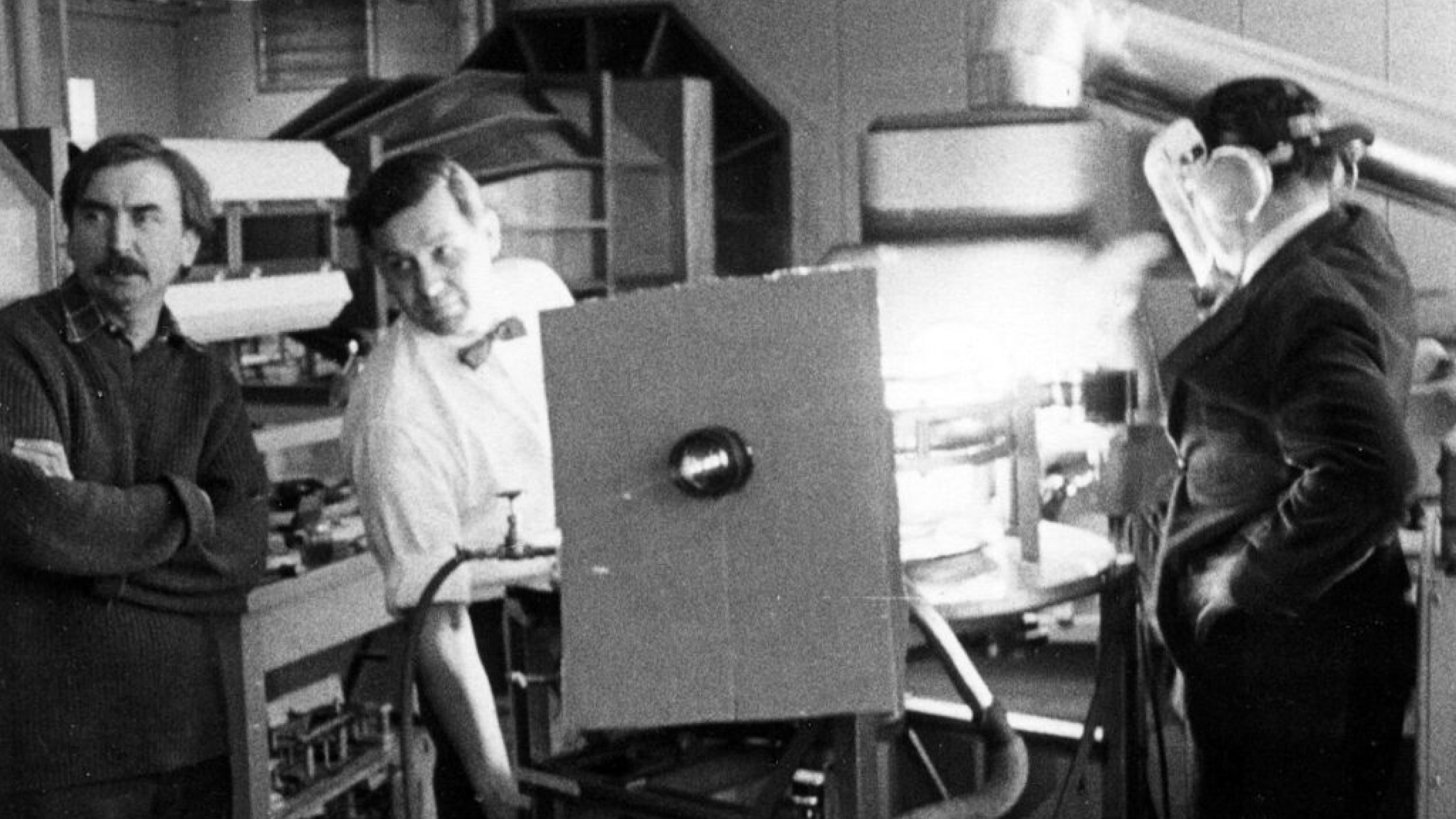
To build it, Ferguson and Kroitor brought in two of Ferguson's high school friends, Robert Kerr, a businessman, and Bill Shaw, an engineer. Together, the four formed Multiscreen Corporation and named the system Multivision, but were soon told the name was too generic to trademark. Searching for an alternative, they kept coming back to “maximum image”. Turned around and shortened that became IMAX.
The team solved the technical problem by adapting an existing idea rather than starting from nothing. An Australian engineer, Ron Jones, had patented a rolling loop mechanism for 35mm film: instead of yanking each frame to a stop, it kept the film moving continuously through a rotating drum. Shaw scaled that design up to handle a far larger frame, and by around 1969 had it working.
The new format debuted at the Osaka Expo in 1970, in a 17-minute film called Tiger Child, shot on a prototype IMAX camera. Notably, it ran on 70mm film, double the width of the 35mm stock every ordinary cinema used at the time, meaning a sharper, more detailed image, one that could be blown up onto a screen far larger than at a standard cinema without turning soft or grainy the way 35mm would at that size.
More than five decades later, it's still the same basic mechanism every true IMAX camera and projector uses. The true 70mm format now showing The Odyssey traces back to that same Osaka debut. The huge screen and the sharp details captivated the audience. Turning that reaction into a lasting business would take years, but it was clear to everyone that they had created something special.
IMAX opened its first permanent installation the following year at Ontario Place in Toronto, followed shortly by screens at the Reuben H. Fleet Science Center in San Diego and the Circus World theme park in Florida. All of these were far larger than the average cinema screen, but what the company presented at Expo '74 took that to new heights, literally.
The pavilion in Spokane, Washington, held 850 visitors at a time in front of a screen that stood 65 feet tall by 90 feet wide. The film, Man Belongs to the Earth, included footage shot from a plane gliding through the Grand Canyon, and was so realistic that some visitors needed airsickness bags.
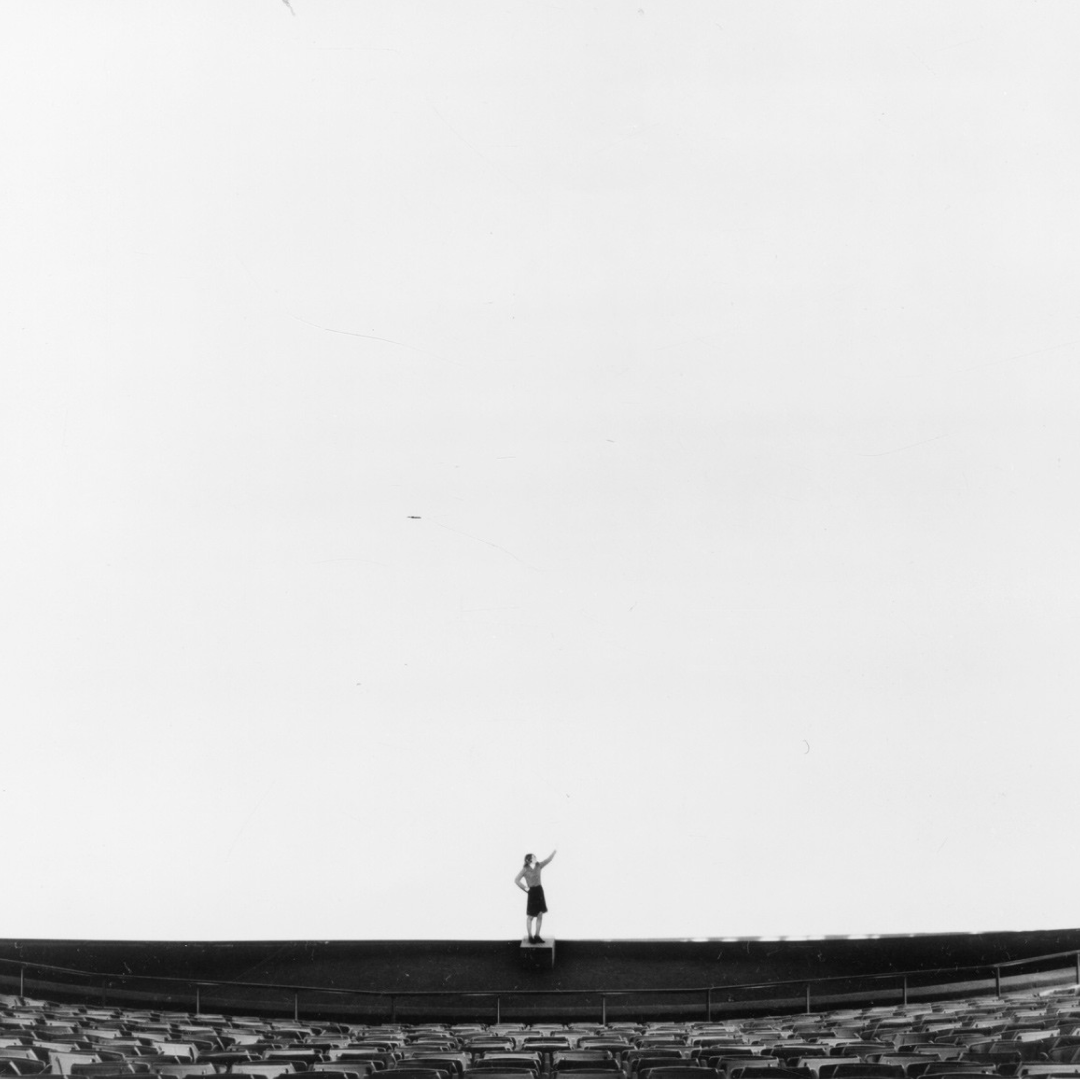
These kinds of venues would become a recurring home for IMAX over the decades that followed: museums, science centers, and temporary pavilions like Expo '74's, built for a single fair. While they are now largely a thing of the past, they were the perfect places for IMAX technology in the early days, offering eager audiences, generous funding, and the freedom to experiment with unusual screens, sound systems, and seating arrangements. All of this was a stark contrast to conventional cinemas, still confined to the same room shapes they'd always had.
Conventional cinemas, though, had commercial titles and box-office revenue behind them, something IMAX would have to wait for. That left the company financially strained, with no clear way to scale beyond where it already stood. It sold occasional system installations, but these were few and far between, with no box-office split behind them. During these years, the company survived project by project, usually backed by a third-party sponsor rather than by ticket sales.
Even without a long-term business model, IMAX had, through its screens, earned real attention within filmmaking circles. One project, sparked by the reaction to Man Belongs to the Earth's showing in Spokane, would go on to change everything. The project took two years and resulted in the 27-minute documentary To Fly!, tracing the history of human flight from a nineteenth-century balloon ascent to a rocket launch into space. It was IMAX's biggest production yet, and with funding from Conoco, it premiered in 1976 at the Smithsonian's National Air and Space Museum in Washington, DC.
Fifty years after its debut, To Fly! is still shown at the Smithsonian, reaching millions of people over the decades. Together, the permanent installation and the quality of the filmmaking made the documentary a defining moment, legitimizing IMAX with the public, and even more so within the industry and among filmmakers. Christopher Nolan has since told his own To Fly! story. The renowned director saw the film as a teenager and was struck by how it captivated the audience, leaving a lasting impression on him.
The screen at the Smithsonian did more than draw crowds, eventually bringing IMAX and NASA together around the idea of flying a camera on the space shuttle so audiences could feel spaceflight rather than just watch it. NASA agreed, and after three shuttle missions in 1984, The Dream Is Alive was released the following year, narrated by Walter Cronkite.
IMAX had pushed its technology into space and earned new prestige in the process, but the underlying problem remained. NASA and Lockheed funded space films the same way the Smithsonian had funded To Fly!, project by project, one collaborator at a time.
While funding remained primarily on a project-by-project basis, permanent installations kept spreading across North America through the 1980s, and the growing footprint eventually brought real momentum. But two decades into the business, with no commercial breakthrough yet, IMAX had no clear sense of where the next wave of growth would come from.
Increasingly, though, the company was eyeing entertainment beyond nature and aerial spectacle. In the early 1990s, IMAX released Stones at the Max (1991), an 85-minute compilation of concert footage from the Rolling Stones' 1990 Steel Wheels tour and the format's first feature-length release. Titanica followed in 1992, sending IMAX cameras 12,500 feet down to the wreck of the Titanic aboard two submersibles.
Acclaim and awards followed both films, but ambitions were already reaching further, toward the kind of scripted, commercial features that had nothing to do with concerts or shipwrecks. But as co-founder Graeme Ferguson later described it, the idea was met with skepticism: "We were told that IMAX features would be impossible because nobody could stand the intensity of the medium for 90 minutes."
It would still take some time, but IMAX would eventually prove them wrong.
In 1994, IMAX was acquired by a group of outside investors and taken public on NASDAQ and the Toronto Stock Exchange. Richard Gelfond, a partner at Cheviot Capital Advisors, was part of that consortium. He has since recalled how the deal came about: he saw To Fly! at the Smithsonian, then returned to his office that week to find the company behind it was for sale. Gelfond took the role of vice-chairman that year, then co-CEO in 1996, co-chairman in 1999, and finally sole CEO in 2009, a role he's held ever since.
While the company didn't resemble what we know as IMAX today, it had begun making its name within the industry. However, as of the mid-1990s, it still didn't compete with traditional cinema, since ordinary movies simply weren't being made for its screens. IMAX remained very much a featured, premium attraction, rather than a volume content platform.
The new ownership's ambition was to scale what already worked, but doing so faster, using capital the founders never had. That kept the customer base centered on museums, casinos, and science parks, though increasingly also a select few multiplexes – cinemas built to house several screens under one roof – that wanted and could support something different: a screen and sound system nothing else in the building could match, worth a real ticket premium, backed by IMAX's documentary library.
During these years, that library extended to a slowly growing run of crossover titles like Everest, the first 15/70-format film to rank among the ten highest-grossing films in North America.
IMAX scaled rapidly after the IPO, and by 1997, the company had signed 60 new theater systems in a single year, more than double the year before, taking its network to 159 systems operating in 22 countries. Leading into the new millennium, it had increased that footprint to 208 systems in 25 countries.
Disney's Fantasia 2000 became the first full-length feature ever released in IMAX theaters, in January 2000. Notably, the film was animated and therefore wasn't shot with an IMAX camera. IMAX instead optically rephotographed the finished film onto a new 70mm negative. Fantasia 2000 became a box-office success, giving IMAX both a share of the revenue and widespread recognition within Hollywood and beyond.
Around this time, IMAX also pushed briefly into computer animation after taking a minority stake in the animation studio Mainframe Entertainment. Two high-profile studio deals came out of that same push, but both stalled. Pixar and IMAX considered releasing Toy Story in 3D, but the film's render resolution reportedly couldn't meet IMAX's requirements. A separate deal to bring DreamWorks' Shrek to IMAX screens in 3D collapsed in late 2000, as a result of rising costs and shifting priorities.
Coinciding with these deals collapsing, the company faced other, more pressing issues. In July 2000, the company announced it was exploring strategic alternatives, and the stock rose on speculation that a major studio might acquire it. However, those expectations would fade in the months that followed.
Into the 2000s, IMAX had grown increasingly dependent on North American multiplex chains for its next wave of installs. As it turned out, that was exactly the wrong group to depend on. Years of aggressive overbuilding through the 1990s had left the entire North American exhibition industry drowning in debt, and as those chains now faced the financial reality, many slid toward bankruptcy.
In October, IMAX announced a steep profit warning, taking the stock into free fall, a decline exacerbated by the later announcement that the strategic alternatives process would be scrapped. Within a year, the price of its shares had collapsed from around $30 to as low as $0.60.
Get curated quality company deep dives every other week.
Out of those difficulties came the innovation that would reshape IMAX's direction for good. The process used for Fantasia 2000 had hinted at this, but that was manual and one-off, an optically rephotographed negative, built by hand for a single studio and a single film.
In 2002, the company announced its new DMR process, Digital Media Remastering. Rather than physically rephotographing a print, the conversion happened digitally. Existing footage, whatever camera it came from, was scanned and algorithmically enhanced, frame by frame, to hold up at IMAX's much larger size. The process could, in principle, run on any studio's film, rather than being custom-built for one film at a time.
The result debuted with two films within weeks of each other in 2002: an Apollo 13 re-release, followed by Star Wars: Episode II. Suddenly, IMAX's big screens could house content beyond its own library. More studios noticed, and DMR conversions became the engine behind an expansion of the medium.
Warner Bros. became the format's first real commercial partner, running the Matrix sequels through DMR in 2003 and committing to the Harry Potter franchise the following year. The Polar Express, also DMR-converted, became IMAX's biggest hit yet, grossing around $75 million from fewer than 100 screens. Again, none of these were filmed in IMAX; they were remastered and then played at a premium on IMAX's growing network.
Up to this point, IMAX's expansion had faced structural issues that limited its growth. On The Journal podcast, CEO Richard Gelfond recalled pitching Steven Spielberg some years earlier on using IMAX's equipment to film a movie. He was turned down flat: "Call me back when you have a thousand screens." It's easy to understand Spielberg's logic, and the difficulty IMAX faced selling its concept in those days.
Even if the film would be sharper and objectively better, why would a director bother if fewer than a hundred screens worldwide could show the difference? And on the other side, why would a multiplex build the expensive theaters capable of showing these films if barely any of them yet existed?
Underneath that standoff sat another problem. Calling an IMAX 70mm screen "large" was (and still is) an understatement. The image quality was great, but the screen couldn't fit in most existing multiplexes or older single-screen cinemas, and needing a costly rebuild to house it made IMAX's pitch even harder. That, combined with Spielberg's assessment, eventually pushed IMAX toward a strategy shift, one built to fit the industry it was trying to break into.
Despite those limitations, the company's systems were in operation at 299 locations globally entering 2008, 60% of them commercially focused. The shift from documentary medium to a Hollywood-capable blockbuster system was, by then, clearly underway.
While that model was proving itself and continuing to scale, IMAX's original proposition – filming with its own cameras – was about to have a breakthrough with one of the biggest studios, directors, and titles of the 21st century.
The highest-grossing film of 2008, Christopher Nolan's The Dark Knight, became the first narrative feature partially shot on true IMAX film, carrying 28 minutes of footage across its biggest action sequences. In practice, that meant viewers at an IMAX theater watched the picture itself expand to fill far more of the screen, taller and fuller than the standard widescreen frame, before shrinking back down for everything shot conventionally.
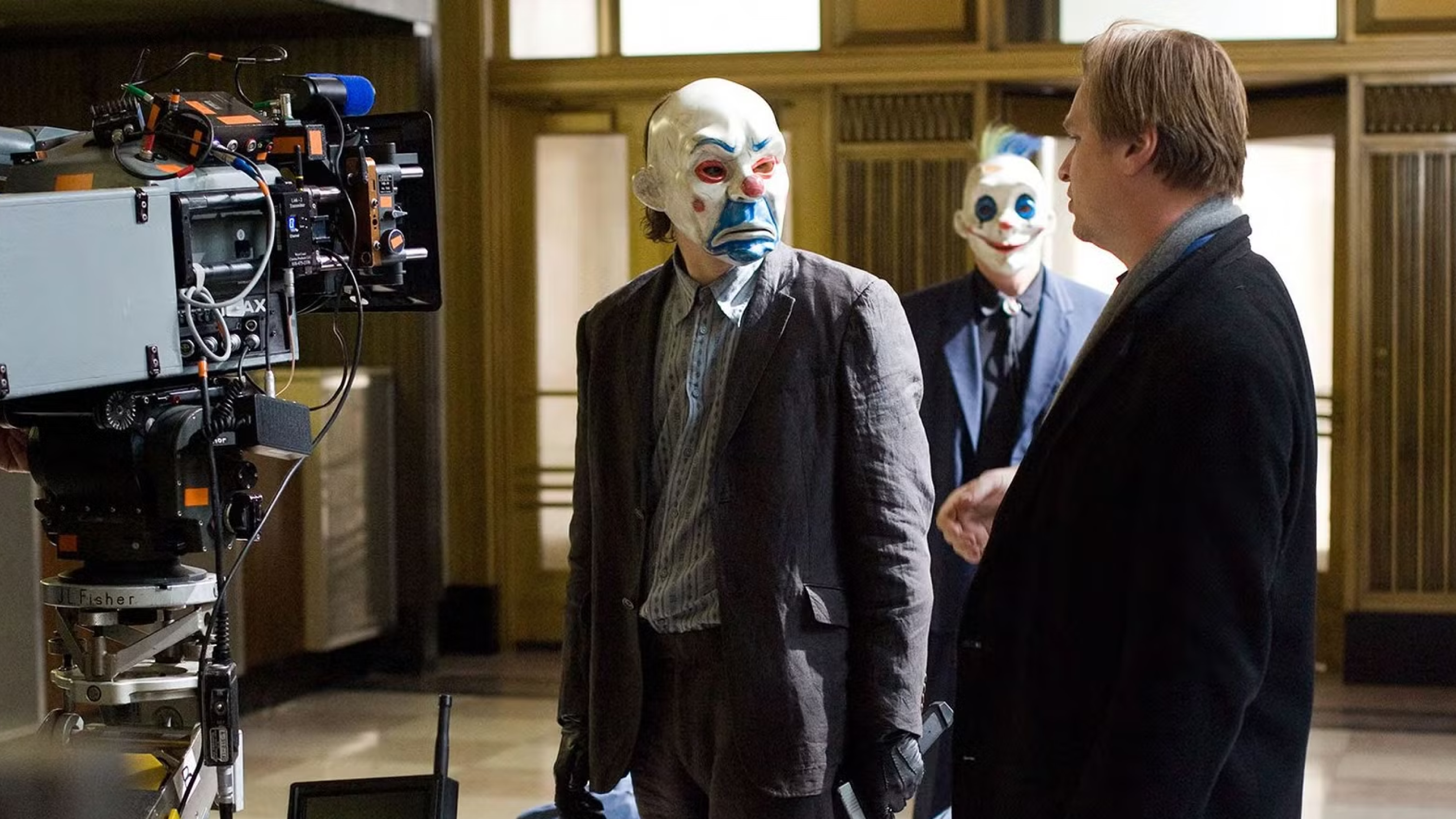
The Dark Knight became the breakthrough IMAX needed. From this point onward, IMAX's status no longer rested only on DMR conversions of popular films. Filmmakers were embracing its 15/70 production technology directly too, marking a turning point in the company's history.
That same year, IMAX launched a fully digital projection system, timed with the broader cinema industry's shift away from 35mm film. We'll get into the difference between these systems later, but in short, the digital system was a smaller, cheaper alternative, one that could be retrofitted into an existing multiplex auditorium rather than requiring an entirely new, purpose-built structure. That meant IMAX no longer had to persuade multiplexes to take on a costly rebuild to house its offering. Around the same time, the company added a joint revenue-sharing model that let exhibitors add an IMAX screen with little to no upfront capital cost.
While shooting on true IMAX became the method many directors sought out, DMR conversions kept climbing alongside it, and with the technology and the business model both finally aligned, the company finally had the momentum it had been chasing for four decades. Adding to all of this was Avatar's release in 2009. Directed by James Cameron and remastered for an IMAX 3D release, it earned $278 million from IMAX screens worldwide, roughly five times The Dark Knight's $55 million.
That momentum carried straight into 2012, when The Dark Knight Rises, the sequel to Nolan's 2008 success, arrived with 72 minutes shot in IMAX. By then, IMAX's network had grown to 731 systems across 53 countries, nearly 85% of them commercial.
The rest of the decade confirmed the trend. Nolan kept pushing further with Interstellar in 2014 and Dunkirk in 2017, which was his most IMAX-committed film yet. In 2015, Marvel announced that Anthony and Joe Russo's Avengers: Infinity War and Endgame, the world's biggest franchise, would be shot entirely on IMAX-certified digital cameras, the first Hollywood productions ever to do so. We'll return to that distinction later.
By the end of 2019, IMAX's network had reached 1,624 systems in 81 countries. Warner Bros. and Nolan, and Disney and Marvel, were no longer exceptions. Universal, Sony, and Paramount were all sending their biggest releases through DMR or IMAX cameras too. Suddenly, a studio or a multiplex didn't choose IMAX to stand out, but risked standing out by skipping it.
Before turning to IMAX's business, it's worth understanding what the name actually means, since the answer isn't as simple as it seems.
Buy a ticket to "IMAX," and there's a good chance you won't see what the name was originally built to mean. A clear majority of IMAX venues today use digital projection in upsized auditoriums, closer in spirit to a standard theater than to the format the founders presented in 1970. The original format, what IMAX calls a Grand Theatre, is a specific theater configuration built around 70mm film projection and a 1.43:1 screen, nearly as tall as it is wide, far closer to a square than the wide, letterbox shape of an ordinary movie screen.
You just can't say: 'Why don't you build hundreds of them?' Because there aren't hundreds of places where it would work.— Richard Gelfond
A true Grand Theatre needs a ceiling height and footprint that almost no existing commercial building has, and retrofitting one is often structurally impossible or prohibitively expensive. Take a location that should be ideal by every demand metric: Paris's Champs-Élysées. IMAX has wanted a true screen there for years, and still doesn't have one.
Andrew Cripps, head of the company's European operations in 2015, told Bloomberg the existing theaters there weren't tall enough, and that many buildings are under historical protection that blocks major reconstruction: "It's a very complex discussion and it can be very, very expensive."
Similar constraints exist in cities worldwide, which is why IMAX built the second, smaller format mentioned earlier: an auditorium design with steeper stadium seating and a screen positioned closer to the audience, built to preserve as much of the Grand Theatre's immersive feeling as a repurposed building allows.
However, the difference between the two experiences shows up in the numbers. The largest true 70mm screens run up to around 100 feet wide, curved and filling the audience's entire field of vision. A digital IMAX screen at an ordinary multiplex can be as small as 40 by 21 feet, closer to a standard auditorium, and shaped to a wider 1.90:1 ratio rather than the true format's 1.43:1.
Today, more than 1,800 screens carry the IMAX name worldwide. Only 41 of these show a genuine 70mm print, a figure that has grown only slightly in recent years even as demand has risen much faster. Cost cuts both ways here, as these are expensive to build, expensive to operate, and that scarcity is itself part of what makes the economics work. If every city had one, they wouldn't sell out the way they do now.
Even setting the rarest format aside, a digital IMAX screen is still a step up from an ordinary theater in the same multiplex: a larger screen, increasingly bright dual-laser projection, and a sound calibration IMAX tunes at every install. Those differences are tangible enough to matter to most people deciding which ticket to buy. But it's still just an IMAX, which is exactly what can make the name confusing.
Nearly every film shown in cinemas today goes through the same basic process. A film is shot, scanned once if it was captured on film at all, then edited, color-corrected, and finished entirely inside a computer. The digital file is then shipped to theaters globally, delivered on an encrypted hard drive or by satellite. This includes the roughly 1,800 screens carrying the IMAX name that run on digital projection.
Although true IMAX 70mm projection is limited to 41 theaters worldwide, the process behind a film shot in the format is worth pausing on, both for its status within the industry and what it means to the company strategically. Everything about it reads like a craft that refused to modernize.
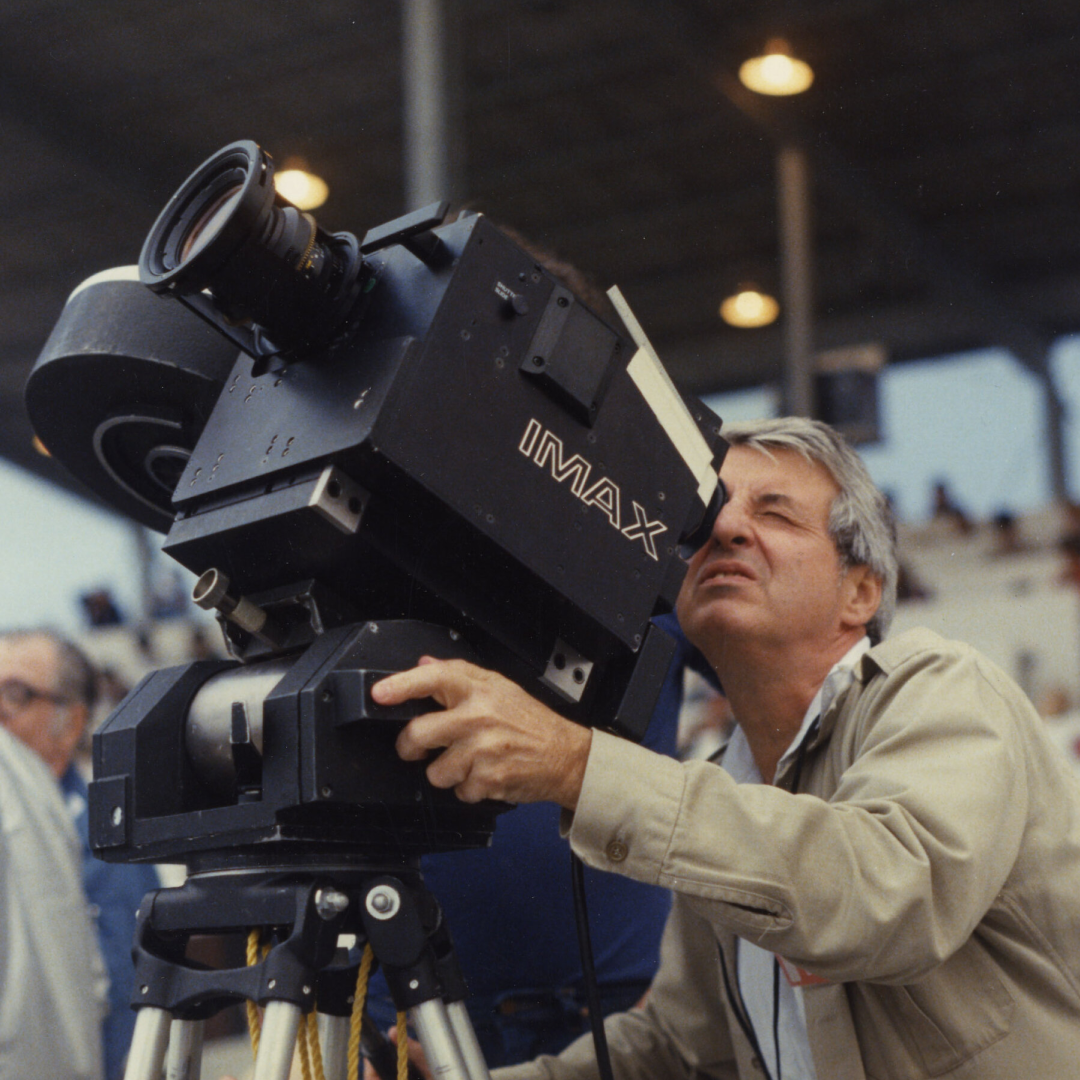
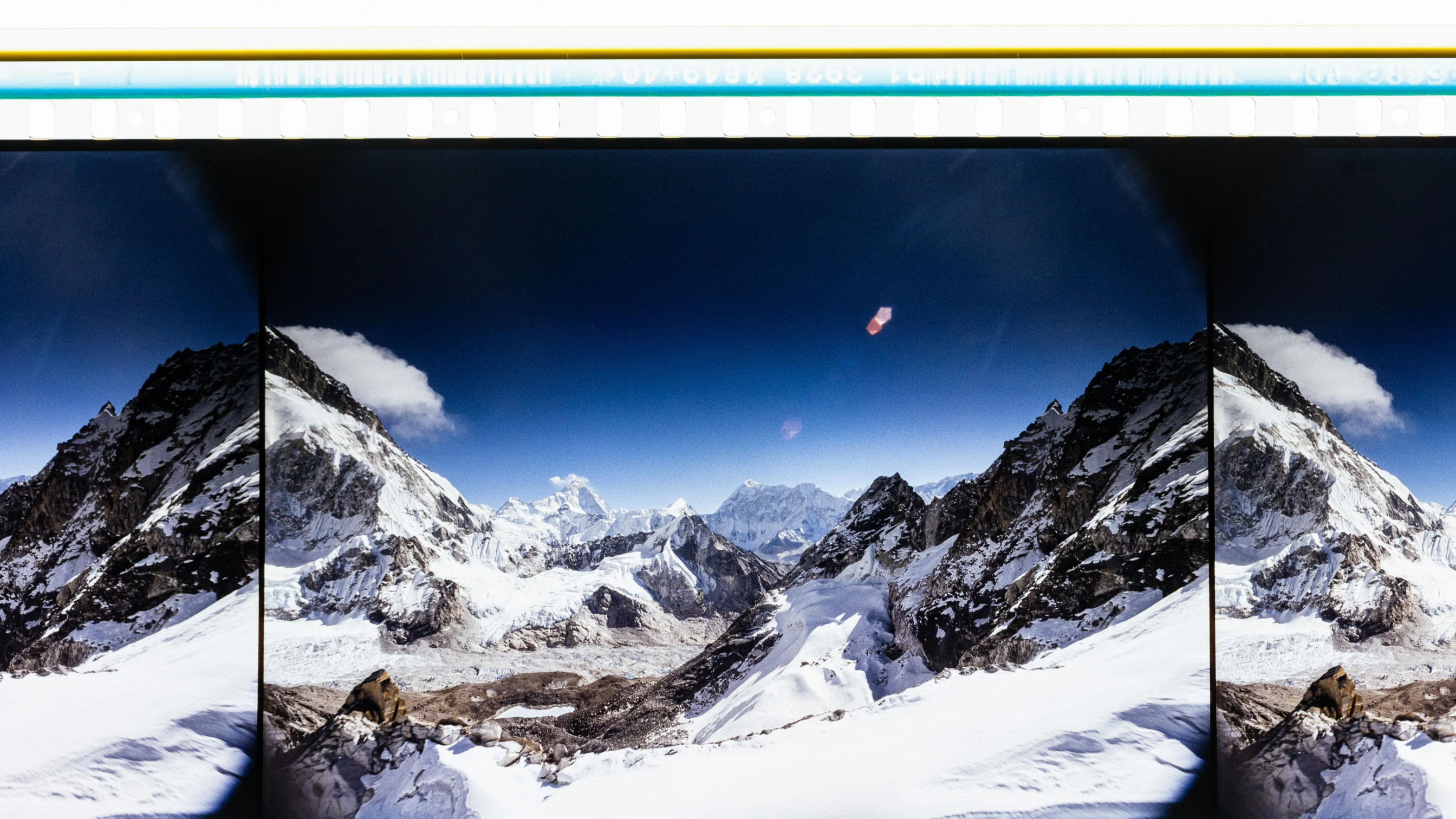
IMAX film is shot on 65mm stock and printed onto 70mm, running horizontally through the camera and projector with fifteen perforations per frame rather than the five that run vertically on a standard 70mm print. That sideways orientation produces a frame around three times the area of conventional 70mm and about ten times standard 35mm. IMAX's own engineers estimate the resolution to be around 12K. None of that needs memorizing to get the point: nothing else used in commercial filmmaking captures more detail.
However, none of this would be usable at 24 frames per second without the rolling loop, the invention that made the format possible in the first place. Older mechanisms yank each frame to a hard stop against the projector aperture, using the film's own perforations to absorb the shock, which limits both speed and how long a print survives.
IMAX instead threads the film through a rotating drum that forms a moving loop of slack, rolling it over fixed register pins so a frame holds perfectly still without ever being forced to stop. It might sound like a small mechanical difference, but it's the reason a print can survive roughly 2,000 projection passes before wearing out, and the reason the system can run film at nearly three and a half times normal speed without shredding it.
The prints themselves have never carried a soundtrack, with sound always being recorded and synced separately. A single 70mm print, costing approximately fifty thousand dollars to produce, could move from a theater in France to one in Germany with nothing but a new soundtrack file following it. No new print was needed for each language market, which partly explains how IMAX could scale globally as seamlessly as it did.
There's a second, unrelated reason sound and picture have always been handled separately in IMAX filmmaking: the camera itself is loud enough to ruin a take. Recording usable dialogue over that was never realistic, which is a large part of why the format spent decades confined to scenes without much talking, such as chases and disasters rather than the kind of scene where actors actually need to hear each other.
The physical handling is another area in which IMAX differs sharply from the rest of the industry. Prints are hand-cut and cement-spliced onto their original negatives, a process nearly extinct elsewhere now that most productions finish entirely inside a computer and never touch the negative again once it leaves the lab. Once assembled onto wooden platters, a finished three-hour feature can weigh up to 600 pounds and needs a forklift to move. Avatar's total print, for instance, stretched close to sixteen kilometers laid end to end.
All of this explains why some of the world's leading directors want to work with the format. But the craft pays off even for the roughly 1,800 IMAX screens that never see a physical print. As Nolan put it, shooting on true IMAX film means "you're working with the absolute best possible image that you could acquire," and that source file is what gets scanned down for every digital laser screen worldwide.
An IMAX film camera is a rare object. Only a single-digit number exists in the world, and only a handful of these are modern models that are in active rotation for commercial features. The core mechanism inside them is essentially unchanged since the format's original design in the early 1970s.
Part of the scarcity is simply that the industry moved on as theaters converted to digital projection in the late 2000s. Manufacturers stopped producing the specialized parts these cameras depend on, and IMAX has said some components are now effectively impossible to source at any price.
That scarcity is also a feature when it comes to production: the cameras are reserved for high-profile, exclusive releases. IMAX receives a steady stream of requests to use its filming technology and turns down most of them. The company is trying to bridge some of those limitations. In 2022, it announced a plan, developed with Kodak, Panavision, and FotoKem, to build at least four new film cameras and grow the existing fleet by roughly half.
With demand for its cameras far outpacing what its limited fleet could support, IMAX introduced a second path in 2020, a certification program called Filmed In IMAX, which qualifies specific high-end digital cameras, including models from ARRI, Panavision, RED, and Sony, to shoot in an expanded aspect ratio that delivers more picture than a standard theater.
Top Gun: Maverick, shot on Sony's VENICE, and Dune, shot on the ARRI ALEXA LF, were among the first films to carry the certification. IMAX still selects only a limited number of films to participate each year, partly by design, since the whole point is differentiation rather than ubiquity, and partly because the premium workflow simply isn't worth it for most productions.
Both paths, true IMAX film and Filmed In IMAX, funnel into DMR, Digital Media Remastering, the process behind almost everything billed as "IMAX" that wasn't shot entirely on IMAX equipment. What once took months now takes a team of about twenty digital artists and a modern render farm just a few weeks.
IMAX isn't the only company selling exhibitors on a proprietary premium format. Dolby Cinema has built its own footprint around color, contrast, and immersive audio rather than sheer screen size, and South Korea's CJ 4DPLEX, owned by CJ CGV, the world's fifth-largest theater chain, has built a network stretching across more than 1,200 theaters in 80 countries. While IMAX's competitive strengths against these and other rivals can be debated, none offer proprietary equipment spanning the entire process, from camera to screen. As Richard Gelfond sees it, the company is in a good position:
“IMAX has been in business for 55 years. We have technology, we have relationships, we have lots of competitive advantages. It's almost like, and with no disrespect to Coke, if I came out, they said, I'm going to start a new soda brand and I'm going to band together with others and we're going to compete with Coke. The good news is if you're Coke, it doesn't work that way. If you're IMAX, it doesn't work that way.”
– IMAX Q2 2025 earnings call (sourced through Quartr Pro).
IMAX entered the 2020s with real momentum. Then came a pandemic that emptied its theaters worldwide almost overnight, and for months, nobody in the industry could say with any confidence how many of those seats would ever fill again.
They did fill back up, though unevenly and later than most people expected. Concerts, sports, and theater all returned pricier and more sought-after than before the pandemic, and cinema followed roughly the same curve.
IMAX's history so far explains why the industry wants it, why directors chase its cameras, why studios build marketing campaigns around its release windows. But a decade-long shift in home entertainment has been reshaping demand at the ticket counter too. From the couch, with a few clicks, consumers can stream high-quality, near-endless entertainment for close to the price of one movie ticket.
That's led some consumers to never trade the couch for a cinema seat at all. But among those who do decide to see a movie they've been waiting for, more are making sure to choose the IMAX showing specifically, and if that means settling for corner seats, paying a premium, or waiting an extra week, then so be it.
)
When The Odyssey opened in the summer of 2026, it did so to sold-out shows worldwide for months, with people traveling cross-country or even cross-continent to reach one of these rare theaters.
For most people, the choice had been between going to the cinema or waiting to watch at home. Now there's suddenly a third option, and it's made a regular cinema showing feel like the weakest of the three.
That shift is showing up in the numbers, and as we'll see soon, many of the underlying drivers reinforce one another. On a trailing-twelve-month basis as of Q2 2026, IMAX generated $416 million. That trailing number has brought revenue past pre-pandemic levels of $396 million, after a prolonged stretch below that level. Since EBIT losses of $128 million in 2020, the company has rebounded sharply, with trailing twelve-month EBIT reaching $95 million as of Q2 2026.
)
Revenue across its network is split between two segments: Technology Products and Services and Content Solutions. That split fluctuates somewhat with box office performance but has stayed relatively consistent over the past five years, with Technology Products and Services accounting for roughly 60% to 70% of combined segment revenue and Content Solutions the remaining 30% to 40%.
Technology Products and Services revenue comes from delivering its systems, including supervising installation and training the projectionist. The company sells its systems to exhibitors in one of three ways. Slightly less than half of the network operates under joint revenue sharing arrangements (JRSAs), where IMAX installs the system with little or no upfront cost to the exhibitor and instead takes a percentage of box office receipts. That revenue stream follows whatever films are playing at any given time, making it the most box-office-sensitive part of the business.
Roughly half of IMAX's network operates under sale or sales-type lease arrangements, where IMAX recognizes a large upfront payment at installation. That makes this revenue stream lumpier, driven more by the pace of new theater construction and signings than by box office performance. A hybrid arrangement is less common, approximately half the upfront cost of a straight sale combined with half the box-office cut of a traditional revenue-sharing deal.
The clear majority of Content Solutions is the business that began with Fantasia 2000 but really took shape with the launch of DMR in 2002: IMAX's proprietary process for remastering films into the IMAX format. This segment tracks box office directly, with IMAX earning a DMR fee on every film it remasters and distributes across the network. The company has said that fee averages 12.5% of net box office receipts, except in Greater China, where it's lower.
While both segments and agreement structures follow somewhat different cycles in the short term, they reinforce each other. Strong box office from IMAX screenings proves to both studios and exhibitors that audiences will pay a premium for the format. Studios respond by committing more of their largest releases to IMAX and shooting more of them with IMAX's own cameras. Exhibitors respond by signing for more systems. Short-term box office builds momentum, momentum builds demand for the network itself, and a bigger network leads to more revenue across both segments.
IMAX has been a global business since the early decades. By the 1990s, it had installations across nearly every continent, and it has kept expanding from there. As of June 2026, the company had IMAX installations at 1,876 locations. Decades after its Expo installations and museum-and-science-center roots, the commercial side of the network now makes up over 95% of the total.
)
The time between signing a deal and bringing the resulting screen into operation varies by agreement. While the majority of systems signed were installed within a year, the timing can differ depending on construction and renovation schedules at the host theater. As of June 2026, the backlog consists of 263 new system installations.
As noted earlier, the vast majority of the network today runs on digital laser projection. The theaters capable of showing 70mm have increased in recent years, but not through new construction: IMAX hasn't built a new 70mm film projector in several decades, due to the same production shortage already covered for its cameras. Therefore, meeting the resurgence in demand after Oppenheimer in 2023 meant tracking down, refurbishing, and reinstalling old units.
Demand for tickets to its 41 true 70mm theaters shows just how undersaturated the format still is, with most of these posting the best box-office-per-screen figures in the network. The company is addressing the opportunity to grow that footprint.
On The Town with Matthew Belloni, Gelfond put his ideal number of true 70mm theaters at 75, with growth concentrated in countries and regions that don't have one yet. Asked about increasing the number of these locations at the Q2 2026 earnings call, the CEO framed it this way:
“We're exploring ways to do that. In a way, it's like a Rolls-Royce. The economics are very difficult to meet, and only certain people could afford a Rolls-Royce. If you wanted to broaden the market for a Rolls-Royce, you'd really have to engineer down the cost. The reason for that is you need a particularly big box with the aspect ratio. It's very expensive. You need film prints, not only the projector, which costs $50,000 a piece, to put in your theater. You need logistics like a forklift to lift them, so you need a very big projection booth. Without boring you and everyone else with the answer, when you get through the numbers of it, there are a finite number of locations that really can support the economics of it.”
IMAX's 1,876 locations skew heavily toward its two largest markets. Greater China (mainly China, but also Hong Kong, Macau, and Taiwan) accounts for the largest share at 810 systems, followed by the United States at 413, with the remaining 641 spread across the rest of the world. Revenue, however, doesn't follow the same split.
Greater China generated $102.3 million of IMAX's $410.2 million in 2025 revenue, about 25%, while the US alone brought in $144.9 million, roughly 35%, despite having barely half as many systems. That gap is partly explained by the lower box-office fee IMAX takes in China, as mentioned, but mostly by how cinema economics work in the region: lower ticket prices, lower box office per screen, and a network heavily concentrated around a single exhibitor.
Notably, that revenue comes from the listed entity IMAX China, which IMAX owns approximately 72% of and therefore consolidates into its own results. That subsidiary was listed on the Hong Kong Stock Exchange in 2015 as part of a strategy to focus on a promising market. Gelfond explained the strategy behind the listing in the press release at the listing:
“We believe it provides investors the ability to access our IMAX China business directly, and provides greater clarity into the performance of those assets in the fastest-growing entertainment market in the world.”
That expansion fared well over the years, growing from a footprint of less than 300 screens at the time of the IPO. However, after the pandemic and a difficult stretch for the stock, IMAX proposed buying out the rest of IMAX China in 2023. The bid fell short of the approval threshold, and IMAX China remained a roughly 72%-owned subsidiary.
Across IMAX's history, a handful of moments have put the medium in the spotlight and, in doing so, redirected the company's own trajectory: the first showing in Osaka, the filming and installation of To Fly!, the arrival of DMR, and the run of 21st-century blockbusters and filmed-in-IMAX content that followed. Its next breakthrough, and potentially the most consequential yet for IMAX's standing in the industry, came in the summer of 2026.
It really is just a great way of giving people an experience that they can't possibly get in the home.— Christopher Nolan
Christopher Nolan has been an advocate for the format throughout his career, pushing further with nearly every film from The Dark Knight through The Dark Knight Rises, Interstellar, Dunkirk, and Oppenheimer. When he began developing his next project in 2024, he wanted to push the format further still. CEO Richard Gelfond described the moment at IMAX's Q2 2026 earnings call:
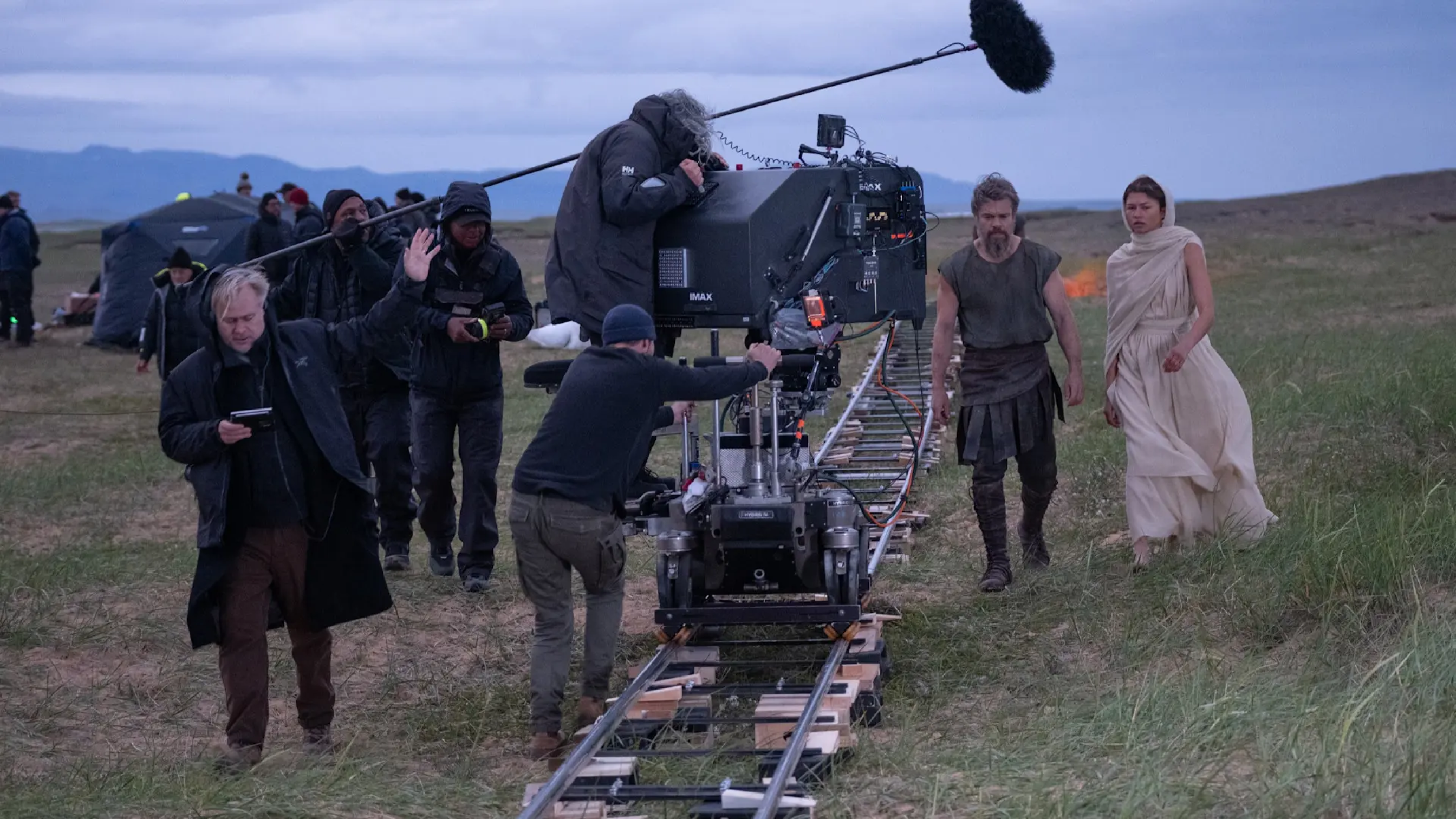
“On the heels of the massive success with Oppenheimer, Christopher Nolan wanted to use his clout to realize a lifelong dream, shooting an entire movie with IMAX film cameras. He challenged us to help make that dream a reality. In response, we designed our legacy film camera from scratch, retaining only the original mechanical movement. In addition, we developed the most advanced camera sound blimp ever created to allow Nolan to shoot sync sound in IMAX for the first time ever and get stronger performances out of his cast. Nolan shot 2.1 million feet of IMAX in its production, the distance from New York to Toronto. IMAX innovation made The Odyssey possible and gave Chris Nolan the tools to make one of the greatest movies ever seen.”
As stated, Nolan wanted to shoot an entire film using IMAX cameras, something the format's own limitations had made nearly impossible until now. The aforementioned noise problem kept dialogue scenes off true IMAX film for decades. The stock itself was heavy and demanding to work with. And once shot, the negative still had to be cut and spliced entirely by hand, the same way it had been done for half a century.
Nolan pushed IMAX's team to solve a problem the format had lived with since its invention, and together they built an entirely new camera to do it. Hoyte van Hoytema, who has shot on IMAX film for most of Nolan's work since Interstellar, was well placed to judge the noise difference, describing it as the gap between “an unhinged lawn mower” and “a nicely lubricated sewing machine.” It was lighter too, with a carbon-fiber body and a new digital viewfinder. For the quietest, most intimate dialogue scenes, the crew also added a separate soundproof housing on top.
The negative itself was still cut by hand, more than 3,000 individual cuts spliced together over twelve to fourteen weeks. The same method used a century ago, applied to a camera built the same year the film was released.
The film and box-office performance were, to put it mildly, a huge success, and at the center of it was IMAX, discussed almost as much as the movie itself. Gelfond continued:
“We've been blown away. We had really high expectations. People at IMAX thought I was a bit of a lunatic, but we've exceeded our high expectations.”
Ahead of the release, IMAX installed 38 new systems in a single quarter, its highest second-quarter total in a decade. While the true 70mm theaters were the only place to see the complete version of the film, IMAX's other screens also saw huge demand, and it's their global scale that ultimately drives most revenue. The Odyssey opened to $52 million in global IMAX box office, 20% of the film's entire worldwide debut despite IMAX screens accounting for less than 1% of all screens showing it.
IMAX was what people looked for when booking a ticket. The promotion and the conversation around it created a worldwide feeling that you had to see it in IMAX. If the film was made for the format, and the format was what made it unique, why settle for anything less? Gelfond again:
“We believe The Odyssey is also a transformational event in many ways we can see and many ways we can't yet predict. The box office results are already exceeding our expectations. IMAX is the center of the cultural conversation like never before. More than ever, IMAX is the premier global platform for blockbuster content. At our Investor Day last year, we talked about how we've entered a new era of growth. Right now, that thesis is on full display.”
At that 2025 Investor Day, Gelfond had laid out just how large that new era might be: a total addressable market of roughly 4,500 locations worldwide, nearly double IMAX's current network and backlog combined. The momentum from The Odyssey is unquestionable, and the global attention and box office performance behind it are already feeding into installations and director demand, with no sign of slowing.
In May 2026, reports surfaced that IMAX was exploring a sale to partner it in this next era of growth. Whether or not anything comes of it, the company's positioning is arguably the best it's ever been. For most of its history, its screens were too big for most buildings to hold, and its business too small to matter to Hollywood. It took decades to get there, but IMAX solved both without compromising the model that had made it so difficult to scale in the first place.
Explore our platforms
Leading companies and financial institutions worldwide rely on Quartr to make better decisions faster.
Desktop
API
)
)
)