Edge16 Oct 2026
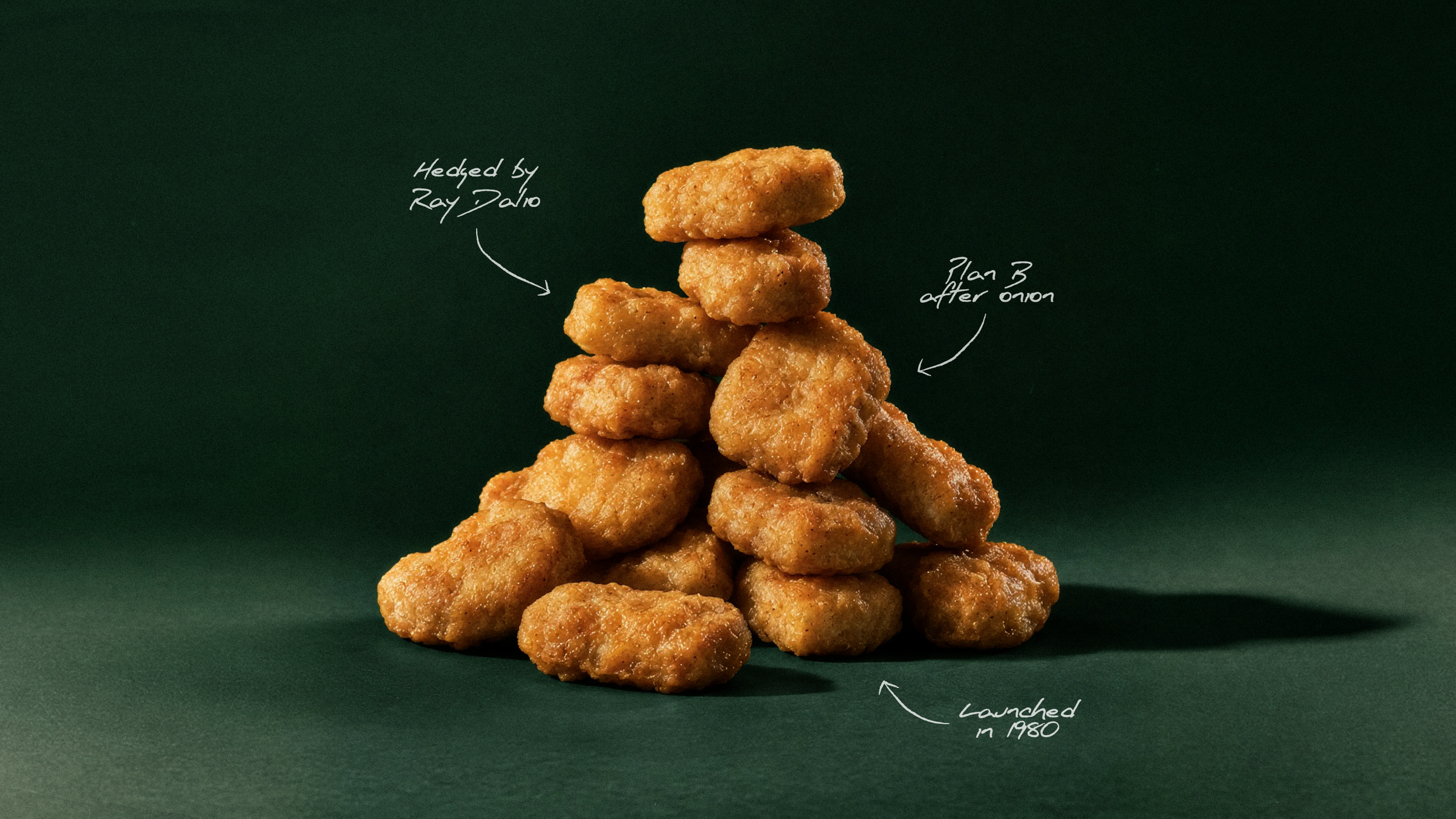
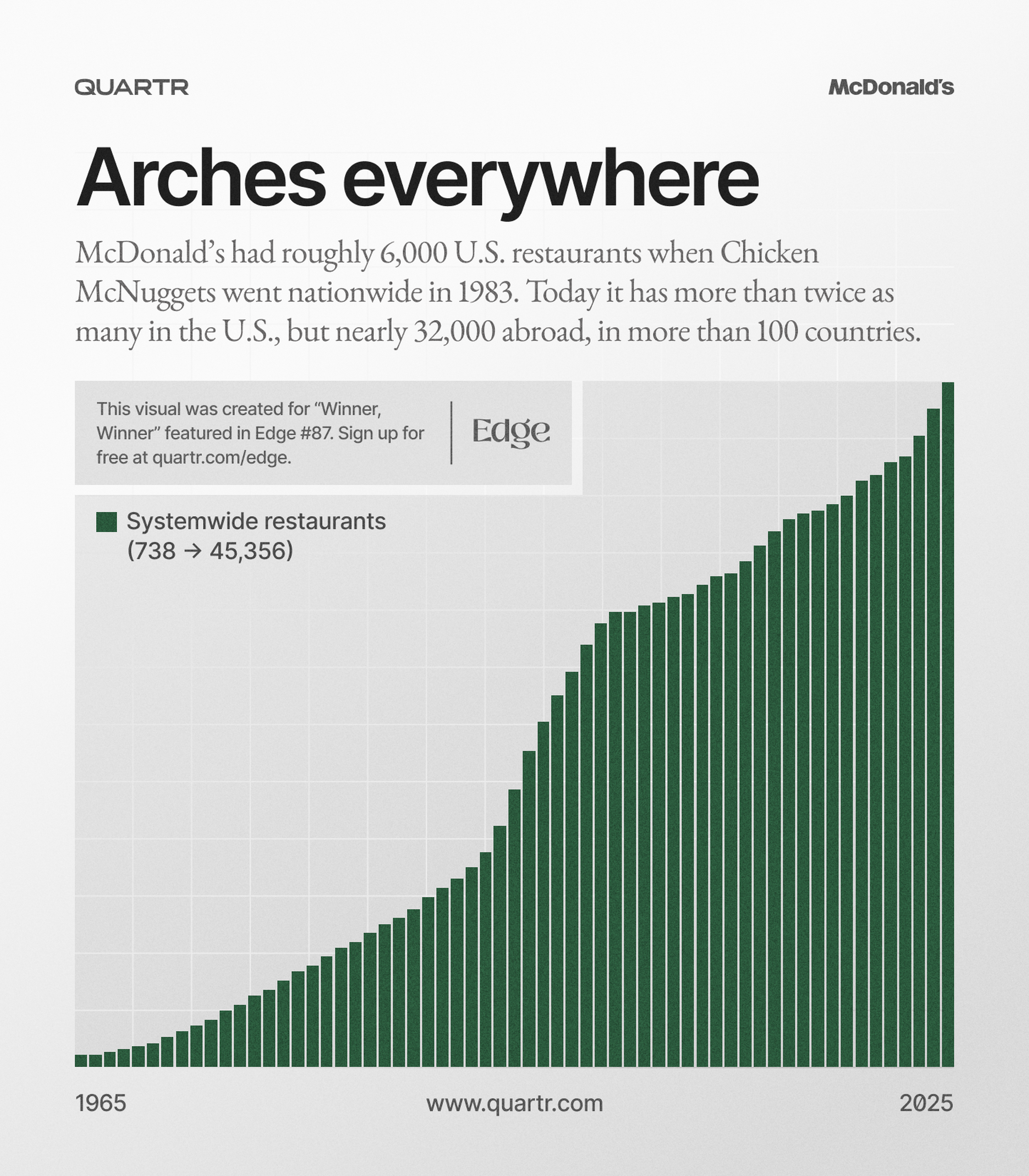
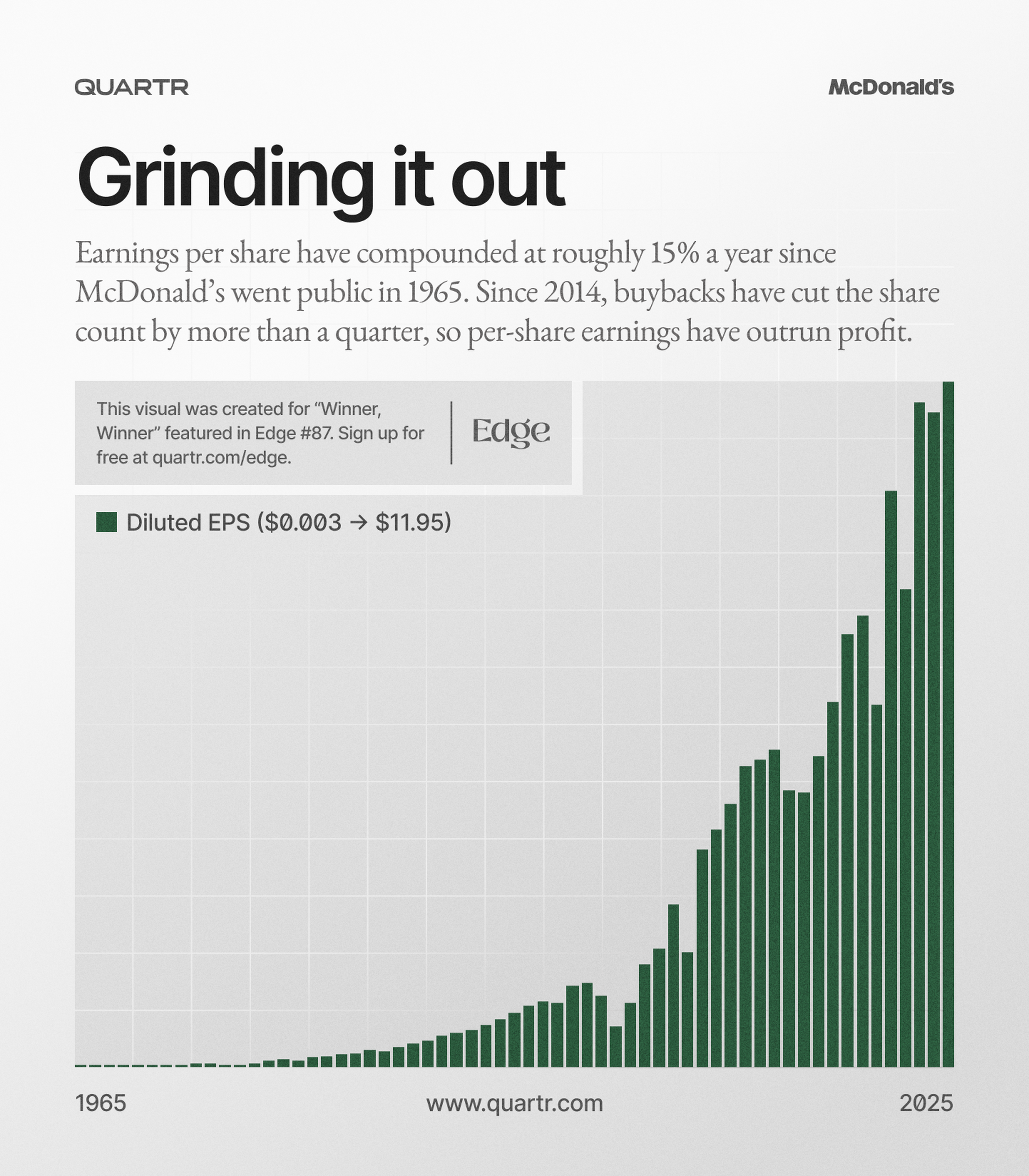
Winner, Winner: The Chicken McNugget Story
How a 1940s breeding contest, a Cornell food scientist, and a hedge by Ray Dalio helped McDonald's turn the Chicken McNugget into a fast-food icon.

The company has evolved to focus on interconnected energy and industrial markets, now deriving about 60% of revenue from infrastructure and industrial sectors.
Positioned at the center of energy convergence, enabling both current and future energy systems across a $400B+ addressable market.
The acquisition of Chart Industries expands the addressable market and strengthens the technology portfolio in heat transfer, cryogenics, and carbon capture.
Integration with Chart Industries accelerates growth in high-potential markets such as data centers, LNG, industrial gases, and geothermal.
Exposure to high-growth end markets is projected to increase the addressable opportunity by nearly 60%, from $36 billion to $57 billion by 2030.
Durable growth and expanding margins are supported by a resilient Oilfield Services & Equipment (OFSE) segment and record Industrial & Energy Technology (IET) margins.
OFSE margins have improved by over 600 basis points since 2017, and IET delivered record EBITDA margins of 18.5% in 2025, with expectations to exceed 20% in 2026.
The company targets 20% adjusted EBITDA margins by 2028, excluding Chart Industries, and expects more than $45 billion of IET orders through the Horizon Two period.
FY'26 guidance projects revenue of $28.5B–$30.3B and adjusted EBITDA of $4.88B–$5.48B, with FCF conversion of 40–45%.
Chart Industries is expected to contribute $1.85–$2.25 billion in revenue and $300–$400 million in EBITDA from the close date through year-end, with margins around 17%.
Integration efforts focus on operational enhancements, cost synergies, and commercial synergies, with a proven business system being applied to Chart Industries.
Cost synergies are expected to reach $325 million annually by year three, mainly through SG&A optimization, supply chain efficiency, and facility optimization.
Chart Industries' EBITDA margin is targeted to expand from 17% in the second half of 2026 to 22–23% by the second half of 2028, driven by cost synergies, operational enhancements, and commercial opportunities.
Commercial synergies include cross-selling, integrated solutions, and accelerated aftermarket revenue, especially in Middle East, Latin America, and Asia.
The integration is supported by dedicated teams, clear governance, and established performance management frameworks.

AI chat
Automations

Live audio & transcripts
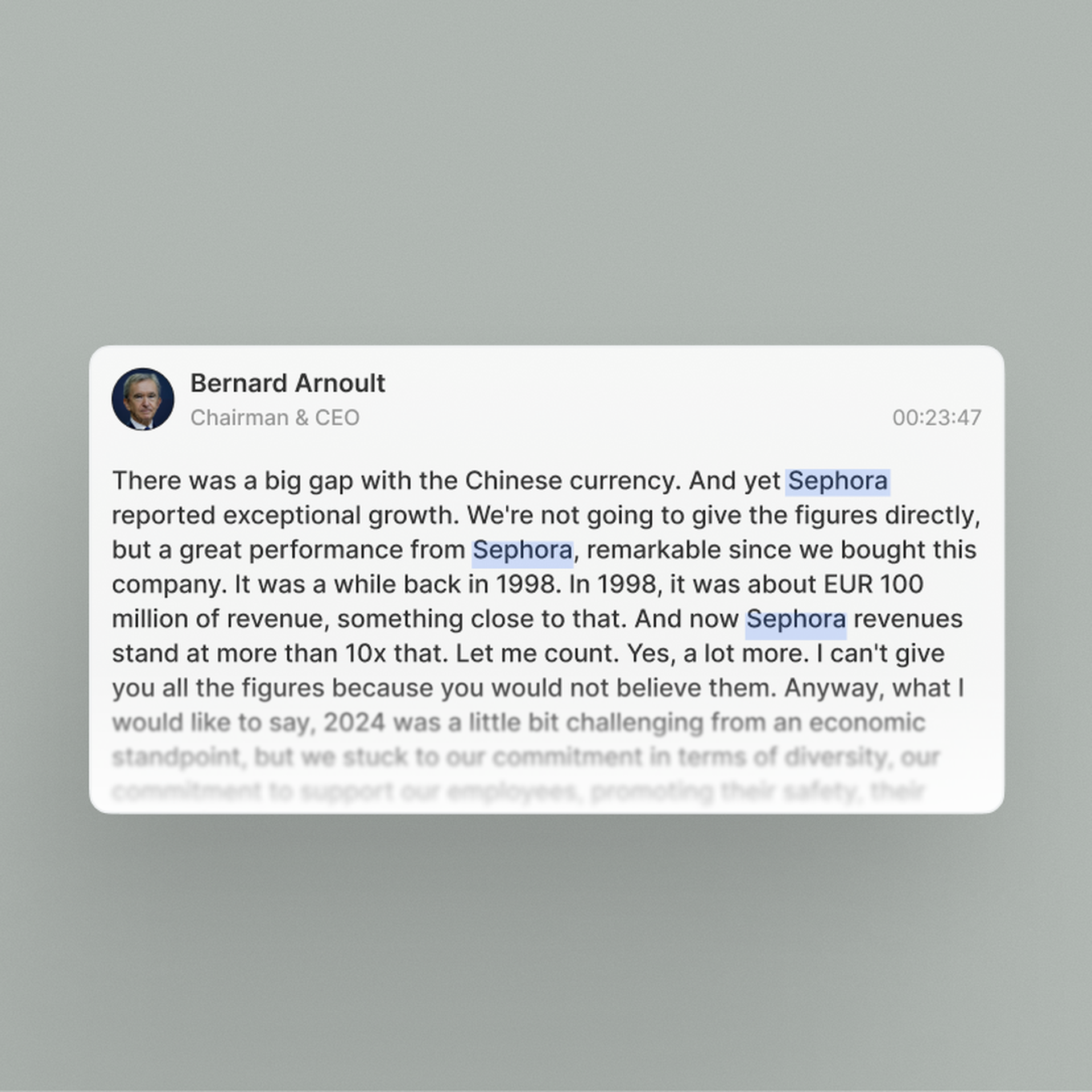
Quartr's AI stands out because it only pulls clean, first-party data from public companies. In investing, that's everything.
Jamie Ross
Investment Manager, GAM Investments
Research that used to take hours now takes seconds with Quartr Pro. Tracking shifts in tone or extracting tables, it's as simple as typing a query.
Tom O'Hara
Investment Director
Before Quartr we spent hours manually compiling insights through the peer earnings cycle. Now, these tasks are done faster, with greater precision.
Gregg Lampf
VP of Investor Relations
Being able to ask specific questions across years of transcripts and reports and instantly get verified answers is a game-changer.
Pontus Dackmo
CEO & Investment Manager
Baker Hughes is an American company headquartered in Houston Texas. It is one of the largest oil field services companies in the world and provides various services and products for the larger oil industry. Baker Hughes provides various types of products and services within oil well drilling, production, and other critical steps in oil exploitation. The company has a global reach, operating in well over 100 countries worldwide and its shares are listed on the NYSE.
Baker Hughes traces its origins back to the early 20th century through the merger of two significant companies: Hughes Tool Company and Baker Oil Tool Company. Hughes Tool Company, founded in 1908 by Howard Hughes Sr., introduced the dual-cone rotary drill bit which revolutionized the drilling industry. Reuben C. Baker, the founder of Baker Oil Tool Company in 1907, patented the casing shoe, a device that enhanced the drilling process.
Their merger in 1987 marked the formation of Baker Hughes Incorporated, creating an industry giant that offered a comprehensive suite of services and products for oil exploration and production worldwide. In 2017, GE became a majority owner of Baker Hughes. However, their ownership proved to be short-lived as GE divested from the company in 2020.
Baker Hughes is one of the foremost oilfield service companies in the world, providing a broad spectrum of technologies and services to the global oil industry. The company plays an instrumental role in the entire lifecycle of oil exploration and production.
From the inception of an oil well to its eventual decline, Baker Hughes offers services and solutions at every stage. In the upstream sector, they provide exploration services, with advanced drilling technologies that facilitate efficient and safe extraction of oil. Their offerings include drill bits, drilling fluids, and machinery, all optimized for varying geological terrains and challenges. In addition to drilling, Baker Hughes provides services and products related to well completions, production systems, and reservoir evaluation to optimize output and prolong well life. The company's integrated approach ensures that oil producers can maximize their yields, reduce operational costs, and maintain safety standards. While Baker Hughes is one of the leaders in its field, it faces competition from companies such as Schlumberger and Halliburton.
The company is also active within the gas sector. Baker Hughes offers a host of technologies and services tailored for gas exploration, production, and processing. The company delivers solutions for both conventional and unconventional gas reservoirs, including shale gas, tight gas, and coalbed methane. Beyond exploration and production, Baker Hughes provides equipment and services for liquefied natural gas (LNG) processing, enabling the transport and storage of gas across global markets.