Edge16 Oct 2026
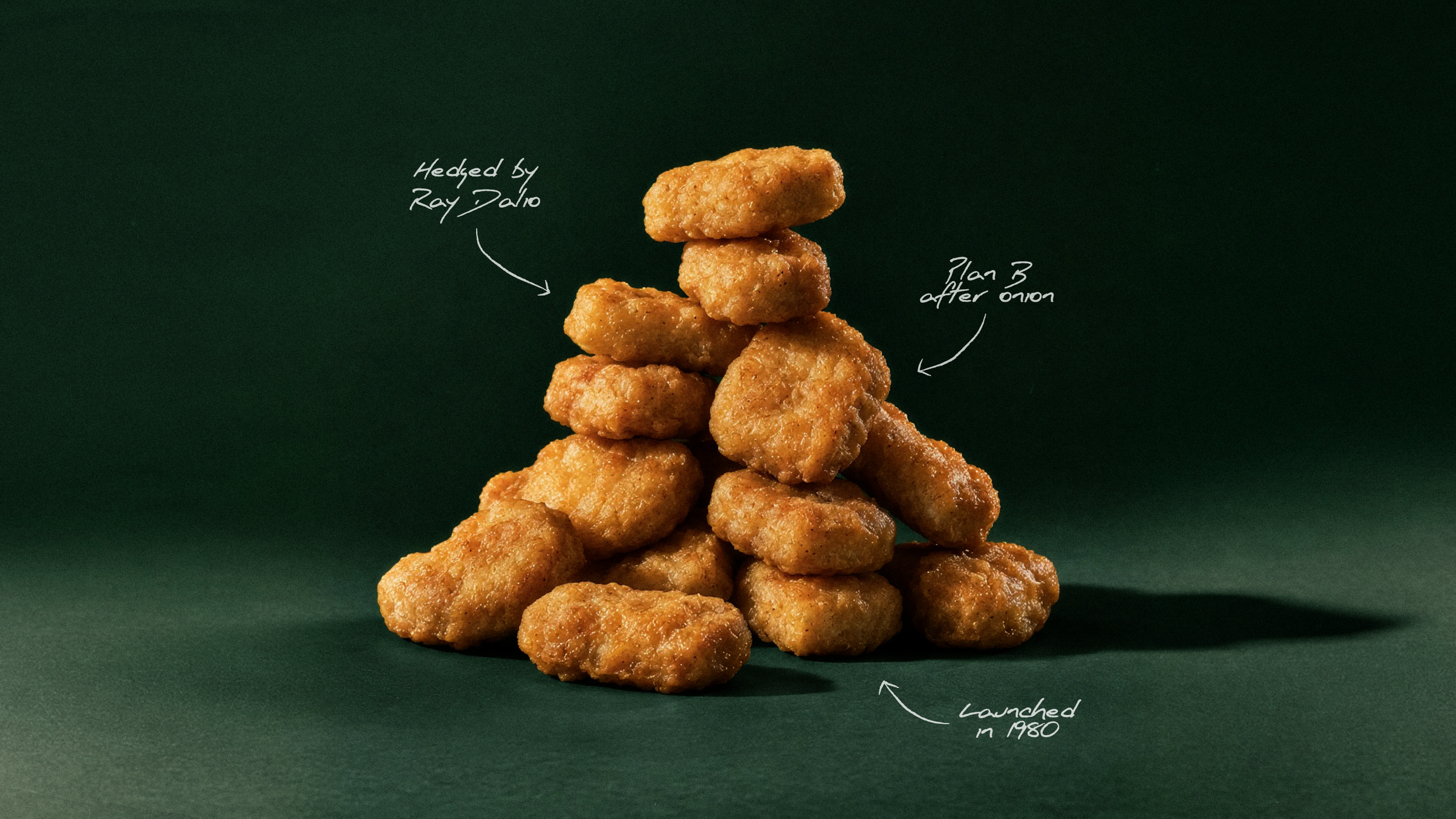
Winner, Winner: The Chicken McNugget Story
How a 1940s breeding contest, a Cornell food scientist, and a hedge by Ray Dalio helped McDonald's turn the Chicken McNugget into a fast-food icon.

ChemT’s virtual cell platform combines a CHO biology knowledge graph with AI to predict how genetic, media and process changes affect productivity, titer, cell-specific productivity (QP) and product quality.
Models start from a target phenotype, trace contributing genes and pathways, then rank interventions; inputs can include RNA-seq, metabolomics and process data.
In a difficult-to-express Fc-fusion case, pathway analysis identified a protein-folding bottleneck; bespoke small molecules targeting the implicated genes improved titer.
In a mAb fed-batch example, a small molecule raised QP from 23 to 34 pg/cell/day and titer from 5 to 8 g/L; in perfusion, QP rose 50% and yield 62%, without reduced VCD or viability and with minimal glycosylation change.
For site-specific integration, a virtual-cell model raised accuracy 62% versus traditional bioinformatics correlation of 0.39; accuracy reached 0.8 for identifying higher-producing sites.
The CHO cell-line development platform has completed 345+ projects over 16 years, supported 90 molecules into clinical trials and helped 10 partners reach commercialization and market approval.
Reported titers reached 10 g/L for mAbs, 7–8 g/L for complex formats and 9 g/L for biosimilars; 30+ biosimilar projects were completed.
CellCelector automation screens up to 24,000 clones and delivered up to 50% higher average clonal outgrowth; monoclonality assurance was 99.7%.
Cell imaging and productivity-bead data from the first four cloning days feed three ML algorithms, which rank clones by high- or low-producer likelihood.
Automated screening and prediction support delivery of recombinant cell banks in nine weeks; selected clones undergo stability testing over 70 generations.
Across three development campaigns, model-assisted selection improved top-clone titers by 33% and 42% for products 1 and 3; for product 2, no significant difference was found, but the model identified a clone with 135% higher titer than the bead-assay average.
The clone-prediction model is designed for mAbs, bispecifics, Fc fusions, new biological entities and biosimilars; each new project contributes data for model retraining.
Future applications combine AI and mechanistic modeling for host-cell design, upstream process optimization and clone selection for continuous or perfusion processes.

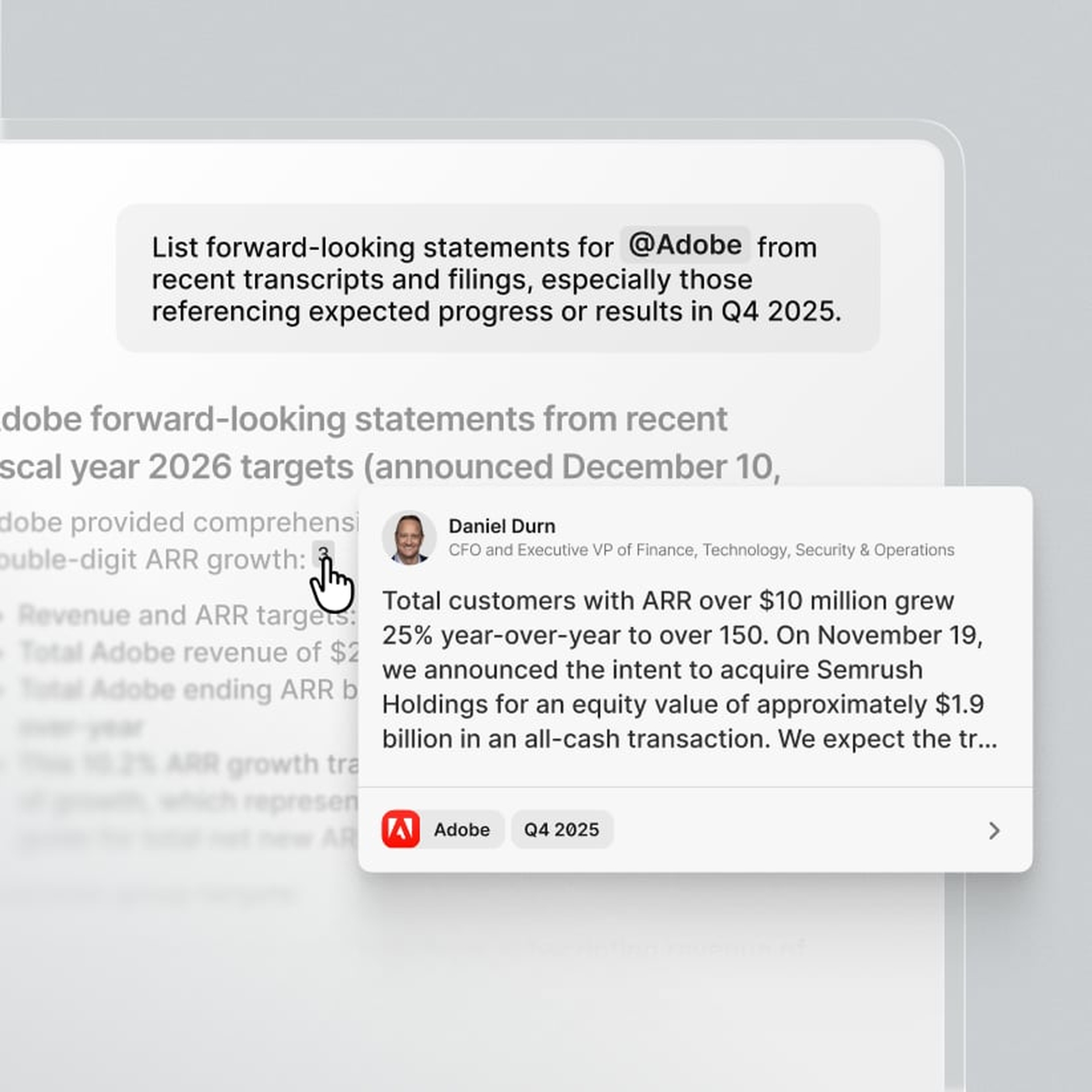
AI chat
Automations


Live audio & transcripts

Quartr's AI stands out because it only pulls clean, first-party data from public companies. In investing, that's everything.
Jamie Ross
Investment Manager, GAM Investments
Research that used to take hours now takes seconds with Quartr Pro. Tracking shifts in tone or extracting tables, it's as simple as typing a query.
Tom O'Hara
Investment Director
Before Quartr we spent hours manually compiling insights through the peer earnings cycle. Now, these tasks are done faster, with greater precision.
Gregg Lampf
VP of Investor Relations
Being able to ask specific questions across years of transcripts and reports and instantly get verified answers is a game-changer.
Pontus Dackmo
CEO & Investment Manager