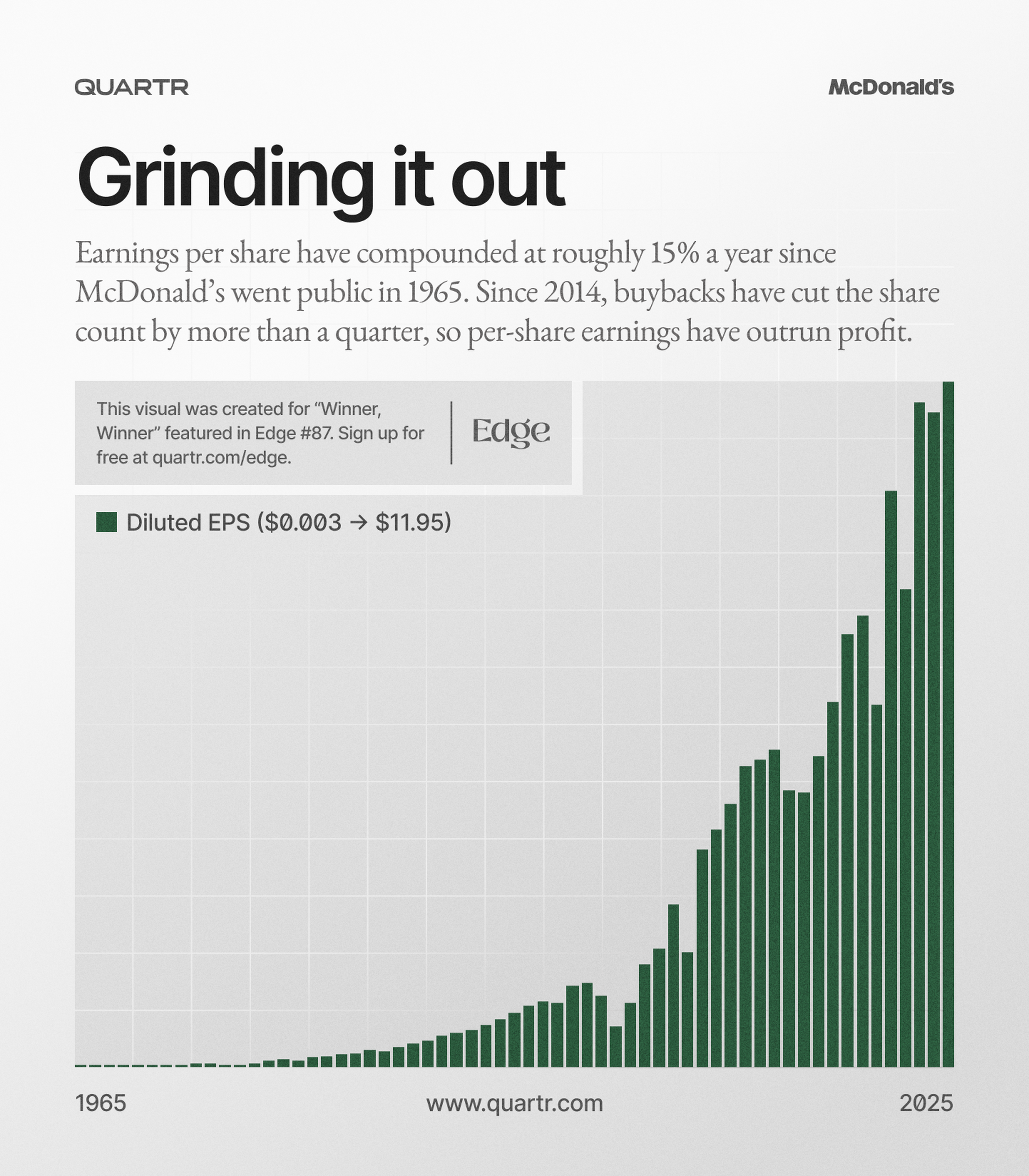

Edge16 Oct 2026
Winner, Winner: The Chicken McNugget Story
How a 1940s breeding contest, a Cornell food scientist, and a hedge by Ray Dalio helped McDonald's turn the Chicken McNugget into a fast-food icon.

Molecular-discovery platform serves life sciences and a growing materials-science market; software licensing is the primary monetization model, alongside early-stage therapeutics, collaborations and NewCos.
Product development extends beyond small-molecule discovery into formulations and biologics, with continued platform advances and AI capabilities.
Physics-based simulation generates data to supplement limited experimental data for AI models; internal GPU capacity supports 30,000–40,000 accurate binding-affinity calculations daily for internal programs.
Accuracy, 30 years of development, more than $1 billion invested in the platform, and feedback from a 200-person therapeutics team were cited as competitive advantages.
Bunsen, an AI agent for running discovery workflows, had internal working versions more than a year ago; scientists validated it by Q4 last year, and it is currently in beta.
Bunsen aims to expand calculation throughput and make workflows more accessible; it can guide users, flag potential errors and support less experienced scientists, while still requiring expert oversight.
A typical pharma workflow could screen far more candidate molecules before selecting a smaller set for synthesis, potentially improving success probability and speeding discovery decisions.
Bunsen sessions can scale a computational chemist’s work across multiple concurrent tasks; results and experimental data can feed into LiveDesign to inform molecule selection.
Materials-science adoption is an opportunity: Bunsen could help individual users follow best practices and shorten service-led onboarding into software sales.
Licensing is based on software instances and calculation throughput, not user seats; greater Bunsen usage is expected to drive demand for more licenses.
ACV is expected to increase 12%–17% this year from $198 million; growth spans top-20 pharma, other life-science and materials customers, new products and new customers.
Large pharma represents roughly half of commercial business; better biotech funding conditions also supported growth.
Bunsen has contributed to license growth while in beta; customers are evaluating it and completing security reviews, with further license-package uptake expected as adoption develops.
Predictive Tox had profiled 80 off-targets; further profiling is needed to increase customer utility, while Bunsen and other products continue to evolve.

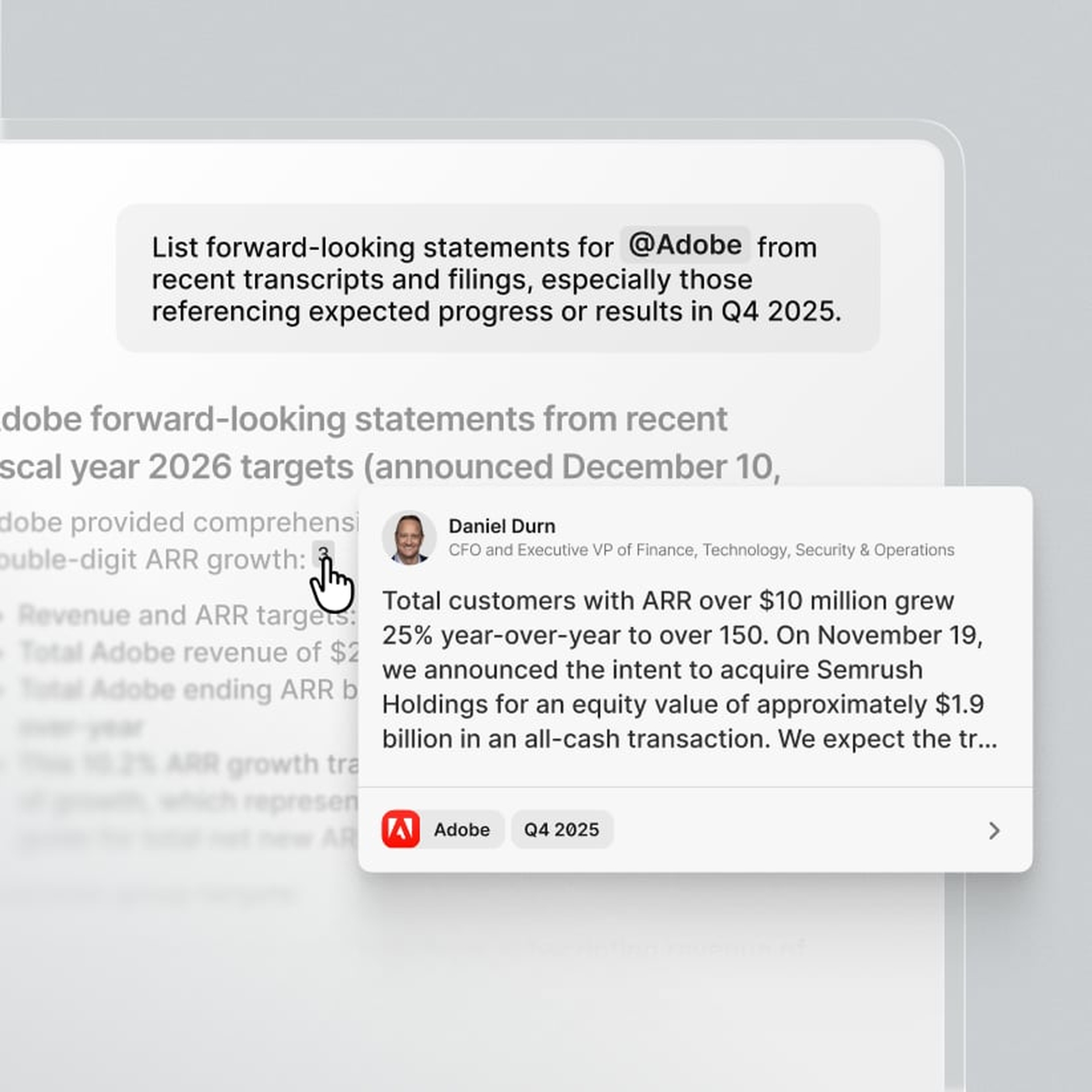
AI chat
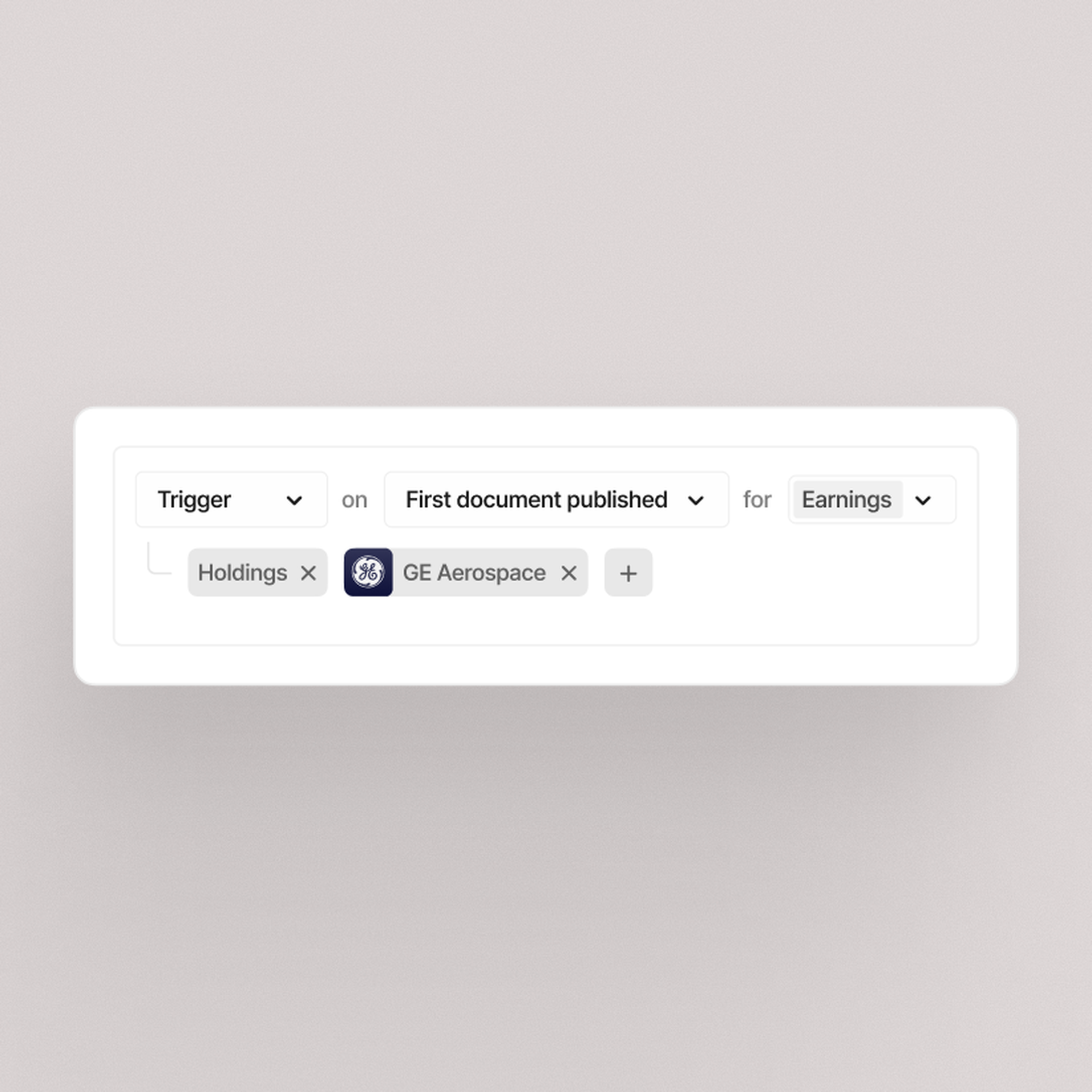
Automations

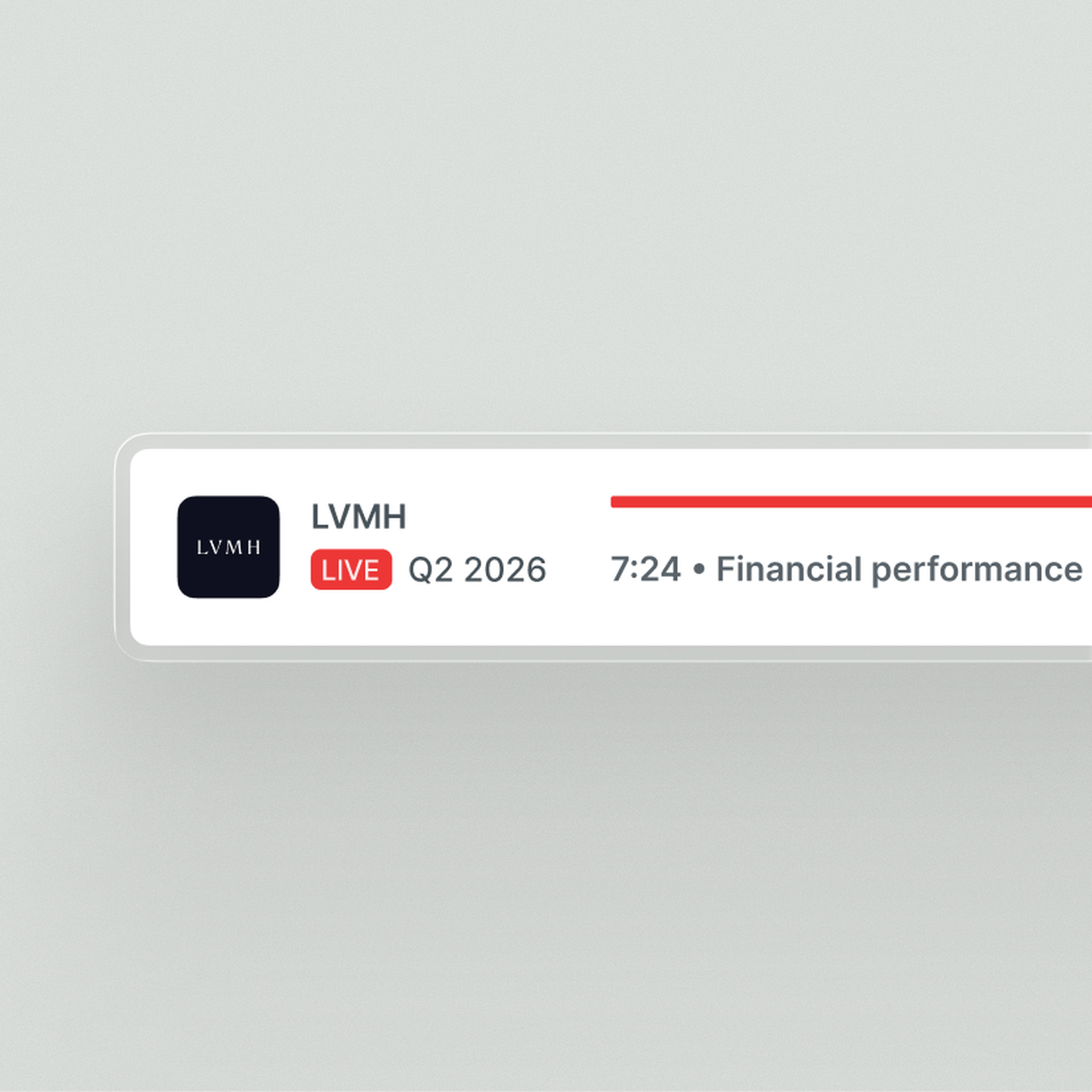
Live audio & transcripts

Quartr's AI stands out because it only pulls clean, first-party data from public companies. In investing, that's everything.
Jamie Ross
Investment Manager, GAM Investments
Research that used to take hours now takes seconds with Quartr Pro. Tracking shifts in tone or extracting tables, it's as simple as typing a query.
Tom O'Hara
Investment Director
Before Quartr we spent hours manually compiling insights through the peer earnings cycle. Now, these tasks are done faster, with greater precision.
Gregg Lampf
VP of Investor Relations
Being able to ask specific questions across years of transcripts and reports and instantly get verified answers is a game-changer.
Pontus Dackmo
CEO & Investment Manager