)
)
)
)
)
Business philosophy20 May 2026
McDonald's CEO: Chris Kempczinski
Chris Kempczinski rose from consumer brands to McDonald's CEO, leading the company through disruption and renewed growth.
In March 1980, McDonald's put a new item on the menu at 15 restaurants in Knoxville. Within weeks, Chicken McNuggets made up 20% of sales at those stores, and within 100 days its supplier had built another plant to keep up with demand. The success looked instant, but refining the process had taken years, and the full story, from chicken to Chicken McNugget, spans three decades.
Long before they were dipped in sauce, included in Happy Meals, and copied by fast-food chains around the world, there was simply chicken. That chicken was cooked whole, or cut up and prepared piece by piece, and it had nothing to do with McDonald's. That chicken was also much smaller than the chicken we now buy at supermarkets. We begin this story with that chicken, at a time when it was changing.
Although the American mainland was spared from attack during WWII, food rationing and shortages of goods were a constant on the U.S. home front. One of the goods in short supply was red meat, and in the search for protein-rich alternatives, people naturally turned to chicken.
Eggs had been a staple ingredient in American kitchens for centuries, and the priority in breeding had been refining egg production, with chicken meat more of a byproduct. But as the circumstances of the war led to increased chicken consumption, and with the rise expected to last into peacetime, the food industry sensed that the growth would be hard to sustain.
That is, if a chicken remained what it had always been. Soon enough, the leading U.S. grocery retailer at the time, A&P, in partnership with the U.S. Department of Agriculture, launched a contest called the Chicken of Tomorrow, meant to encourage the development of broiler chicken breeds with more meat.
The contest began in 1946 at state level, moved to regional level in 1947, and went nationwide by 1948. In March that year, 40 finalist farmers and breeders brought their eggs to be hatched, birds to be marked, and then raised under identical conditions. After a 12-week growing period, roughly 16,000 birds were shipped to the processing plant. There, earlier notations on hatchability, mortality, and diseases were logged alongside post-mortem data such as edible meat yield, weight, and meat characteristics.
The result was presented on June 24, 1948, at the University of Delaware's Agricultural Experiment Station in Georgetown, where 50 birds from each breeder were displayed and judged on the aforementioned factors. The top prize went to Charles Vantress, a California breeder who had crossed the New Hampshire with a California strain of Cornish.
In hindsight, the name Chicken of Tomorrow lived up to its promise: the winning line went on to supply the genetics behind most of the broilers raised today, and is the main ingredient of this story.
Ray Kroc was neither the original founder nor a McDonald by name. But in every sense, it was he who set McDonald's on the path to success. The first McDonald's restaurant opened in 1940 and bore the surname of its owners and operators, Richard and Maurice, better known as Dick and Mac McDonald.
While burger joints in 1940s America were nothing new, the two brothers' restaurant in San Bernardino, California, was different. The quality and price of the food, the speed of service, the cleanliness of the kitchen – everything was done to exceptionally high standards.
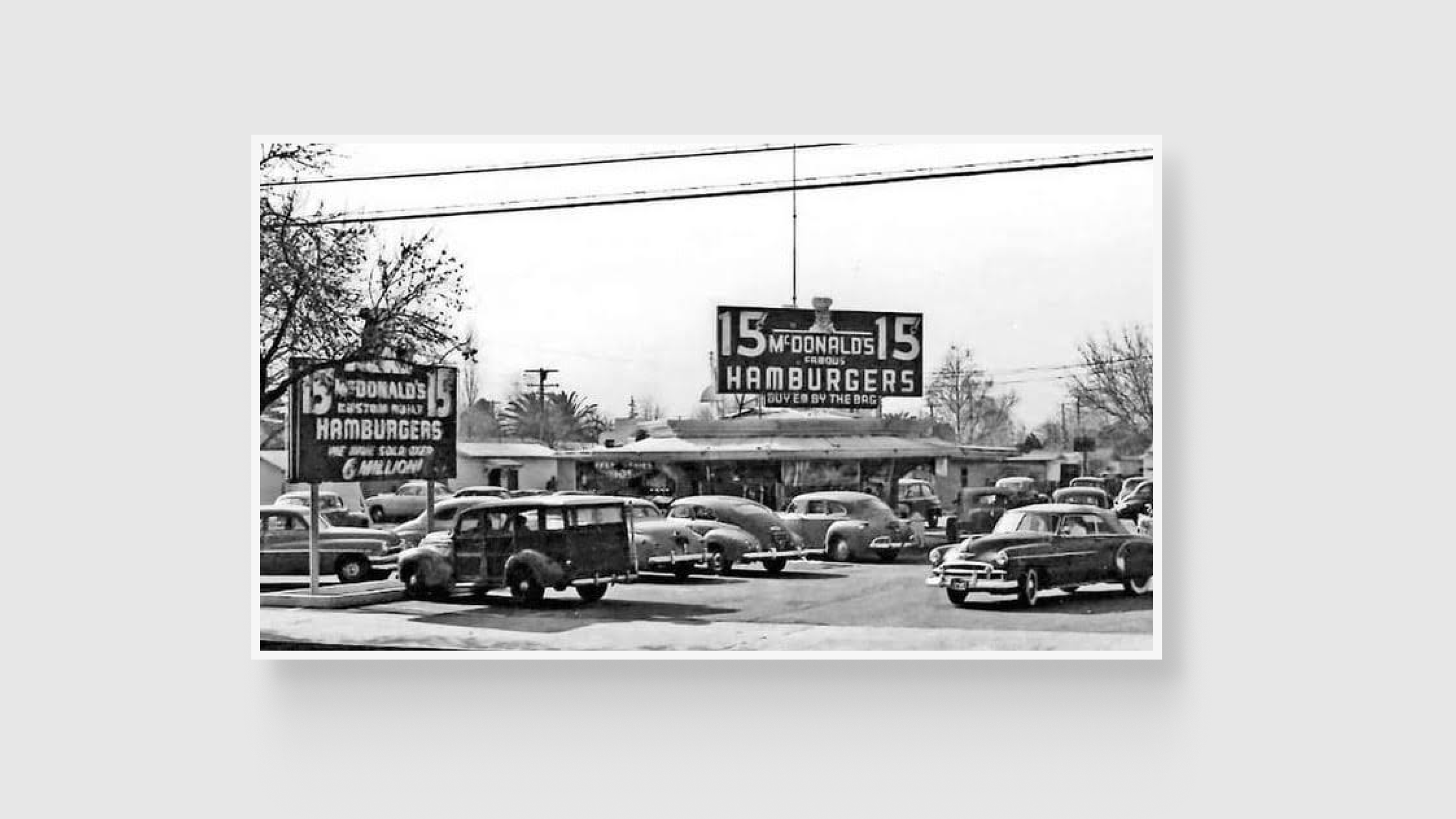
The regional success of the burger restaurant had long drawn copycats across the state and regular offers from restaurateurs wanting to go into business with the brothers. As a matter of fact, the pair had tried to expand beyond the original restaurant, but only to a few licensed locations and a handful of newly franchised ones.
With no clear framework or oversight, operators who lacked commitment and skill slipped through an inefficient vetting process. Consequently, the restaurants were far from uniform, and the expansion failed. In truth, these had been halfhearted attempts, with nowhere near the discipline needed to apply the blueprint that had made the first restaurant unique.
It may sound like a cliché, but they didn't want it bad enough, simply because they were content with how things were. Both were around 50 years of age, had the financial success they'd always dreamed of, and, in their own words, didn't want to "be on the road all the time, in motels, looking for locations, finding managers."
The brothers and everyone else who had been at the San Bernardino restaurant knew that they were onto something special, but Dick and Mac just didn't have the ambition to replicate the success. If it was going to happen, someone else would have to do it.
That someone had been part of the restaurant's operations for a couple of years, though only through its equipment. Ray Kroc sold milkshake machines across the U.S., and one of his best customer accounts was a single restaurant in San Bernardino. In 1954, he visited the restaurant for the first time to understand how it could post such strong numbers. After observing the lunch service and speaking with repeat customers, he understood why that was the case. This was clearly no ordinary hamburger joint.
Then he learned that the brothers had failed in their attempts at franchising and were now looking for a new agent. Sensing an opening, he asked: "What about me?"
Kroc was also in his fifties, but he certainly didn't lack ambition, and he immediately saw how well McDonald's would lend itself to franchising. His years on the road in sales had taken him across the country, and he knew there were endless locations where the concept would succeed.
At the time, the U.S. lacked a nationwide fast-food burger chain. Ray Kroc envisioned McDonald's as the first.
The McDonald brothers accepted Kroc's offer, naming him their exclusive franchising agent nationwide in exchange for a percentage fee split. On March 2, 1955, Kroc founded McDonald's System, Inc. By then, he had turned 52 and had spent much of his career as a salesman in the food service industry, first selling paper cups and then the milkshake machines that had led him to McDonald's. Franchising was new to him, but he was confident he had the work ethic and industry knowledge to figure it out as he went along.
Kroc wasted no time and opened his own restaurant just six weeks later, in Des Plaines, Illinois, outside Chicago. The restaurant made him franchisee number one and gave him a working demonstration of precisely how a McDonald's should run, right down to the equipment layout. Every operator who signed on afterward would be trained using the Des Plaines store as the standard.
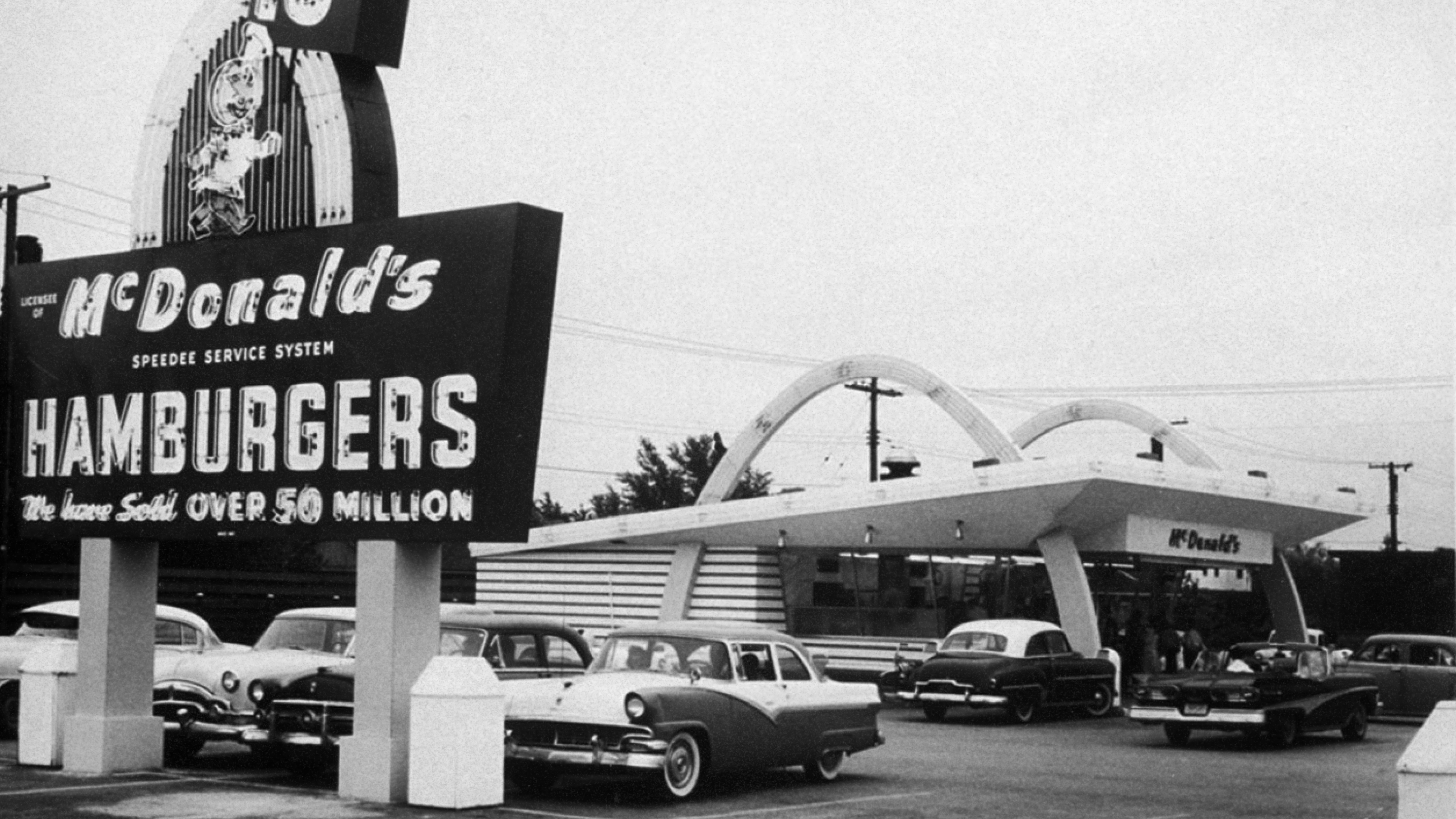
One of the first people to work in that store was a 23-year-old named Fred Turner, who started at the counter and soon became assistant manager at a newly opened location. Within a year, he moved up to lead franchisee training, and when Kroc stepped down decades later, Turner was the one to pick up the reins. He would spend the rest of his career at the company and play a foundational role in the story of the McNugget.
Importantly, the Des Plaines operations followed the brothers' original format, with operational refinements by Kroc to improve standardization as the company began to scale. Recreating the success in California, something the brothers had tried and failed, would become the core of Kroc's legacy.
Perfection is very difficult to achieve, and perfection is what I wanted in McDonald's. Everything else was secondary for me.— Ray Kroc
The key to that accomplishment was the supplier and distribution system. The single restaurant in San Bernardino only ever had to satisfy the people who walked through its door that day, whereas a chain aiming for hundreds or thousands of locations needed something else entirely: suppliers guaranteeing that shipments arrived consistently in every state, with every item tasting, weighing, and cooking to the same specification.
In the 1960s, McDonald's was still building out its supplier network and had yet to consolidate it into one distribution system. Each store in its U.S. network could expect up to 25 deliveries a week. Meat five days a week, buns three times, ketchup in a delivery of its own, and the rest of the menu's ingredients on individual schedules.
For franchisees, that schedule was a logistical nightmare and an inventory burden that grew worse with every restaurant the chain opened. Kroc knew the system had to become more efficient, and that quality standards had to hold across the network.
It would take nearly two decades of constant challenges and gradual improvements, but through centralized supplier arrangements, McDonald's eventually concentrated distribution until every store received only three deliveries a week. As a result, each new opening plugged into a predefined system that began with the ingredients and carried through to an operational framework for running the restaurant. No matter who ran the store, it would hold the McDonald's standard that customers had come to expect.
That system became the McDonald's model underneath everything customers saw. The restaurant count rising into the hundreds, then the thousands, depended on a supply network keeping the same pace behind the scenes. For the suppliers willing to take it on, working with McDonald's meant tying their own growth to the chain and rebuilding their operations around a consistency and scale their businesses had never seen.
Under the 1955 agreement, Kroc's McDonald's System, Inc. earned a service fee on franchisees' sales, part of which went to Dick and Mac. The split looked fair on paper, but Kroc's share barely covered the costs of running the franchising operation. And while the aforementioned operational framework consistently grew the sales behind those shares, a real estate model on top of the restaurant business offered a way to earn more from that expansion. As early as 1956, McDonald's began taking long-term leases or mortgages on the land and buildings under its restaurants and subleasing them to franchisees, collecting rent at a markup on top of a percentage of sales.
Over the decades that followed, that evolved into the reason McDonald's is still described, half-jokingly, as a real estate company that sells burgers on the side. In 2025, rent accounted for $10.4 billion of the company's $16.5 billion in revenue from franchised restaurants, well ahead of the $6 billion collected in sales royalties. The company owns roughly 56% of the land and 80% of the buildings across its markets.
With the real estate strategy at work, McDonald's bought out the brothers in 1961 for $2.7 million. The company Kroc had founded as McDonald's System, Inc. had by then taken the name it still carries today: McDonald's Corporation.
After the buyout and a public listing in 1965, the company accelerated through the 1960s, growing to thousands of U.S. locations and into more than a dozen countries. The menu grew too, with the introduction of now-classic items like the Filet-O-Fish and the Big Mac. Into the 1970s, nothing seemed able to slow it down.
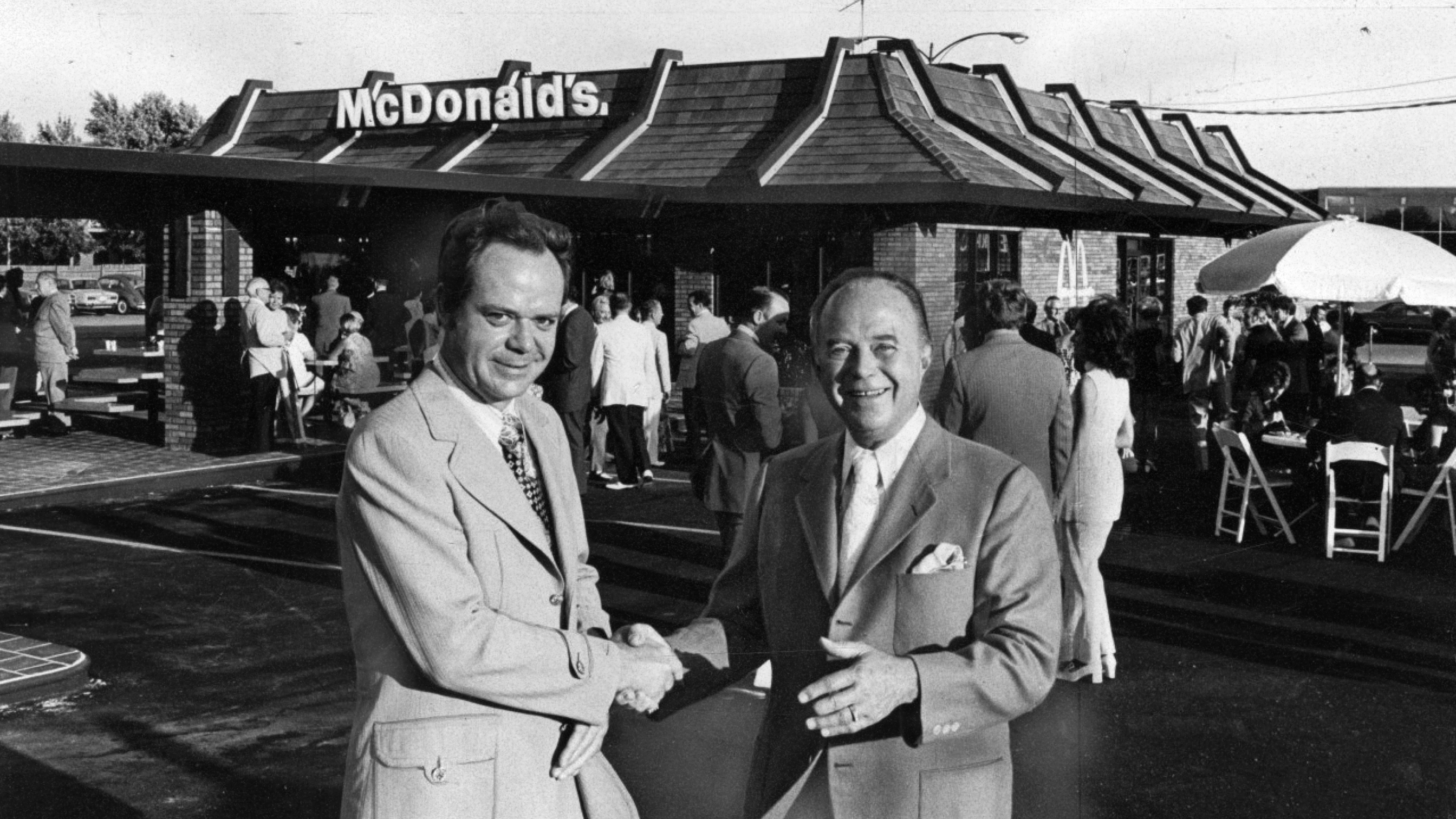
Red meat was the main ingredient of McDonald's expansion. Beyond the chain's burgers, industrial-scale production had filled store aisles nationwide with beef and pork in a seemingly endless range of processed forms. Chicken, the main ingredient of this story, had yet to begin that journey, and was still sold unprocessed. What shoppers brought home was essentially what had left the farm.
The Chicken of Tomorrow contest had, by all accounts, been a success, but the bigger broilers it produced were, ironically, turning into a problem. By the mid-1950s, U.S. farms were producing more than a billion broilers a year, and supply quickly outran appetite. Poultry prices collapsed, and the industry entered what would later be called the Broiler Depression.
While McDonald's was spreading to every other street corner in the country, a food scientist at Cornell University named Robert Baker saw an opportunity in the depression. He had long followed developments in the struggling poultry industry and was confident that chicken could be processed and industrialized like any other meat. Together with student Joseph Marshall, he set out to solve the core problems.
Experiment after experiment followed, until they found a way to hold ground chicken together without the skin and to make a batter that survived both the freezer and the fryer. During the early 1960s, their Cornell lab produced a wide catalog of poultry and egg products, trying different formulations as they went along.
One of those recipes would prove consequential: Chicken Sticks, created in April 1963 and published in a bulletin for anyone to read. Baker never patented any of it, but instead announced that he would gladly share the full method, equipment list, sanitary requirements, even an estimated production cost, with any food service company that replied. Cornell even mailed it to hundreds of poultry companies, hoping to inspire a new era of chicken products.
Within a few years, nugget-shaped chicken in the spirit of Baker's Chicken Sticks began appearing in select retail markets and newspaper recipe columns, then on restaurant menus. Chicken had found its way into convenience cooking, but appetite grew slowly, and the fast-food chains were still years from adopting it.
)
By the mid-1970s, everything was still looking up for McDonald's, with a growing network of more than 3,000 restaurants. In the two decades since the first franchised restaurant opened in Des Plaines in 1955, the company had expanded and sold hamburgers at a pace no one had thought manageable.
Ray Kroc's Golden Arches had become a source of national pride, as much a symbol of the United States as Marlboro, Levi's, Coca-Cola, Elvis, or Hollywood. On the home front, Americans were beginning to see McDonald's as a natural part of their cities and daily lives, and abroad, people traveled across countries to visit one for the first time.
The same narrow, standardized formula that had driven that rise was also its greatest exposure. McDonald's small menu was built almost entirely around beef, which left it with no answer if the country's appetite ever turned against red meat.
Until this point, there had been little reason to worry, but by the late 1970s there was. A slow accumulation of research and medical guidance had long tied diets heavy in red meat to heart disease, and by 1977 it had hardened into dietary goals from the U.S. Senate's nutrition committee: eat less red meat, more poultry and fish.
"Eat less red meat" was unwelcome news for a chain built on beef. The Filet-O-Fish had been on the menu for more than a decade, and McDonald's had never been shy about experimenting and introducing new items. Yet most of the innovations, such as the Big Mac, the Quarter Pounder, and the Egg McMuffin, still contained the very thing Americans had been advised to eat less of. It would be a slight overstatement to call this period a crisis, but McDonald's surely felt a pressing need to look beyond beef.
A deliberate step had already come in 1976, when McDonald's hired its first executive chef to lead product development. Rene Arend arrived after a career at some of the top restaurants in Europe and the U.S., most recently serving Ray Kroc and Fred Turner at the Whitehall Club, a luxury hotel in Chicago, where both were regulars. On numerous occasions in the early 1970s, the duo had tried to recruit him, and each time Arend gave the same answer:
"Ray, what can I possibly do for you? I am a chef, not a hamburger man."
To Kroc, that was exactly the point. The founder believed growth could only continue if McDonald's improved its products and broadened its menu, with less reliance on hamburgers. He also sensed that Arend could bring new perspectives, the kind that those in the industry, stuck on their well-worn tracks, could not offer. "The results will be culinary art in fast-food form," Kroc predicted in his autobiography, Grinding It Out (1977).
Arend instantly began experimenting with ingredients beyond red meat, and, following consumer trends, he put much of the effort into chicken. A chicken pot pie came first and failed quickly. Fried chicken in larger pieces came next, but a certain Kentucky-named company dominated that market, and McDonald's attempts to take a share of it went nowhere.
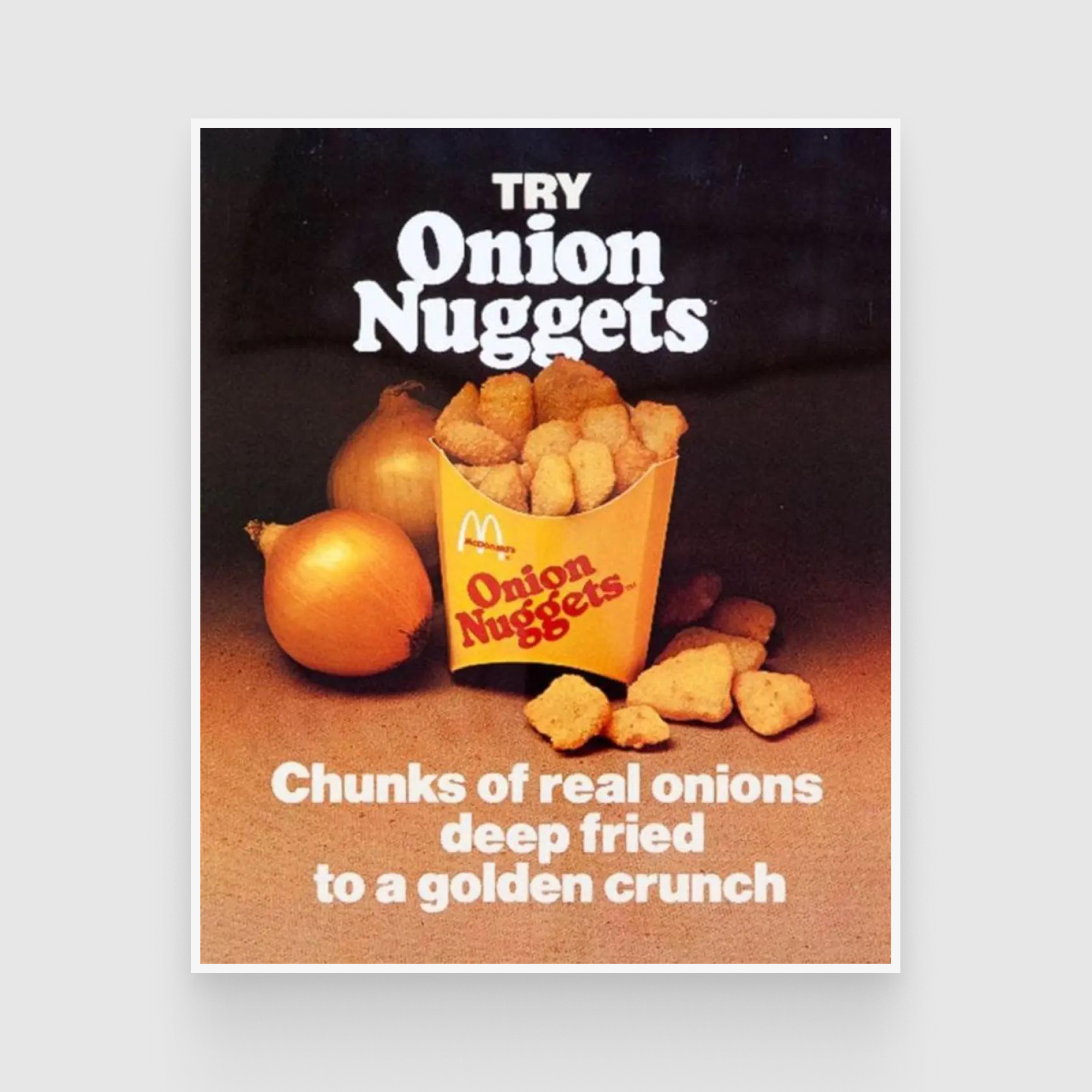
The chef also developed an onion nugget on Kroc's recommendation – McDonald's own take on the onion ring. The onion nugget met its fate in regional testing, where it fell short of expectations mainly because onions proved difficult to supply in large quantities at consistent quality.
When Arend sat down one morning with then-CEO Fred Turner to take stock of the experiments, the next idea came from Turner himself:
"But, Rene, why not try chicken nuggets instead?"
Arend went straight to work and, within a couple of hours, had Turner tasting fried, bite-sized chunks of chicken. Turner loved them and was sure from the first bite that they would be a success, one McDonald's should pursue all the way to the menu. He also understood that taking the nugget from a test kitchen to thousands of restaurants would take more than a good recipe.
First of all, would it work on a McDonald's menu, or in the company's own words, could it be "McDonaldized?" The answer to that was yes; they knew they needed something exactly like this. Secondly, could it scale across supply, pricing, and process? Supply looked simple, since the raw ingredient was readily available. Pricing looked like a problem for later. In the short term, the process was the greater test.
To take on the challenges, Turner turned to the expertise inside McDonald's supplier network. His pick to lead the so-called "Chicken McNugget SWAT team" was Bud Sweeney of Gorton's, which had been key to developing the Filet-O-Fish for the chain back in 1962.
Sweeney handpicked a few executives, and together with Arend they set about industrializing the idea. Gorton's breading and battering technology could solve the tempura coating, while for the more complex problems underneath they turned to Herb Lotman's Keystone Foods. Working exclusively for McDonald's, Keystone had spent decades developing and supplying the chain's beef patties, building out its distribution system, and refining the cryogenic freezing process that much of the operation now ran on. With the right expertise on the team, the real work could begin.
The question was how to turn a hand-cut test batch from Arend's kitchen into something a machine could repeat. After extensive experiments and testing of different solutions, they finally settled on a step-by-step procedure. Cutters manually deboned chicken and mixed it with the rest of the ingredients. An automated line using a modified beef patty machine then formed it into bite-sized pieces, and a golden coating inspired by Gorton's Filet-O-Fish finished the nugget.
The last two steps delivered the automation that would prove essential for industrializing the process. As with McDonald's beef patties, the nuggets were frozen at the plant and fried in the restaurants, another key to turning the morsels into fast food at scale.
While much of the SWAT team focused on refining the procedure, Arend turned to the necessary sauces. Long before fast food and prestigious Chicago hotels, the chef studied cooking in France and learned his trade in kitchens where sauces were the foundation of the cuisine. To Arend, the nugget needed more than ketchup or mayo, and after testing hundreds of combinations, he settled on four: barbecue, honey, hot mustard, and sweet-and-sour.
"We have a saying in France, 'La sauce c'est tout,' which means the sauce is everything. It enhances and diversifies the food. It adds the cook's personal touch to food." – Rene Arend
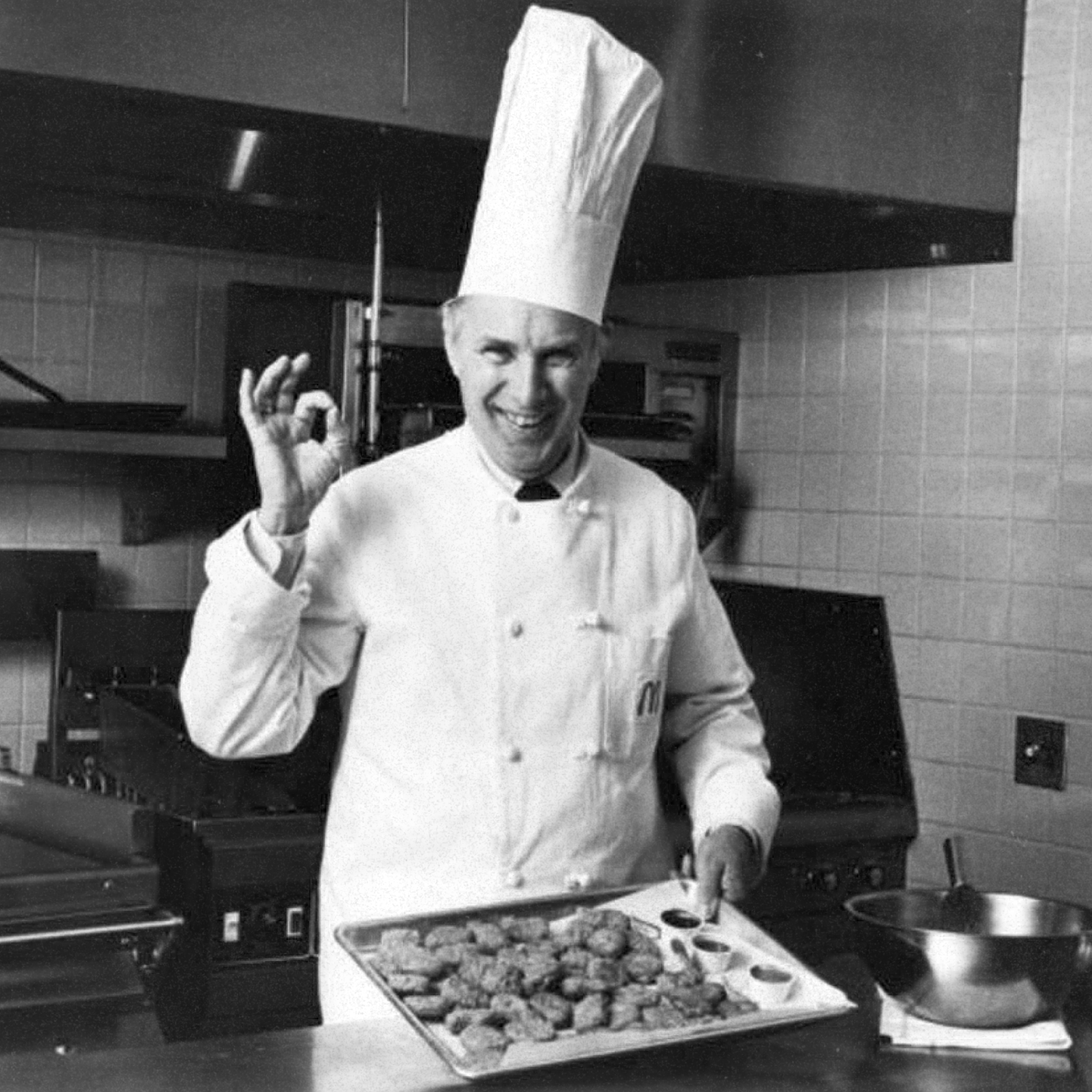
No recollection or attribution directly connects this process or recipe to Robert Baker, the Cornell food scientist. Still, the market McDonald's studied and eventually entered owed much to his experiments, just as the chicken itself owed its size to the Chicken of Tomorrow contest. Years after those breakthroughs, the nuggets coming off Keystone's lines were ready to take that groundwork to fast food's biggest stage.
Named Chicken McNugget, the golden bites were fully McDonaldized before entering a test market in March 1980. The test would run in the 15 Knoxville restaurants of franchisee Litton Cochran. McDonald's believed in its new product, but the results exceeded expectations from the start. Within weeks, McNuggets accounted for as much as 20% of sales across those stores, which was all the green light needed to continue rolling them out as fast as production allowed.
Word spread quickly among franchisees, with Keystone's plants running nonstop to supply as many restaurants as possible. The processing company built an additional plant in no more than 100 days, to be able to at least attempt to meet the demand. Through the early 1980s, the rollout advanced as fast as production could sustain. Every owner in the U.S. franchisee network wanted Chicken McNuggets on their menu, and all of them had to wait for supply to catch up.
The early success made it clear to both Keystone and McDonald's that a single producer would not be able to keep up as the rollout continued across its network. To bridge the gap, McDonald's struck a deal with Tyson Foods, and as was standard practice among McDonald's suppliers, Keystone handed its production secrets over to Tyson.
A few years later, Tyson returned the favor with a new breed of chicken, the "Mr. McDonald," which carried nearly twice as much meat as its predecessors and quickly became the chicken of choice for both suppliers. For a name that sounded permanent, Mr. McDonald wasn't the end of the line. Each generation of breeding, at Tyson and other suppliers, aimed to outdo the last on breast size and feed efficiency, and Mr. McDonald was no exception. What carried through was the ambition the Chicken of Tomorrow contest had set in motion decades earlier: keep improving the bird.
Committing to a nationwide launch was the next obvious step. By 1983, three years of test-market data had settled any question of whether its domestic customers wanted the McNugget. The open question was a different kind of risk, one that had nothing to do with taste.
"The McNuggets were so well received that every franchise wanted them. There wasn't a system to supply enough chicken." – Rene Arend
In 1983, McDonald's had roughly 6,000 restaurants in the U.S. Introducing McNuggets on every one of those menus would require hundreds of millions of nuggets, and millions of broilers further back in the supply chain.
Launching nationwide and tying demand to supply meant considerable exposure to volatility in the chicken market. Before committing to the menu, McDonald's wanted a fixed national price, which its chicken producers understandably wouldn't agree to, worried that their own feed costs might rise and squeeze them instead.
For beef, this kind of risk had a straightforward answer. Live cattle futures had traded on the Chicago Mercantile Exchange since 1964, a mature, liquid market by the early 1980s, and hedging beef costs was by then a fairly routine piece of corporate finance. However, there was not an adequate chicken market to hedge the risk with the McNugget, and attempts over the years to create one had never succeeded.
McDonald's solution came from a small, recently founded investment firm, Bridgewater, run by a then largely unknown Ray Dalio. With growing experience in hedging instruments, Dalio could look at the problem from both sides of the standoff, and spot what neither side had considered.
His insight was that a full-grown broiler was simply a small chick that had spent weeks eating corn and soybean meal. Therefore, the price of the chicken was just an extension of the price of its feed. And importantly, that feed had a liquid futures market. Dalio showed the company's chicken suppliers how to use corn and soybean meal futures to lock in their own costs years in advance, which let them offer McDonald's a fixed national chicken price in return.
Bridgewater, for its part, cites the episode as foundational work for the All Weather investment strategy it launched in 1996. For McDonald's, Dalio's contribution was the final piece of a puzzle that had taken years to assemble, and meant that the company could commit to the costs and launch the McNugget across American restaurants.
Before we turn to the domestic launch story, it's worth zooming in on the Chicken McNugget itself, and how a hand-shaped test batch in Arend's corporate kitchen became a repeatable industrial product.
Say the word McNugget to almost anyone and a shape comes to mind. To the untrained eye, the shapes look random, but there are only four of them. The company refers to them as the Ball, the Boot, the Bell, and the Bone (sometimes known as the Bow Tie), and they have remained unchanged for decades.
The meat is all white chicken, cut by hand from the breast, tenderloin, and rib meat, then coarsely ground by machine with a small amount of skin added back for flavor and juiciness. The grind is mixed with a seasoned marinade that helps the meat bind, then pressed into one of the four shapes. Each nugget is coated in a light tempura-style batter and partially fried at the plant, flash-frozen, and bagged before being shipped to distribution centers. Finally, at the restaurants, the nuggets go straight from the freezer into the fryer, where they are fully cooked in a few minutes and then boxed to order.
Doing this at McDonald's scale requires plants built for industrial speed: a single plant can work through well over a million chickens a week. Since the early days, Tyson has remained the core producer of McNuggets and grew further in 2018 when it acquired Keystone Foods, thereby significantly expanding its global footprint. The other major name is OSI Group, which has been tied to McDonald's supply chain for decades and operates plants across several regions.
Over the years, production at these suppliers has scaled dramatically and become far more efficient compared to the process developed by the SWAT team. Even so, order a box of Chicken McNuggets at your nearest McDonald's today, and you'll get essentially the same product that launched nationwide more than four decades ago.
Boxed by six, nine, or twenty, Chicken McNuggets reached every single one of McDonald's 6,000 domestic restaurants in 1983. With hindsight bias about the McNugget's status, it's easy to assume the nationwide launch was a formality, as if the test market's success was always going to repeat itself nationwide. A menu addition so unlike what McDonald's had focused on for roughly three decades could not safely be expected to catch on right away. But it did.
McDonald's placed great confidence in its new addition and launched it with a campaign that played on America's anticipation. "They're here!" announced that the wait was over, and one campaign after another followed, each showing that the McNugget belonged at the center of the menu and, by extension, of the company's next chapter of growth.
Within three years of going nationwide, McNuggets made up roughly 7.5% of McDonald's domestic sales. Around the same time, The New York Times reported that the company was using an estimated 1.5% of U.S. broiler production for its nuggets. While numbers like these are always difficult to put into perspective, they clearly show the scale of the demand.
KFC had long been, and still was, the main place to go for a fast-food chicken meal, but McDonald's soon became an option many came to prefer. In 1988, KFC added nuggets to its own menu, a sign of how seriously it took the new and unexpected competition from a burger chain. Burger King and Wendy's had already moved at that point, recognizing consumers' demand for the bites and introducing similar products around the mid-1980s.
In 1984, only a year after its U.S. release, the McNugget reached Canada, Japan, France, and Germany, with the U.K. and other European markets following in the years after. In each of them, the story was the same, with adoption immediate and lasting.
Needless to say, McNuggets weren't the only ingredient in McDonald's continued growth during the 1980s and into the 1990s. The golden, bite-sized pieces of chicken were only one part of the recipe for success created by Kroc, Turner, Arend, and the many suppliers and franchisees behind them.
McDonald's will never be everything to everyone. It will always be a place for burgers, but we want to see what else will fit in for the sake of variety.— Rene Arend
More than four decades on, the Chicken McNugget can only be described as a food icon. For McDonald's, however, that status stretches well beyond the nugget. Many of its other beloved innovations have been mentioned throughout this story, from the Big Mac and Filet-O-Fish to the Quarter Pounder and Egg McMuffin, and the list goes further with its Cheeseburger, the Fried Apple Pie, and the McFlurry, to name a few.
Looking back on some of these creations in Grinding It Out, Ray Kroc underlines the source of innovation:
"The most interesting thing to me about these items is that each evolved from an idea of one of our operators. So the company has benefited from the ingenuity of its small businessmen while they were being helped by the system's image and our cooperative advertising muscle. This, to my way of thinking, is the perfect example of capitalism in action. Competition was the catalyst for each of the new items."
The brothers' original restaurant in San Bernardino and Kroc's in Des Plaines were the blueprints for what every McDonald's aspired to become. Standardizing, replicating, and, above all, continuing to innovate on that concept is the only reason McDonald's now stands on street corners, highway exits, shopping malls, and airports, at more than 46,000 locations in over 100 countries.
)
Creating enduring menu items that can be reproduced at worldwide scale is the main driver of that success, and the Chicken McNugget might just be the best example. As you now know, it originated at headquarters, unlike the other items mentioned. Once developed, though, it relied on the same machinery as the rest, a system built to carry a good idea across the chain.
Over the decades, innovation at McDonald's has also reached well beyond the menu. The Egg McMuffin was part of an effort to extend sales hours into breakfast, an unconventional move at the time that proved hugely successful. The Happy Meal, the dedicated playground area, and Ronald McDonald made the chain a family favorite, offering a cheap meal and an activity for the kids in one stop.
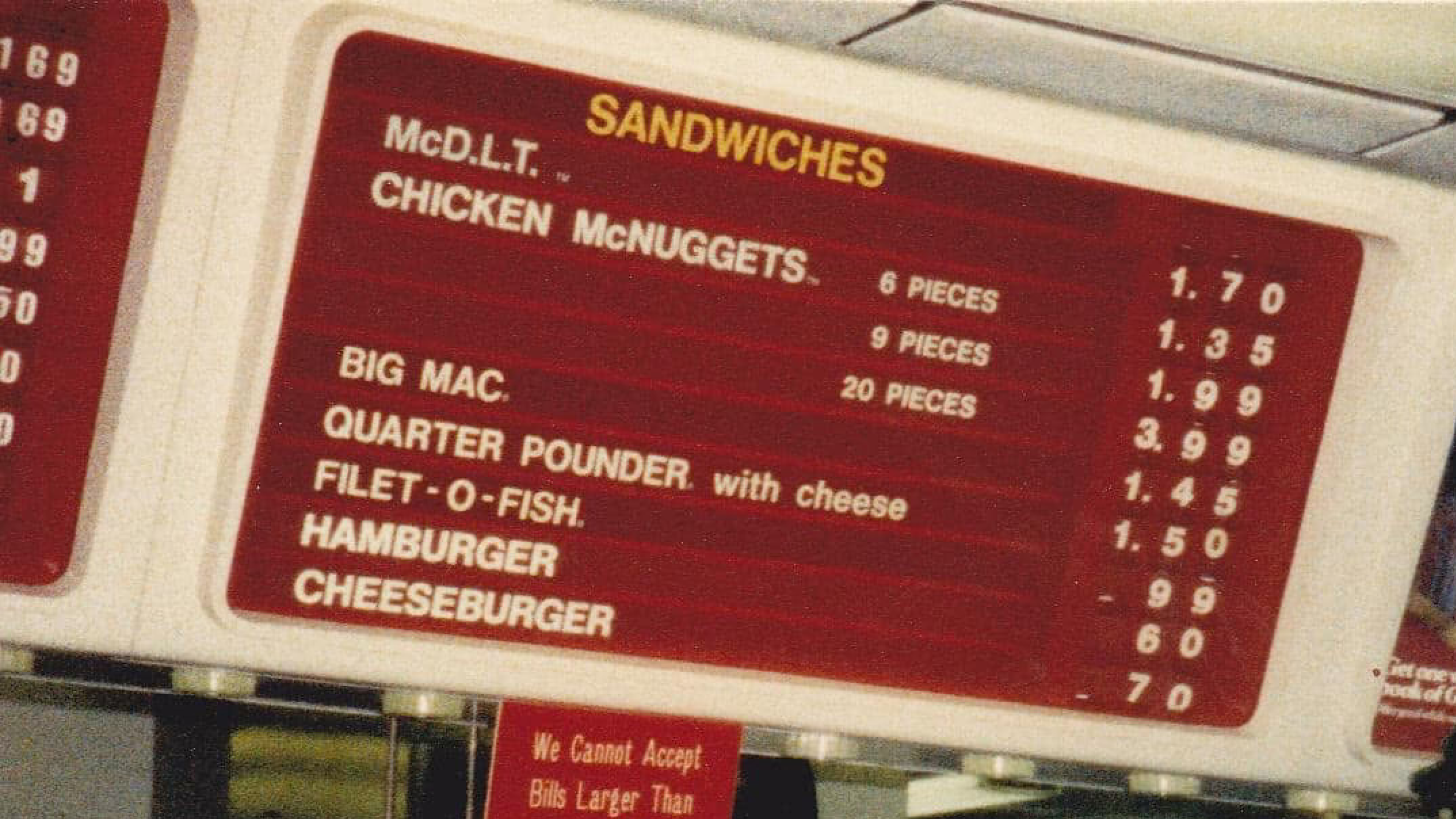
What these innovations share is that they were introduced several decades ago. McDonald's has innovated since, but the point here is how well these creations have lasted. Every day, more than 70 million people visit one of its restaurants, many of them for a menu item they have eaten hundreds of times before. Creating something with near-universal appeal that endures almost unchanged for decades and can be reproduced at tens of thousands of locations worldwide has to be McDonald's greatest success.
While Arend's original quartet of sauces has since grown into a lineup adapted to local tastes, the Chicken McNugget itself has stayed close to the product tested in Knoxville in March 1980. How little the original concept has changed shows how right McDonald's got it from the start. It's fair to call the McNugget one of the most popular items in fast-food history.
At its 2026 Investor Day, McDonald's said that Chicken McNuggets generate nearly $15 billion in annual system-wide sales, representing roughly 10% of the company's total. The 46-year-old product has also grown by almost 40% over the past five years. Expanding beyond beef might have seemed out of character at the time, but it clearly paid off.
)
In the beginning, there was simply chicken, and it took a long list of names to make it a McNugget. Seen conceptually, the invention took more than three decades, beginning with the Chicken of Tomorrow contest and carried forward by Robert Baker, Ray Kroc, Fred Turner, Rene Arend, SWAT team leader Bud Sweeney, Herb Lotman, and Ray Dalio, each taking it a step further. Tomorrow's chicken, it turned out, came with four sauces and has been on the menu ever since.
Chicken McNuggets will go on long after I am gone.— Rene Arend
Explore our platforms
Leading companies and financial institutions worldwide rely on Quartr to make better decisions faster.
Desktop
API
)
)
)