Edge16 Oct 2026
Winner, Winner: The Chicken McNugget Story
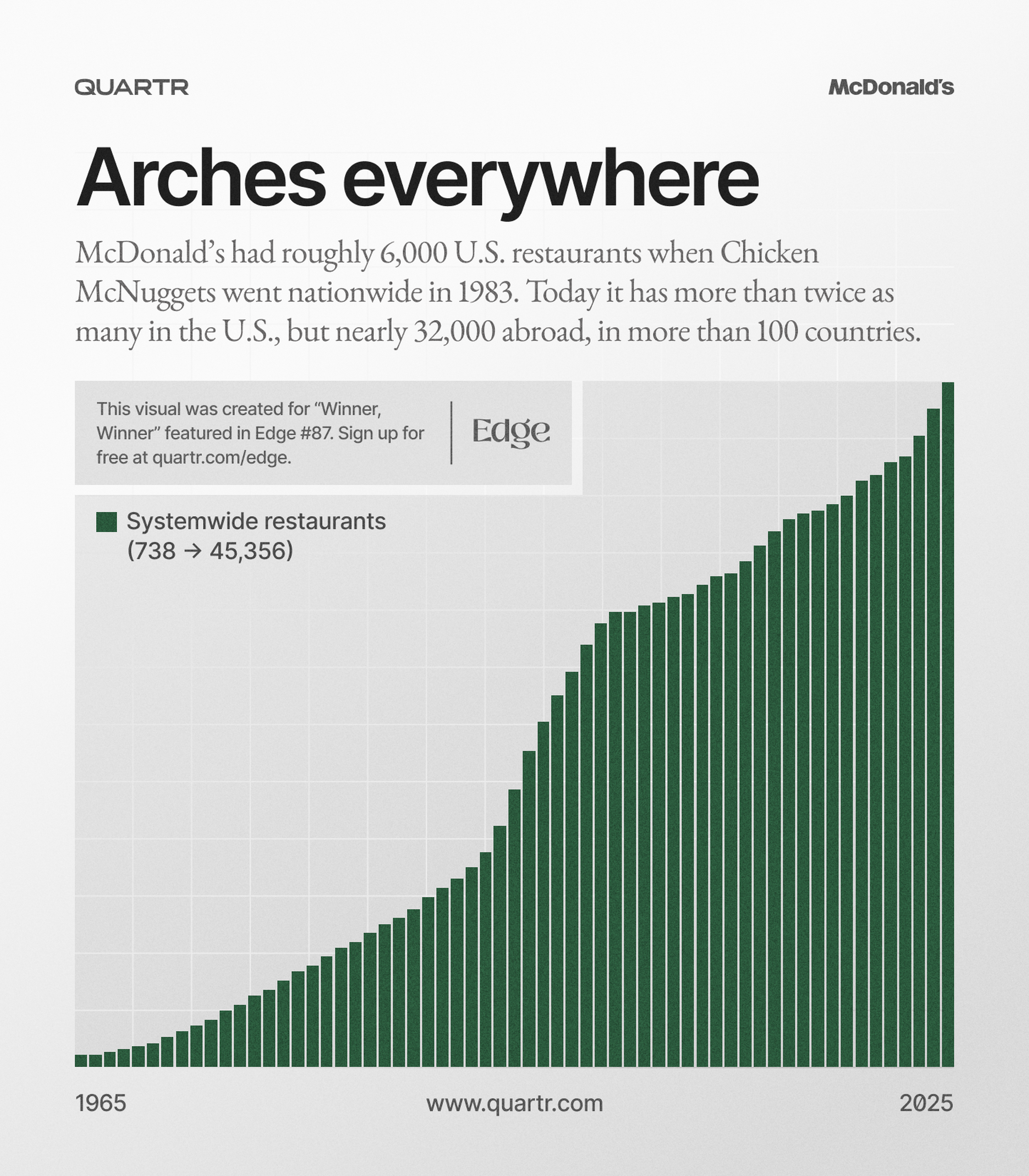
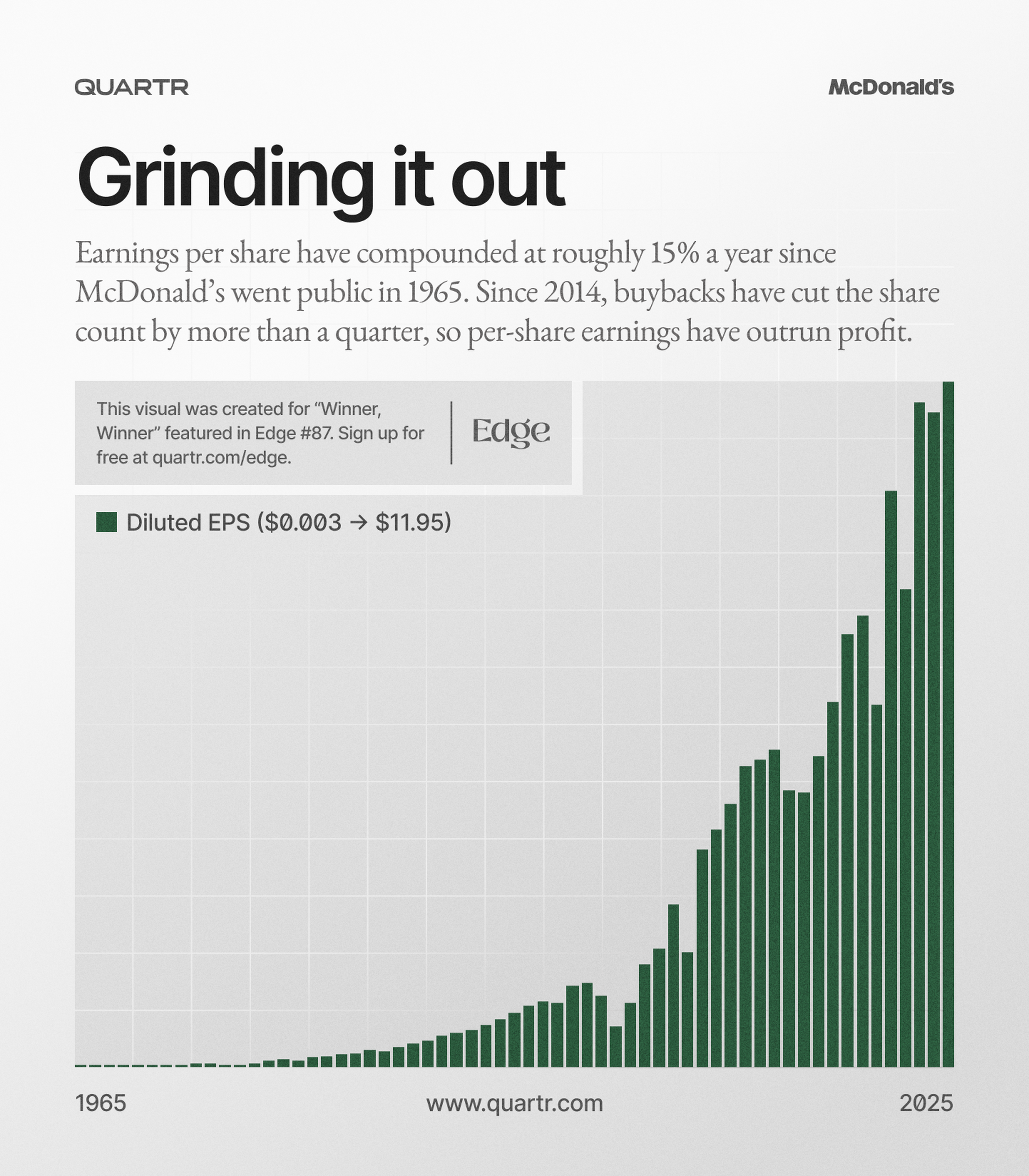
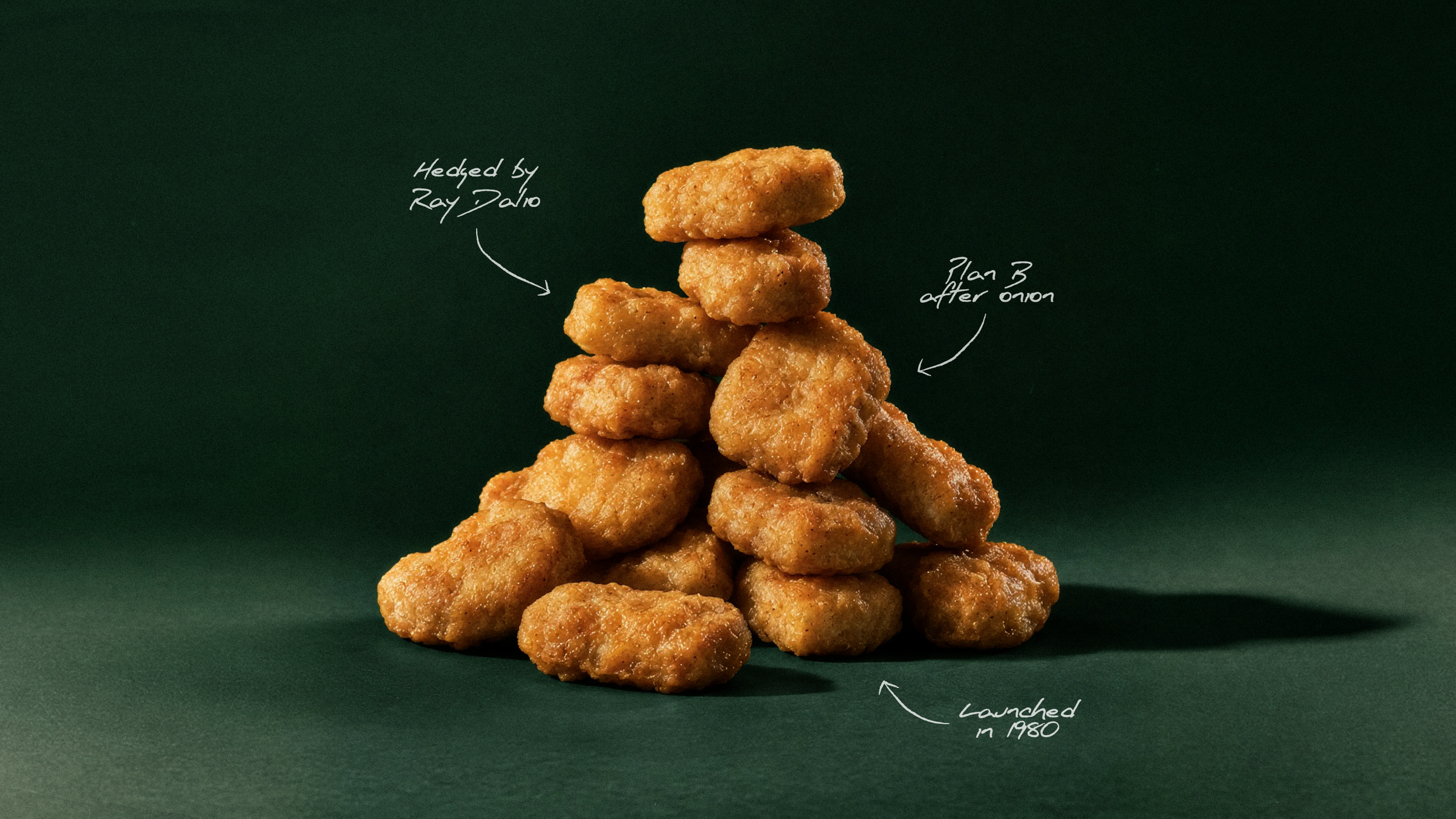
How a 1940s breeding contest, a Cornell food scientist, and a hedge by Ray Dalio helped McDonald's turn the Chicken McNugget into a fast-food icon.

Four security classes: ~$6.5B of senior convertible bonds, short-duration STRC, long-duration STRF/STRD/STRE/STRK, and MSTR common stock.
STRC is designed for investors seeking short-duration, high-yield digital credit; the other preferreds target longer holding periods, while MSTR offers Bitcoin exposure and equity upside.
Capital-structure figures cited: $4.9B in USD assets, $52.5B in Bitcoin reserves, ~$36B in US equity, ~$6.7B in convertible debt and $12.7B in preferred stock.
Credit issued against net reserves can create shareholder value when Bitcoin’s return exceeds the credit hurdle; the spread remaining after credit costs accrues to common shareholders.
Scale and credit liquidity support issuance; the balance sheet held over 850,000 Bitcoin, and the preferred securities were described as highly liquid.
Capital choices respond to Bitcoin, credit and equity market conditions; MSTR issuance, Bitcoin swaps, credit issuance or cash can be used when thresholds indicate accretion.
When STRC trades below par, exchanging MSTR for STRC can retire a liability, support liquidity, increase net reserves and net Bitcoin per share, and strengthen credit capacity.
When STRC trades above par and credit markets are strong, issuance can raise cash or buy Bitcoin, increasing amplification and potential equity upside; contracting markets prompt credit buybacks and reduced risk.
STRC was characterized as investment-grade digital credit, 5x over-collateralized, with a 12% dividend; the stated natural demand at that rate was estimated at $5B-$7.5B.
The ongoing buyback effort aims to stabilize STRC near $100 and prioritize liquidity, low volatility and credit quality over maximizing outstanding volume.
Net Bitcoin per share reflects reserves after liabilities and is used for near-term decisions; gross Bitcoin per share is a longer-term measure with simplifying assumptions, including assumed conversion of convertible debt.
Gross Bitcoin per share captures potential spread from Bitcoin returns over the credit hurdle, but its value depends on funding costs, credit terms, duration and Bitcoin performance.
The cited hurdle rate was ~10.5%; amplification is not static and depends on whether credit can be raised sustainably and at an acceptable cost.
Net Bitcoin per share accretion was presented as an immediate measure of shareholder accretion; gross Bitcoin per share can rise through borrowing while adding credit risk.
USD reserves were described as covering 3.4 years of cash needs, with ~40% of the balance sheet backed by dollars; financing and risk levels are adjusted continuously as markets change.

AI chat
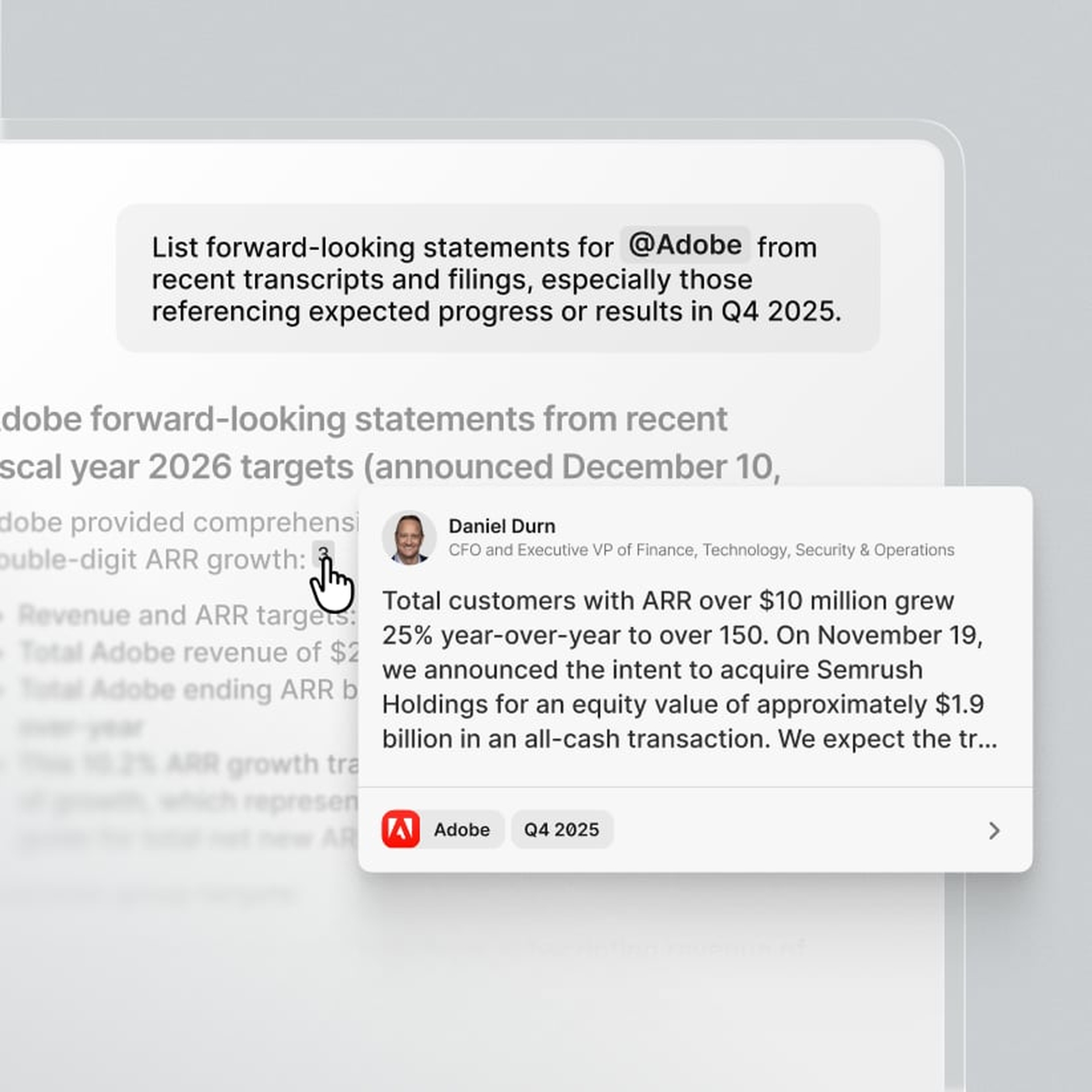
Automations


Live audio & transcripts

Quartr's AI stands out because it only pulls clean, first-party data from public companies. In investing, that's everything.
Jamie Ross
Investment Manager, GAM Investments
Research that used to take hours now takes seconds with Quartr Pro. Tracking shifts in tone or extracting tables, it's as simple as typing a query.
Tom O'Hara
Investment Director
Before Quartr we spent hours manually compiling insights through the peer earnings cycle. Now, these tasks are done faster, with greater precision.
Gregg Lampf
VP of Investor Relations
Being able to ask specific questions across years of transcripts and reports and instantly get verified answers is a game-changer.
Pontus Dackmo
CEO & Investment Manager