Edge16 Oct 2026
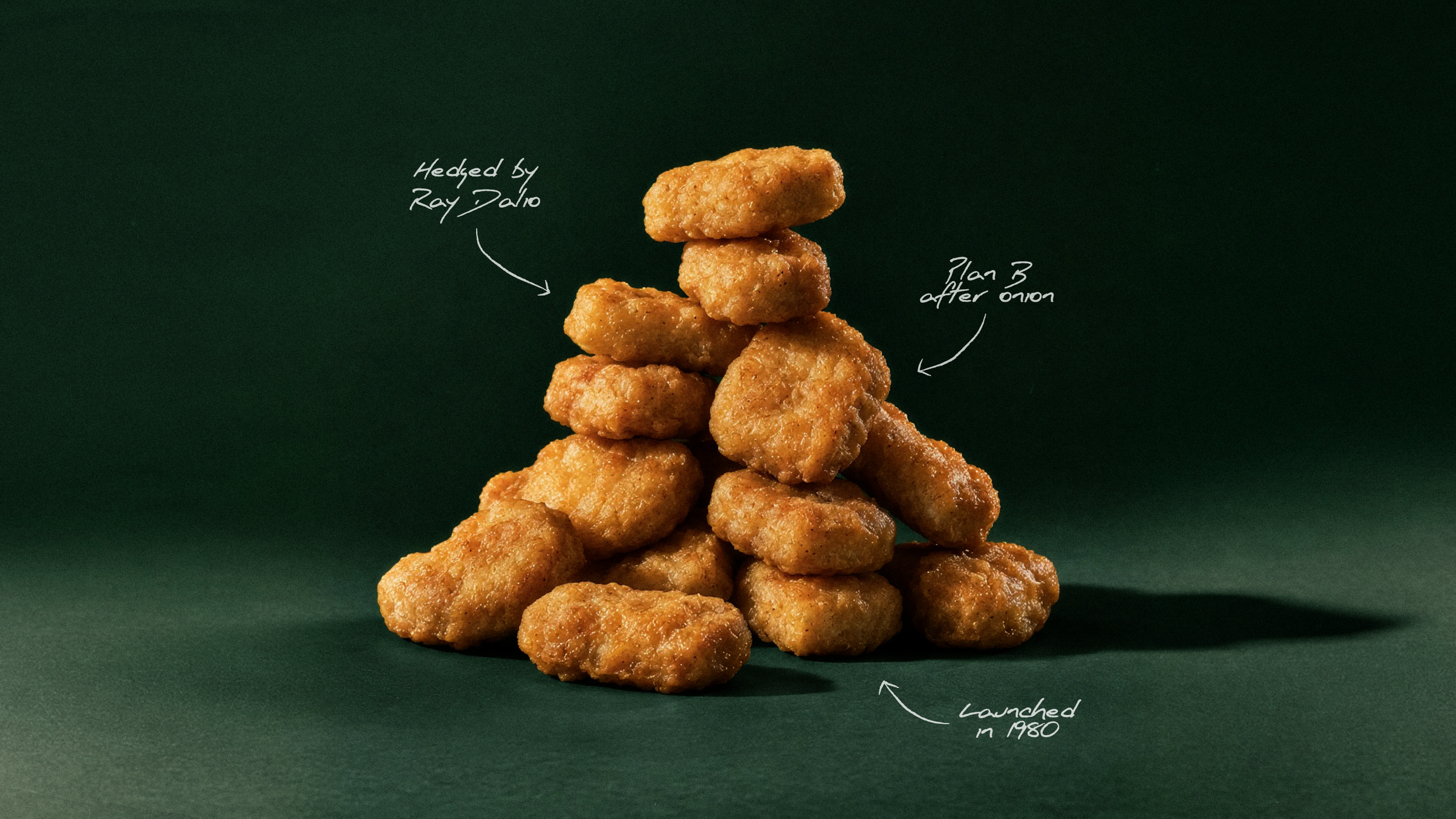
Winner, Winner: The Chicken McNugget Story
How a 1940s breeding contest, a Cornell food scientist, and a hedge by Ray Dalio helped McDonald's turn the Chicken McNugget into a fast-food icon.

Incoming CEO will prioritize operational excellence, growth, and brand innovation, leveraging recent business stabilization and a strong culture.
Emphasis on expanding branded and value-added products, aiming to become a house of brands.
Plans to invest in R&D, marketing, and customer engagement to drive growth and innovation.
Focus on organic growth for smaller brands, with increased resources allocated to develop them into billion-dollar brands.
International growth will concentrate on optimizing assets and expanding in Southeast Asia, especially Thailand and Malaysia.
Revised guidance driven by a $125 million reduction in the beef segment due to live cattle non-cash impairment, with a narrowed chicken range and a slight pork outlook reduction.
Chicken business shows resilience with value-added branded products up 3.8%, despite food service softness.
Pork profitability revised down due to lower cutout prices and animal flow disruptions, but lower input costs benefit Prepared Foods.
Prepared Foods segment has shifted to a more balanced seasonal split, supported by innovation, advertising, and joint business planning.
Investments in further processing and advertising are planned to support brand and value-added product growth.
Beef network optimized to three large-scale facilities in the cattle belt, focusing on efficiency and readiness for future cattle supply increases.
New chicken genetics are expected to improve operational performance, with 75% rollout by end of 2026.
Consumer trends show a search for value, with trade-ups to larger sizes and trade-downs to smaller packs; company aims to compete across value, mid, and premium tiers.
Commodity cost headwinds in beef and pork are managed through pricing and operational flexibility, with transportation costs passed through to customers.
Capital allocation remains disciplined, balancing investment, dividends, buybacks, and selective M&A, supported by a healthy balance sheet and 2x leverage.

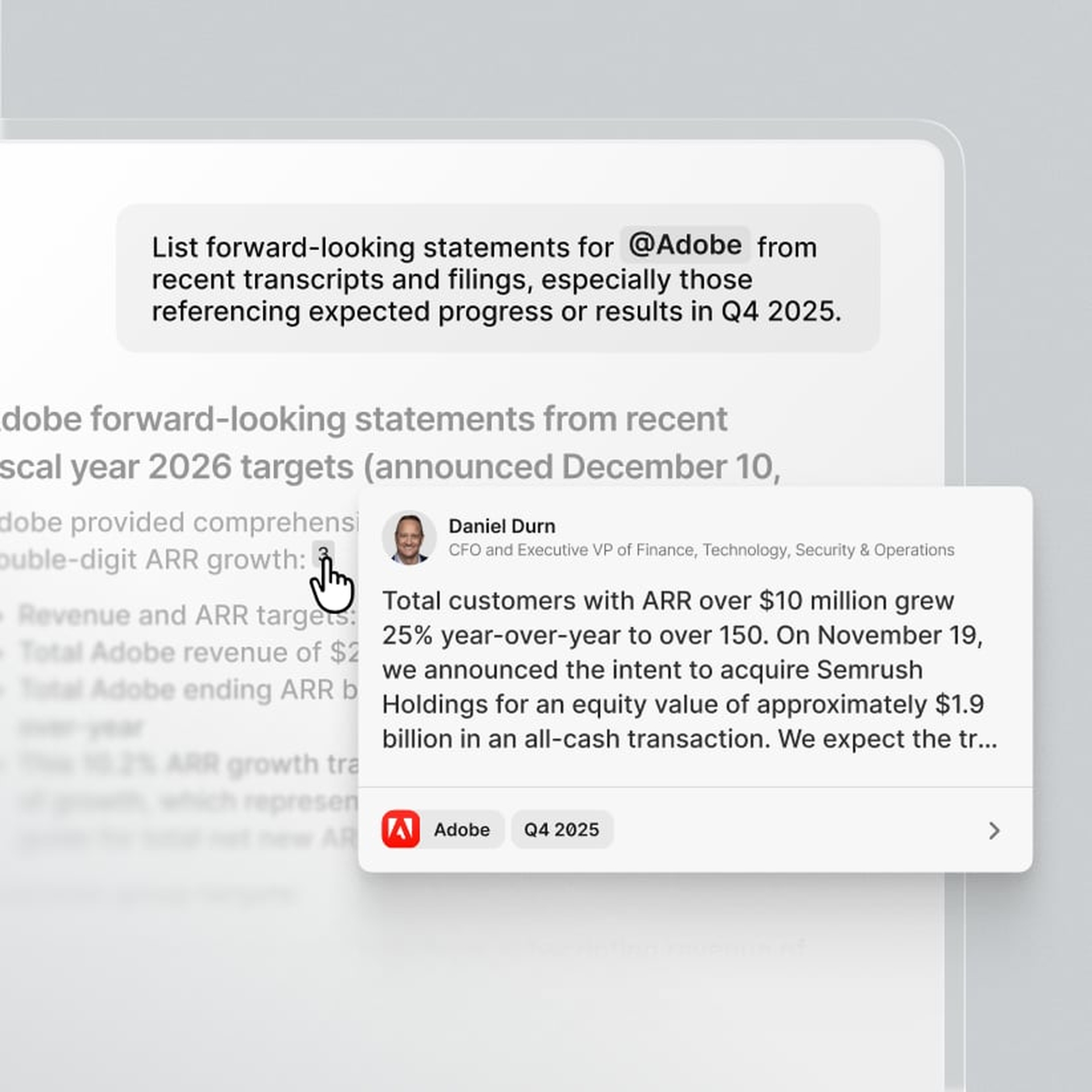
AI chat
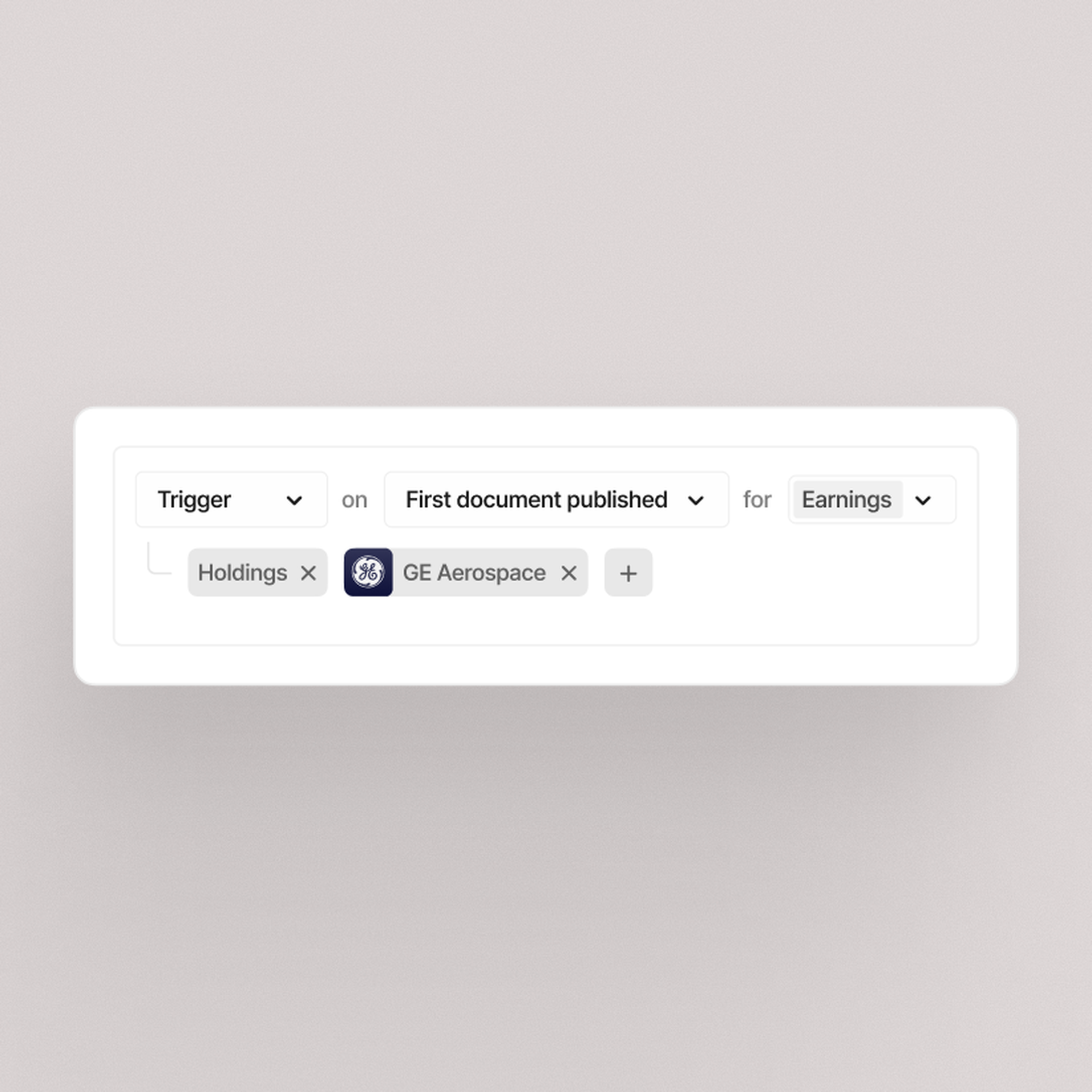
Automations

Live audio & transcripts
Quartr's AI stands out because it only pulls clean, first-party data from public companies. In investing, that's everything.
Jamie Ross
Investment Manager, GAM Investments
Research that used to take hours now takes seconds with Quartr Pro. Tracking shifts in tone or extracting tables, it's as simple as typing a query.
Tom O'Hara
Investment Director
Before Quartr we spent hours manually compiling insights through the peer earnings cycle. Now, these tasks are done faster, with greater precision.
Gregg Lampf
VP of Investor Relations
Being able to ask specific questions across years of transcripts and reports and instantly get verified answers is a game-changer.
Pontus Dackmo
CEO & Investment Manager
Tyson Foods Inc. is an American multinational corporation in the food industry, particularly known for its production of chicken, beef, and pork. Tyson Foods has grown to become one of the world's largest meat processors and marketers, and its product line includes a wide array of fresh, frozen, and prepared food products which are sold to retail and food service customers globally. The company operates a comprehensive supply chain which includes farming, processing, and distribution. Tyson Foods is headquartered in Springdale, Arkansas, and its shares are traded on the NYSE.
The company was founded in 1935 by John W. Tyson in Springdale, Arkansas. Originally a small poultry business, the company saw rapid growth during the Second World War, as the government did not ration chicken. During the 1950s, Tyson Foods capitalized on the increasing demand for chicken and evolved from a supplier to a major processor. This growth was fueled by strategic acquisitions and an increased focus on vertically integrated operations, which involved controlling every aspect of production, from feed mills to processing plants. Tyson Foods has also diversified outside of poultry production over the years and is today one of the largest producers and exporters of meat in the US.
Their business operations encompass a wide range of activities from the breeding and raising of livestock to processing, packaging, and distribution. Tyson's approach to business involves vertical integration, meaning they control multiple stages of their supply chain.
At the core of Tyson's operations are its numerous processing plants, where raw meat is converted into various products. These plants are designed to handle large-scale production while adhering to food safety and quality standards. Logistics is another crucial aspect of Tyson Foods' operations, and the company has a well-developed distribution network spread out across the US and other key markets. When looking at publicly traded companies that are relatively similar to Tyson Foods, one finds names such as Hormel Foods and JBS.
Tyson Foods caters to a diverse range of customers, including retail grocery chains, food service companies, and institutions like schools and hospitals. In addition to its domestic customer base, Tyson has a significant presence in the international market and is a significant exporter.