Edge16 Oct 2026
Winner, Winner: The Chicken McNugget Story
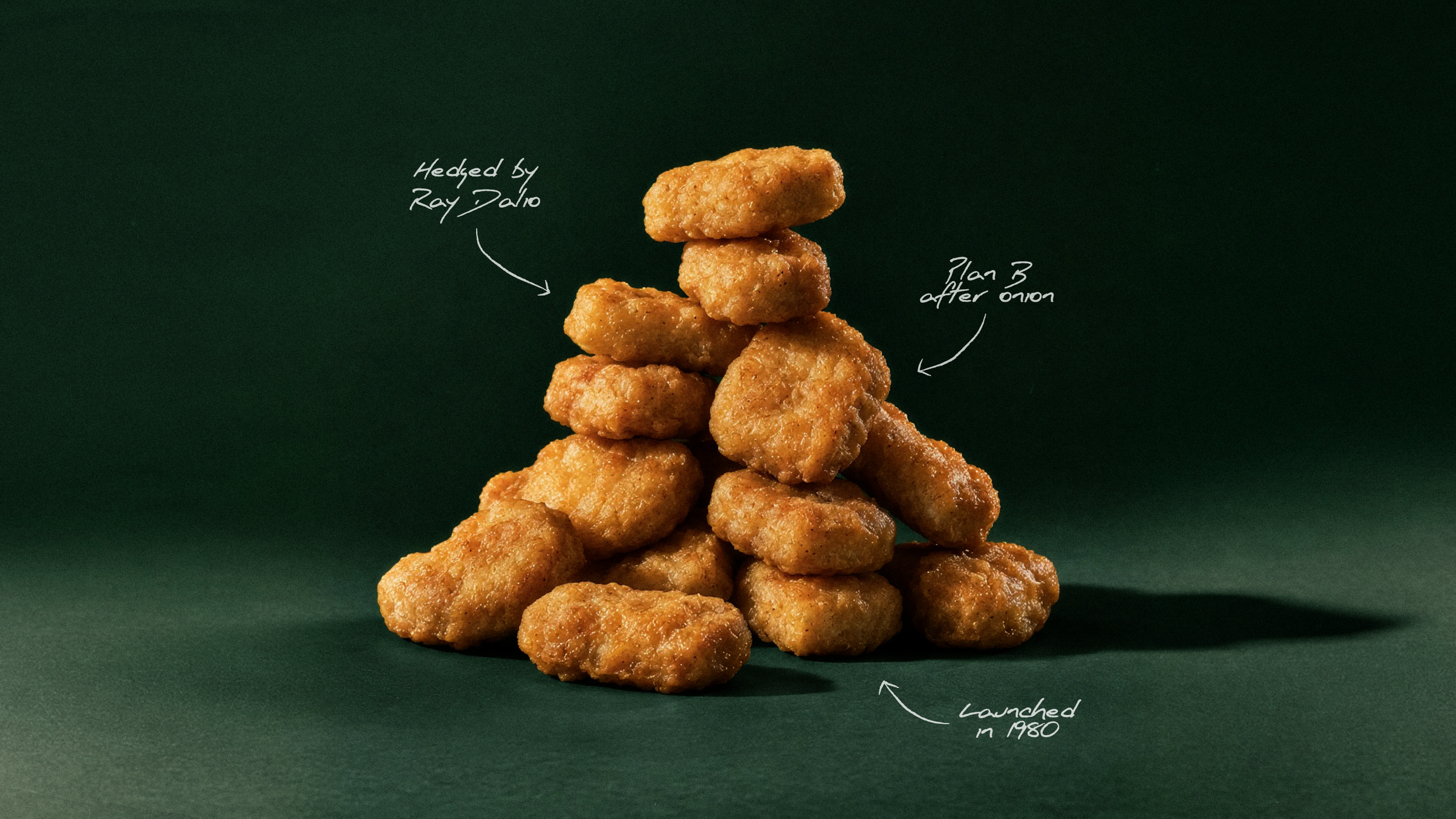
How a 1940s breeding contest, a Cornell food scientist, and a hedge by Ray Dalio helped McDonald's turn the Chicken McNugget into a fast-food icon.

Multifamily differs from the GFC: the earlier crisis was debt- and capital-driven, while current pressure is tied more to supply and constrained equity; debt remains available.
Absorption is the third-best year on record and debt originations the second-best; improving fundamentals have not yet translated into stronger sales activity.
Distressed sales were cited at 5% currently versus 25% of multifamily sales in 2010; the current figure’s measurement period was uncertain.
Institutional multifamily sales volumes have recovered to pre-pandemic levels or slightly above, though volume is not adjusted for inflation and unit activity may be weaker.
Q3 debt brokerage volume rose 58% QoQ, while GSE financing volume fell 50% QoQ after the 10-year Treasury rose 84 bps in Q3.
Higher rates and tighter cap-rate spreads are delaying transactions; buyers increasingly need long holds, flexible timing and attractive asset bases, while some sellers resist repricing.
Equity remains hesitant despite available debt; the September rate hike and rate uncertainty delayed capital returning to the market.
CMBS represents 3% of outstanding multifamily debt; cited delinquency rates were 60–70 bps for GSEs and below 2% for banks, versus an 8% CMBS default rate.
$6.3B of 2017 Fannie Mae and Freddie Mac loans mature in 2027; average DSCR rose from 1.36 at origination to 2.11, with refinancing costs the key concern.
Credit distress is viewed as more contained than in the GFC, with patient lenders and debt funds pursuing loan purchases; weaker, older assets and poor submarkets face greater stress.
National rent growth was 2.83% through September before slowing in October; the outlook was approximately 2% YoY in 2026.
Multifamily starts in 2027 are forecast below 300,000, with conventional market-rate starts below 250,000; reduced supply is expected to support above-average rent growth after a lag.
Historically, rents were flat when starts exceeded 450,000, up 3.5% when starts were below 350,000 and up 4% below 250,000.
Austin rents fell 7.7% in 2025, then improved to 1.6% T12 through Q3 and turned slightly positive YoY by October; Charleston and Boise also showed rebounds after supply eased.
Investment and development guidance favored disciplined locations, quality assets and patient capital; potential targets included affordable housing and luxury product in strong-demand, lower-supply submarkets.

AI chat

Automations


Live audio & transcripts

Quartr's AI stands out because it only pulls clean, first-party data from public companies. In investing, that's everything.
Jamie Ross
Investment Manager, GAM Investments
Research that used to take hours now takes seconds with Quartr Pro. Tracking shifts in tone or extracting tables, it's as simple as typing a query.
Tom O'Hara
Investment Director
Before Quartr we spent hours manually compiling insights through the peer earnings cycle. Now, these tasks are done faster, with greater precision.
Gregg Lampf
VP of Investor Relations
Being able to ask specific questions across years of transcripts and reports and instantly get verified answers is a game-changer.
Pontus Dackmo
CEO & Investment Manager