)
)
)
)
)
Edge11 Oct 2024
Texas Instruments: From Calculators to Master Capital Allocators
Texas Instruments has undergone many transformations from its origins in oil exploration to become one of the world's largest semiconductor producers.
In the time it takes you to read this paragraph, several hundred thousand barcodes will have been scanned. A carton of milk in Mexico City, a boarding pass in Bangkok, a blood sample in a hospital in Melbourne, all logged using the same system. The black-and-white symbol is scanned billions of times every day, making it, by a comfortable margin, the most-read piece of design on the planet. It costs nothing to print, no patent protects it, and no one owns it. Yet it underpins virtually all of modern retail, logistics, and global trade. Remove it tomorrow, and the world's commerce would unravel in minutes. This is the story of the barcode: who invented it, why it was useless at first, and how it eventually became the connective tissue of the global economy.
To start our story, we have to go back to 1948 and the Drexel Institute of Technology in Philadelphia. One of the key figures in the story, Bernard Silver, was a graduate student at the university when he overheard a conversation between the dean and the president of a local food chain.
The executive had come with a problem that needed solving. His cashiers were (in his opinion) too slow, and with an inventory management system that was a jumble of documents and estimations, he was convinced that there had to be a technical solution. Perhaps the institute could research a way to automatically capture product information, both at checkout and in the inventory?
For one reason or another, the dean turned him down. Whether he thought that the problem was simply unsolvable or something that the institute shouldn't allocate time and resources to is lost to history, but the problem lodged itself firmly in Silver's mind. While he couldn't shake the feeling that the grocer was onto something, he was well aware that identifying a problem and solving it are two completely different ballgames. After some thought, he brought the issue to his friend, Norman Joseph Woodland, a 27-year-old graduate student and teacher at Drexel.
Woodland was, by any measure, the right man to bring a problem to. Despite his age, he had worked on the Manhattan Project during the war. But most pertinent to our story, he had been involved with the Scouts as a young boy, where he'd learned Morse code, a skill that would shortly prove more consequential than working on the atomic program.
The pair quickly became consumed by the problem. Their first attempt used patterns of ultraviolet ink that would glow under special light. While they managed to build a prototype, the ink was prohibitively expensive and quickly faded from whichever surface it was applied to. In short, the idea was clever, but the execution was unfeasible. That combination, a good idea with unworkable execution, would define the project for years.
But by this point, Woodland had become convinced it was solvable and (more importantly) worth solving. Graduate studies were put aside, some stock market gains were cashed in, and he moved into his grandfather's apartment in Miami Beach to do nothing but think.
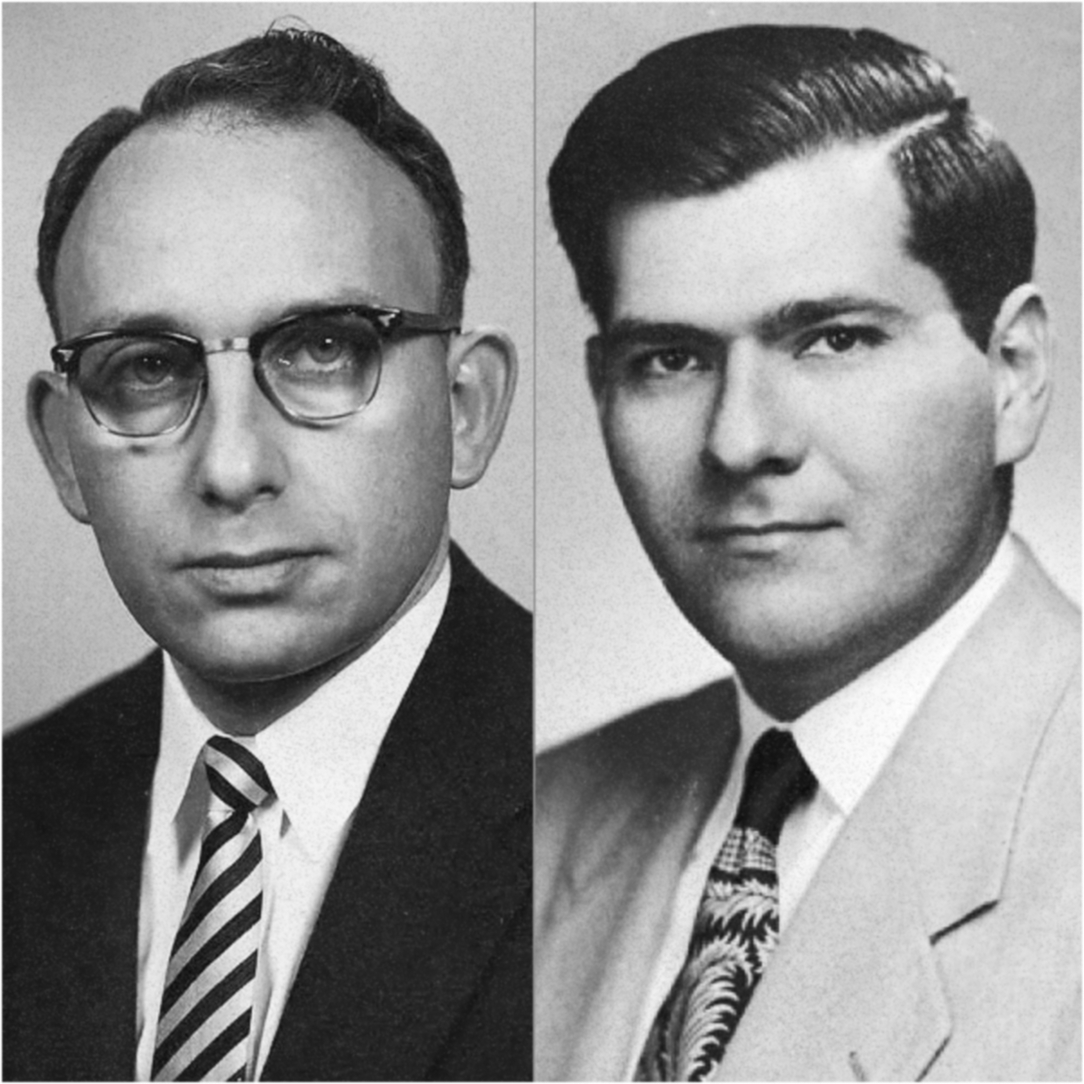
Not all eureka moments behind world-changing inventions can be pinpointed precisely, but this one can. On a winter morning in 1949, sitting in a deck chair on the beach, Woodland finally cracked it. He'd been turning the problem over for months, knowing he needed a kind of code, something that could represent information visually and be read by a machine.
With the sound of the waves gently crashing against the shore, he absent-mindedly dragged four fingers through the sand and looked down at what he'd drawn. Four vertical lines, pulled toward him.
When he retold the story later, Woodland said that the thought arrived in his mind fully formed: instead of the dots and dashes that make up Morse code, it could consist of wide and narrow lines. The same concept, just stretched vertically into bars of varying thickness. All the information needed could be stored in the widths of the lines and the spaces between them, with a beam of light reading them by measuring how the reflection changed as it swept across.
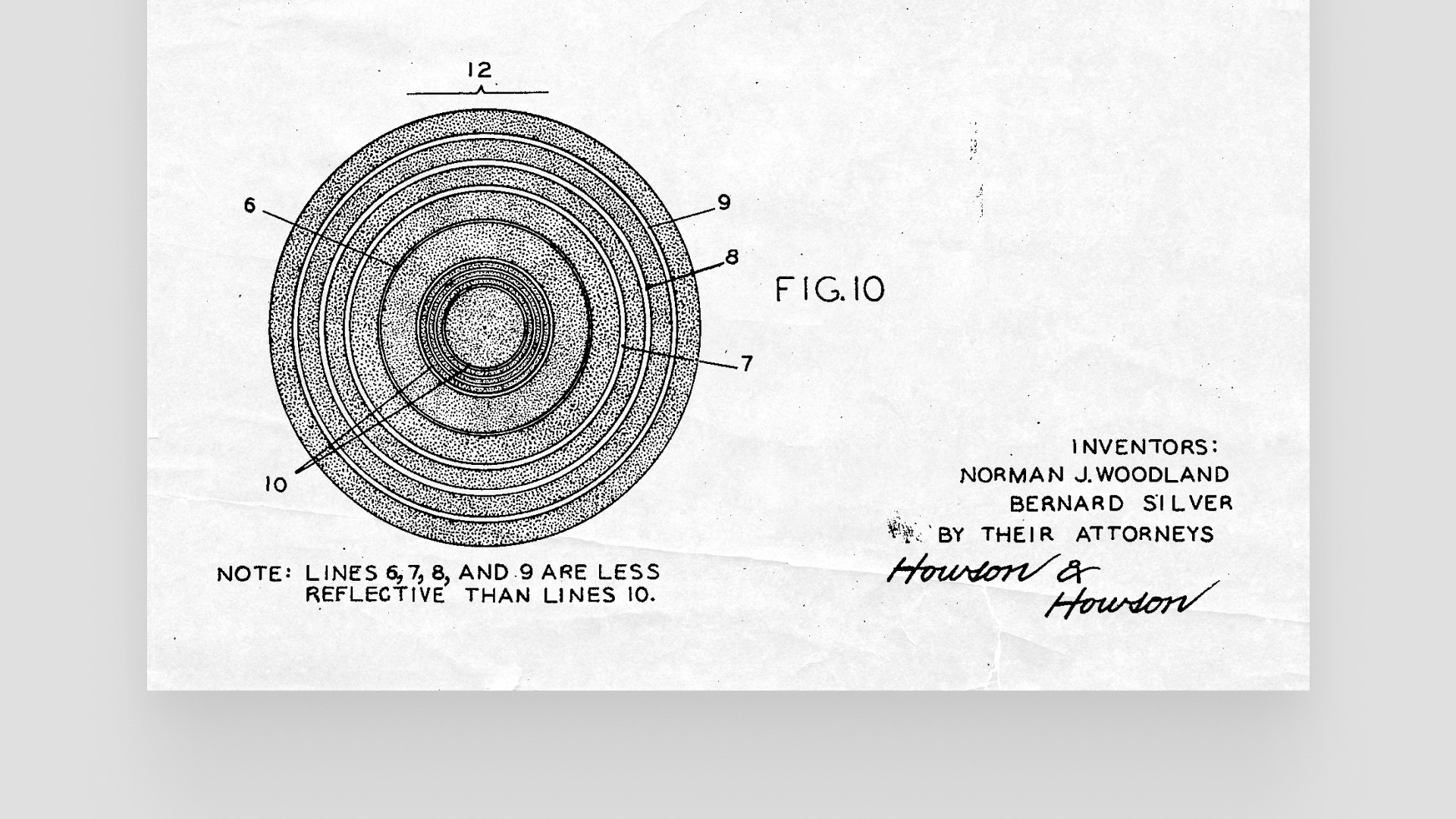
But this carried a second problem. A straight row of bars can only be read if the scanner passes over at the right angle. Woodland swept his fingers through the sand again, this time forming a circle by turning the lines into a series of concentric rings. Bull's-eye.
A circular code looks the same from every direction, which means it can be read no matter how the product is oriented. For a checkout counter, where a clerk slides items past a scanner rapidly all day, it would make all the difference to efficiency. The next step was finding the right solution for reading the codes. At the time, optical film soundtracks worked by shining light through a transparent strip printed along the edge of the film. Woodland would use the same principle in reverse: shine light on a printed pattern, capture the reflection, and convert it into data.
Silver and Woodland filed their patent application in October 1949 under the title "Classifying Apparatus and Method." It described both the linear and circular versions of the code, along with the apparatus for reading them. On paper, the barcode now existed.
But in practice, it was hopeless. The prototype Woodland built used a 500-watt incandescent bulb, an oscilloscope, and a large photomultiplier tube designed for movie sound systems. While that might not give you a clear picture of what the contraption looked like, we can lay out some of the practical issues this solution presented: it was the size of a desk, it generated enough heat to be a fire hazard, and the bulb's light was so unfocused that reading a code reliably required conditions no supermarket could ever provide.
The idea was complete, but the conditions the barcode required (cheap, focused light, and small, affordable computers) would not exist for another two decades.
Woodland never stopped believing in the invention, but belief doesn't pay rent. In 1951, he joined IBM, where he tried repeatedly to persuade the company that the barcode was worth developing. IBM commissioned an evaluation that reached a conclusion as accurate as it was familiar: the idea was interesting and feasible, but processing the information would require equipment that lay some distance in the future.
IBM offered to buy the patent, but the offer was too low for the inventors to accept. So in 1952, they sold it to Philco instead, for $15,000. It was the only money Woodland and Silver ever made from the barcode. Philco later sold the patent on to RCA, and there it sat, gathering dust and largely forgotten, while the technology it required slowly came into being elsewhere.
The value of the barcode, measured over the decades, runs into the trillions of dollars. The patent itself expired in 1969, five years before the first commercial scan. This means that the single most important piece of intellectual property in the history of retail spent its entire life as a curiosity and entered the public domain just before becoming useful. Whatever value the barcode would eventually create (and it created an enormous amount) would not belong to its creators. It would belong to a standard, available for anyone to use.
Bernard Silver never saw any of it. He died in 1963, aged just 38, more than a decade before the first pack of gum slid across the first scanner. Of the two fathers of the barcode, only Woodland would live to watch the lines in the sand take over the world.
Get curated quality company deep dives every other week.
During the 1960s, a system similar to the modern barcode had found some use on American railways, but it would be the grocery industry that dragged it into the mainstream. To understand why, we need to look at the financial realities of selling food. A supermarket moves enormous volumes of low-margin products. Then as now, margins in the grocery business hover around one or two percent, meaning that profitability is decided by operational details such as labor, shrinkage, inventory, and more.
By the late 1960s, those details were causing more and more problems for grocery store operators. Labor costs were climbing, and the checkout counter was the most labor-intensive point in the entire store. Every item required a clerk to read a price sticker and key it into a register, a process that was slow, error-prone, and therefore expensive. While that might be manageable at smaller grocers, stores were increasing in size, with both Walmart and Target beginning their expansion across the U.S.
For these new big-box stores, which banked on turning around more inventory than smaller mom-and-pop operations ever had, these costs were compounded into a problem that needed solving. But beneath it all sat another, equally big problem. A grocer in 1970 had only the haziest idea of what was selling, how fast, and at what margin. Inventory was counted by hand, and ordering was guesswork mixed with experience.
In 1966, the National Association of Food Chains held a meeting on the problem of automating the checkout, and put the challenge directly to equipment manufacturers. RCA happened to be sitting on Woodland and Silver's old bull's-eye through its acquisition of Philco's patent portfolio. The company dusted it off and realized it had a two-decade head start. It assembled a team, and Kroger, one of the country's largest grocery chains, volunteered as the guinea pig.
In July 1972, a Kroger store in the Kenwood neighborhood of Cincinnati became the first supermarket in the world to scan products at checkout. The codes were RCA's bull's-eyes, direct descendants of the circles Woodland had drawn in the sand, printed on labels and stuck onto packages by hand. Customers saw their groceries slide across a scanner set into the counter as the rings flashed past a laser and the register rang up the price without a single keystroke.
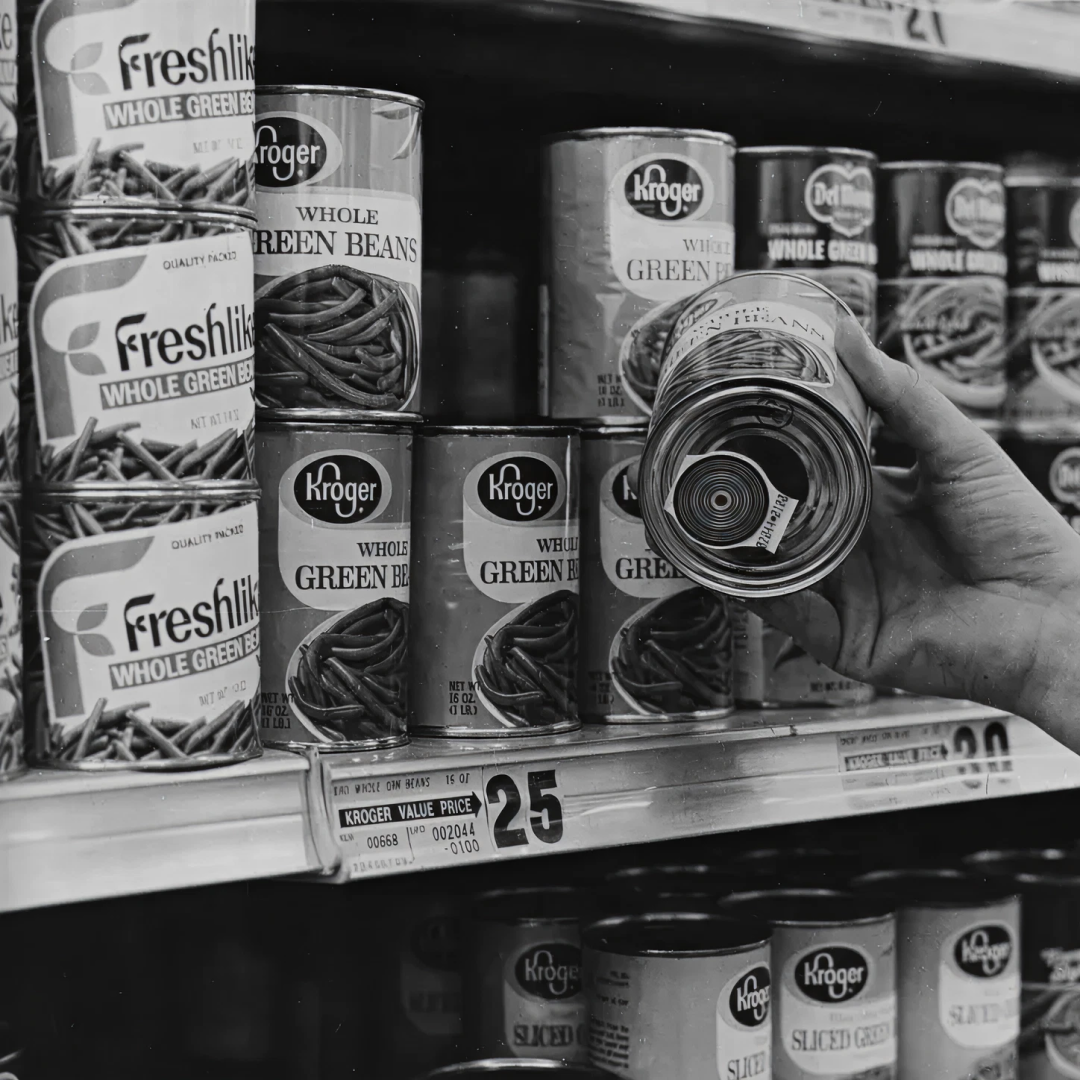
For the most part, it worked. The trial demonstrated everything the industry hoped for: lanes moved faster, pricing errors decreased, and for the first time, management could see item-level sales data. But the bull's-eye, as good as it was, had a flaw. The problem was not in the state-of-the-art optics that scanned the products, but in the ink.
What doomed the bull's-eye, and handed the future to the barcode, came down to printing presses. As packaging flies through a press at industrial speed, ink drags slightly in the direction of the printing. On a pattern of straight vertical bars, that smear runs harmlessly along the length of the bars, leaving their width intact. On a circle, some portion of the rings consistently smears into illegibility.
RCA's system could handle this in a controlled trial with carefully printed labels. Across hundreds of thousands of products, printed by thousands of different presses on every kind of packaging material, in every corner of the economy, it could not. The test run in Cincinnati had proved that the concept worked, but it showed it needed some final refinement before it would conquer the world.
The next part of our story takes place between 1970 and 1973, and is centered on what can only be described as an almost miraculous feat of cooperation. As it turned out, the American grocery industry, a vast, fragmented, ferociously competitive ecosystem of retailers, wholesalers, and manufacturers, voluntarily organized itself, agreed on a single technical standard, and committed to it before anyone could be certain it would pay off.
The vehicle was the Committee for a Uniform Grocery Product Code, formed in 1970 and chaired by R. Burt Gookin, chief executive of H. J. Heinz. The committee had members from every part of the industry, balanced between manufacturers who would have to print the codes on all products, and retailers who would have to scan them.
The first order of business was deciding what the code would say. They landed on a uniform numbering scheme in which every product from every manufacturer would carry a unique identity, which would be the same in every store across the country. In other words, a barcode for a package of Oreos in Boise would be identical to a barcode for a package of Oreos in Tallahassee.
The second thing on the to-do list was choosing the symbol itself. The task landed on a Boston supermarket executive, Alan Haberman, who began collecting proposals from various companies. This included RCA's bull's-eye as well as a submission from IBM, which had finally joined the party. The committee subjected the candidates to years of testing and internal debate to answer the question: which pattern of printed ink could be manufactured, printed, smeared, scuffed, frozen, and still read correctly, billions of times, decades into the future?
When IBM decided to compete for the grocery standard, it discovered that the inventor of the concept itself had been on its payroll for twenty years. Norman Woodland was transferred to the effort, and IBM's initial instinct was the obvious one: refine the bull's-eye, the shape its own employee had invented and its rival RCA now championed.
The task of leading the project fell to George Laurer, a career IBM engineer with a stubborn streak. Asked to adapt the circular code to the committee's specifications, Laurer studied the printing problem and concluded that no amount of refinement would save it. The smearing was not a defect to be engineered around. No matter the effort, the problem was inherent to modern printing.
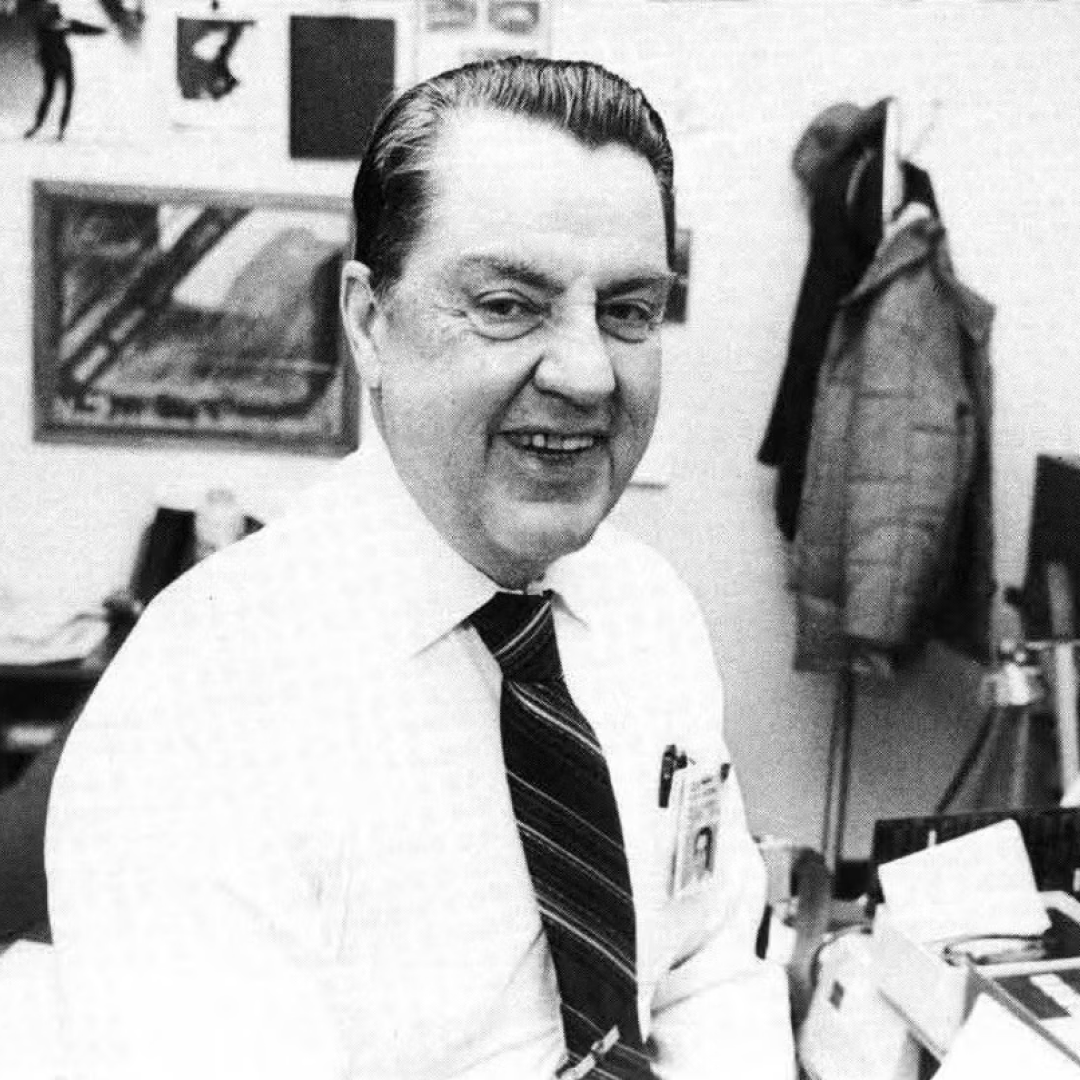
Laurer now had two options: convince all of the printers of the world that they needed to change their way of operating, or come up with something new. He went to his managers and told them that his team intended to submit another design instead, one based on a rectangle.
The rectangle they came up with was a brilliant piece of engineering. Each digit was encoded as two bars and two spaces of varying widths, dense enough to fit twelve digits into a symbol small enough for a tube of lipstick. Guard bars at the edges and center told the scanner where the code began and ended.
Importantly, that also allowed it to be read in two halves, which meant that a beam sweeping across at an angle could still capture everything. The omnidirectional reading that had justified the bull's-eye was present not in the printed symbol but in the scanner, where a spinning mirror split the laser into a crosshatch of beams so that at least one would always cross the bars correctly.
The twelfth digit was a check digit, computed from the other eleven, so that a misread would announce itself rather than silently charge a customer for the wrong item. Laurer's design moved the complexity from the place where errors were ruinous (the printing press) to the place where engineering could handle it (the scanner). That single decision, and the result that sprang from it, is why it won.
When the committee gathered to deliver its final verdict, Woodland was in the room. The man who had drawn the first barcode in the sand of a Miami beach twenty-four years earlier watched the industry adopt his idea in the one form he had considered but set aside: straight lines.
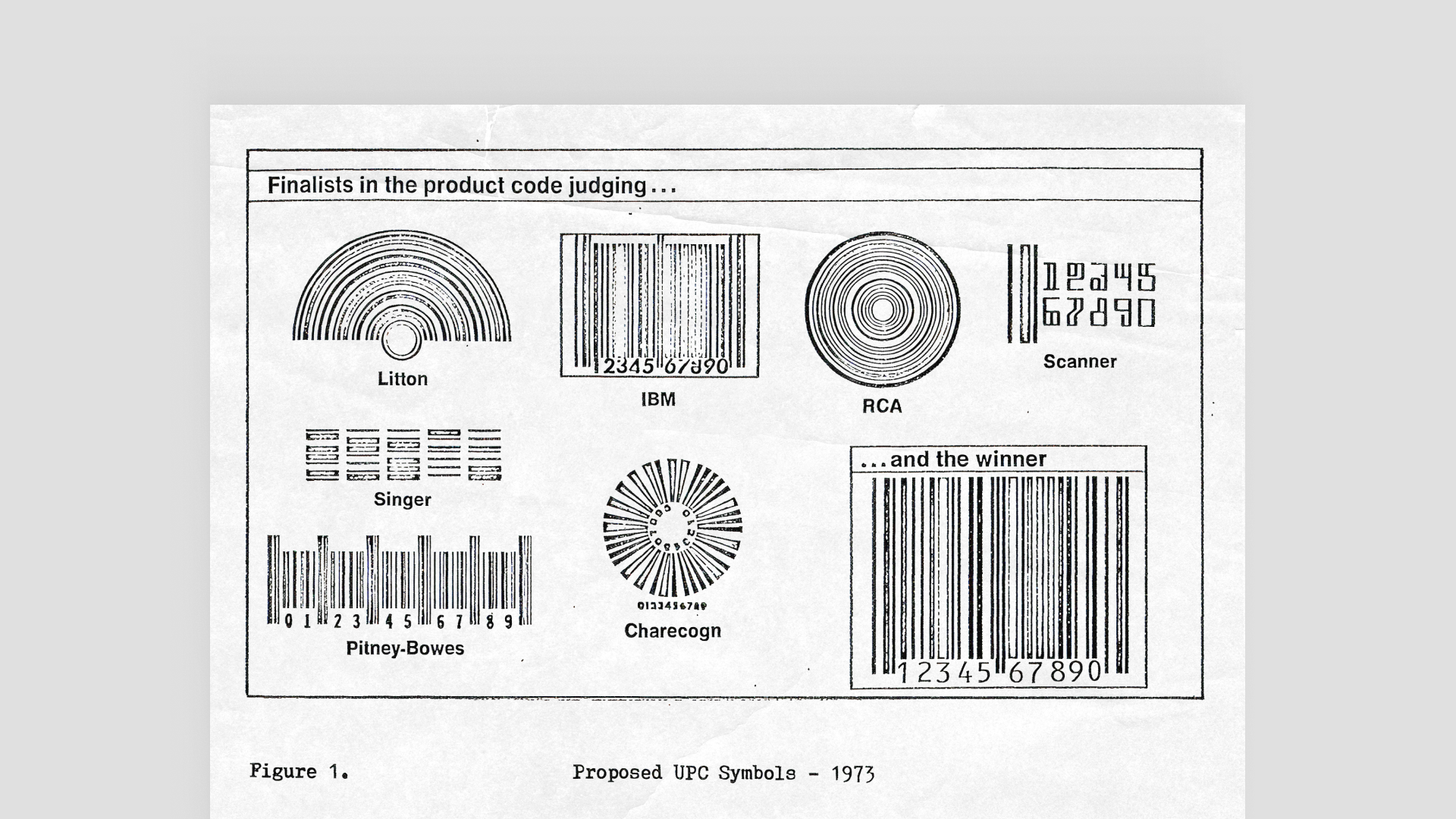
The Universal Product Code made its commercial debut not in New York or Chicago but in Troy, Ohio, chosen mainly because NCR, which built the scanner, was headquartered just down the road. In June 1974, the town's Marsh Supermarket was fitted out as the first store in the world to run the new standard end-to-end.
On the morning of June 26, the store staged its small piece of history with an appropriate ceremony. The first customer was Clyde Dawson, head of research and development at Marsh, and the cashier was Sharon Buchanan. At 8:01 a.m., Dawson lifted the first item from his basket and handed it over: a 10-pack of Wrigley's Juicy Fruit chewing gum. Buchanan passed it across the scanner, the laser found the bars, and the register rang up the price. The first retail barcode scan in history was complete.
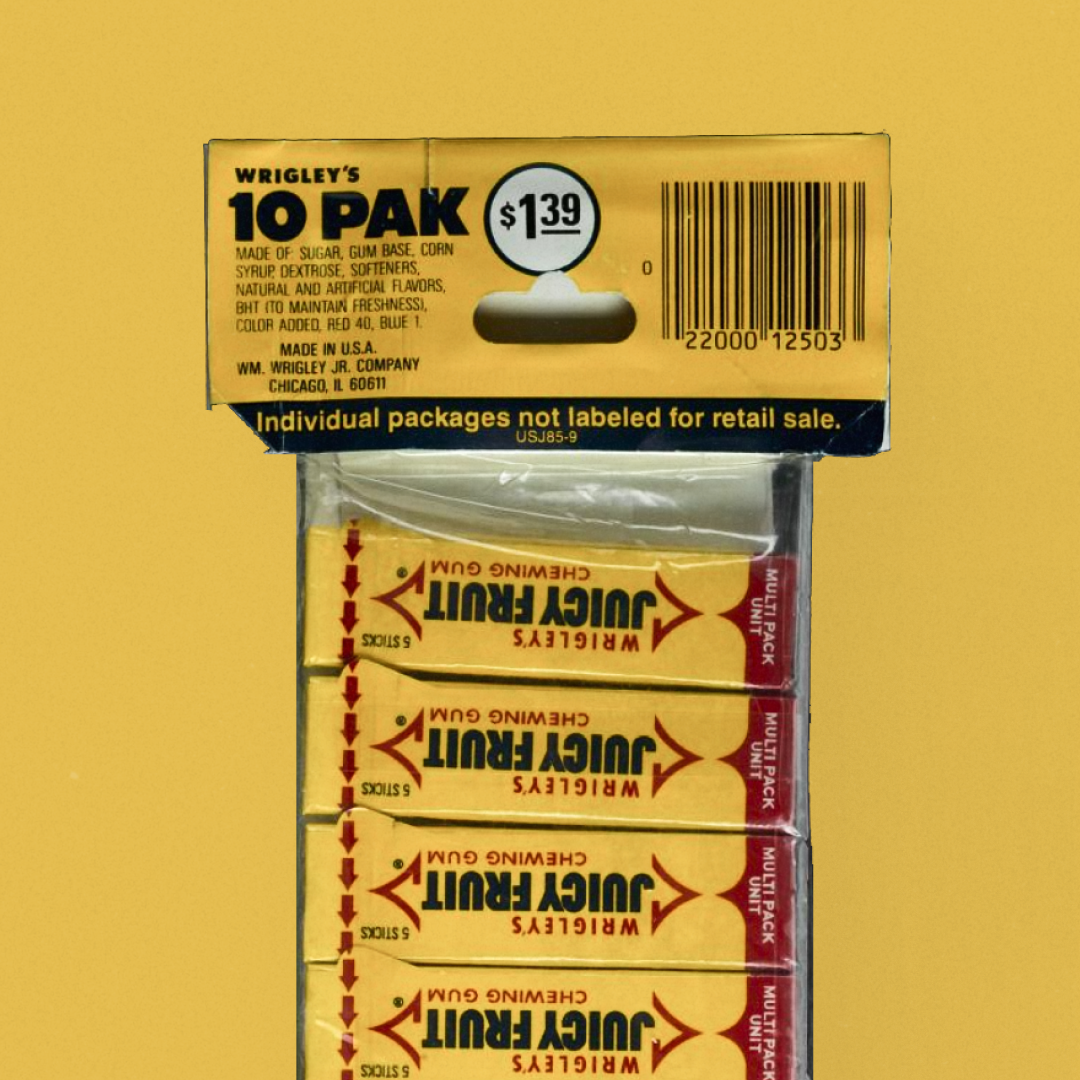
But after that first day, the barcode didn't take off. The Troy store worked beautifully, but almost no other retailer followed. The years after the first scan were a long commercial anticlimax, and the reason comes as no surprise, given the earlier parts of the story.
Consider the arc. Conceived in 1949, patented in 1952, first scanned in 1974, but not universal until the end of the 1980s. Four decades separate the lines in the sand from the barcode's eventual conquest of retail. The interesting question is not why it succeeded but why success took so long, because the answer reveals what kind of invention it really was.
Two of the constraints were technological. The implementations needed a cheap, precise, durable beam of light. The laser was not demonstrated until 1960, nor was it cheap enough to sit in a checkout lane until the end of that decade. It also needed computers small and affordable enough to be installed at all checkout lanes, which needed the integrated circuit to be invented and then commoditized.
The third constraint was far less technical. A barcode is worthless to a store unless arriving products already carry codes, and printing codes is worthless to a manufacturer unless stores can read them. The standard had to be singular, since competing codes would have forced manufacturers to print several symbols on every package, defeating the whole economic logic. The technology was ready around 1970. The agreement took just as much inventing.
The barcode is a pure infrastructure technology, the kind whose value depends not on what it does but on how many others have adopted it. Such technologies are almost always too early until they suddenly become ubiquitous, because their adoption is governed by network effects rather than merit.
With the first two technological constraints approaching commercialization rapidly, each side of the third constraint waited for the other. The studies commissioned at the time made the stakes explicit: a store installing scanners would lose money unless the great majority of the products crossing its counters already carried the barcode.
The two sides of the market moved at very different speeds, explained by their wildly asymmetric cost curves. For a manufacturer, adding a barcode meant changing the packaging artwork once, at a cost close to zero per unit. For a retailer, scanning meant rebuilding every checkout lane and installing a centralized computer system, an investment that could easily cost over a hundred thousand dollars per store.
Within a few years after the first chewing gum had passed the scanner in Troy, the symbol was on virtually all packaged groceries in America, patiently waiting for the other side to make its move. The machines to read them remained rare. The number of scanner-equipped stores across the entire country could be counted in the hundreds, and the trade press was questioning whether the whole project had been a costly mistake.
What broke the logjam was simply the compounding evidence. The stores that did install scanners discovered that the benefits exceeded the projections, and not only at the checkout. The speed and the labor savings were real, but the transformative discovery was the data. For the first time, a retailer knew exactly what was selling, item by item and hour by hour.
Through the early 1980s, the installed base climbed steadily, though even by the middle of the decade, only about a third of American supermarkets had made the leap. But then the snowball of adoption started rolling, and rolling fast. Falling computer prices met accumulating proof, mass merchandisers like Kmart committed to scanning general merchandise, and skeptics found themselves competing against other retailers with more data and lower costs. By the end of the 1980s, the barcode was effectively universal in American retail.
Europe, watching closely, was just behind the Americans. In 1976, the format was extended by a digit so the system could identify products from anywhere on Earth, and the European Article Number, fully compatible with the American original, made the standard global. The committee's insistence on a single code had held, and would keep holding, across every border it met.
Before the barcode, the knowledge of what was selling existed nowhere at scale. It dissolved at the moment of sale, recoverable only through laborious counting after the fact. After the barcode, every transaction left a perfect, item-level, time-stamped record as a free byproduct of charging the customer. Point-of-sale data became the raw material for a new analytics industry, with firms building businesses on aggregating and selling scanner data.
The deeper consequence was a shift in power. For most of the twentieth century, the manufacturer held the information advantage in retail. Brands had oversight of their products, and the stores just sold them. The introduction of scanner data reversed the relationship somewhat. The retailer now knew more about what was selling than the company behind the brand did, right down to the store, date, and time. That knowledge translated directly into negotiating leverage over pricing, shelf placement, and trade terms.
The rise of the modern retailer, with Walmart as the towering example, is unthinkable without the barcode. Walmart's legendary logistics, its cross-docking distribution centers, its just-in-time replenishment, and its willingness to share scanner data with suppliers in exchange for them managing their own inventory all stood on the assumption that every item announces its identity to a computer at every step.
When Walmart pushed barcodes onto its general merchandise suppliers in the 1980s, consumers experienced the change as a matter of shopping convenience. Behind the scenes, it was laying the rails for the most efficient distribution machine in the history of commerce.
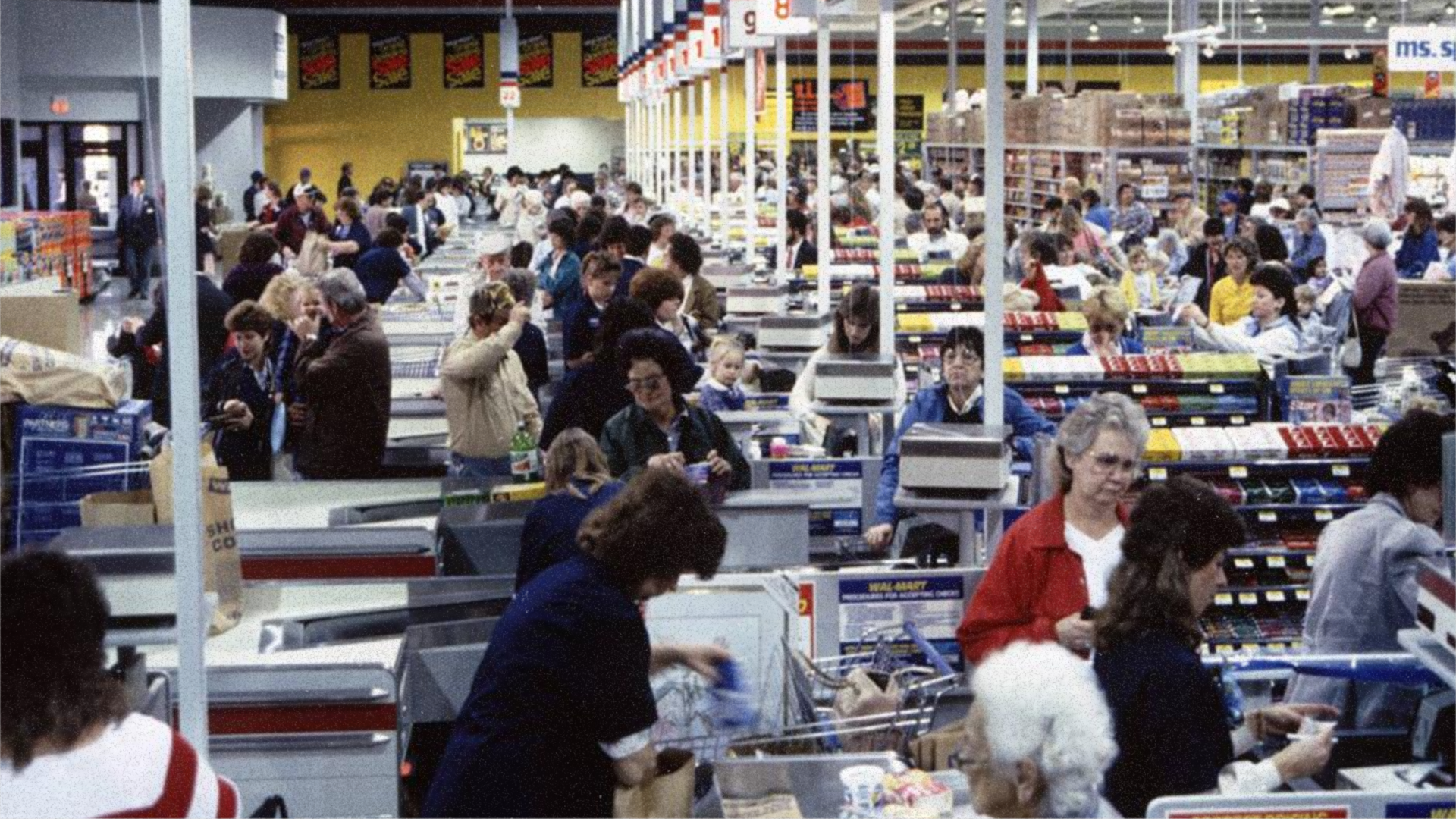
The technology that created all this value was free to use. The patent had expired, the standard was open, and the symbol cost virtually nothing to print. The money was made not on the code itself, but on top of it by whoever used the data, the logistics, and the scale it enabled.
From the supermarket, the bars spread to everything. Hospitals put them on wristbands and blood bags, airlines printed them on luggage tags and boarding passes, and the postal services of the world started using them. Anywhere an object needed an identity, the barcode provided a solution. The standards bodies born from the original committee evolved alongside, eventually merging into GS1, the global organization that today governs the numbering system across more than a hundred countries and over a billion products.
Measuring what the barcode is worth to the modern economy is in many ways a fool's errand, because the honest answer is that the modern economy is, to a meaningful degree, built out of it. When the American grocery industry commissioned a study for the symbol's twenty-fifth anniversary, the report concluded that the code was saving that single industry on the order of $17 billion a year, and that even this figure, by the study's own admission, captured only the most easily counted benefits. It's worth keeping in mind that it was one industry, one country, a quarter of a century ago.
The deeper point is what all that scanning makes possible. Global trade as currently practiced assumes that any object, anywhere, can identify itself in a fraction of a second, at a marginal cost of zero. Container shipping moves the boxes, but the barcode tells the system what is in them, where each item came from, and where it is going. Every just-in-time manufacturing line, every overnight delivery, every real-time inventory figure in every earnings report rests on that assumption.
After all, the barcode's place in the modern economy rests on its price. The symbol is effectively free to use, and that is precisely why it is everywhere. Five decades after a pack of gum crossed a scanner in Ohio, those black lines have become something close to a law of physics for modern commerce and global supply chains: invisible, assumed, and indispensable.
History was slow to thank the people in this story, but it got there. Norman Woodland spent the rest of his career at IBM, much of it working on the very scanning systems his beach-morning idea had made necessary, and retired with the satisfaction of knowing that he had truly changed the world. In 1992, President George H. W. Bush awarded him the National Medal of Technology, the United States' highest honor for technological achievement. He died in 2012, at 91, by which time his invention was being scanned billions of times a day.
George Laurer, who had risked his standing at IBM to kill the bull's-eye and draw the rectangle, lived until 2019. Throughout his life, he insisted that he had not invented the barcode, only the version of it the world uses, a distinction he viewed as immensely important, wanting to give Woodland the credit he rightfully deserved.
If the story of the barcode teaches one thing, it is that the hardest part of innovation is often not the idea. Woodland had the idea in 1949, complete and correct, after dragging his fingers through sand.
The hard part was everything that followed: the twenty-five years of waiting for lasers and microchips, the committee work, the printing tests, the standards politics, the brutal chicken-and-egg decade when the technology worked perfectly and almost nobody bought it. The barcode succeeded because an industry chose cooperation over fragmentation at exactly the moment it mattered, and because a handful of stubborn individuals kept the idea alive through decades when keeping it alive paid them nothing.
For anyone who studies businesses, the barcode is also a reminder to look at the infrastructure behind the companies we research. The moats we admire in modern retail and logistics, the inventory turns, the supply chain mastery, the data advantages, all rest on a free, unpatented, decades-old pattern of stripes that no company owns and every company needs.
Explore our platforms
Leading companies and financial institutions worldwide rely on Quartr to make better decisions faster.
Desktop
API
)
)
)