

Edge16 Oct 2026
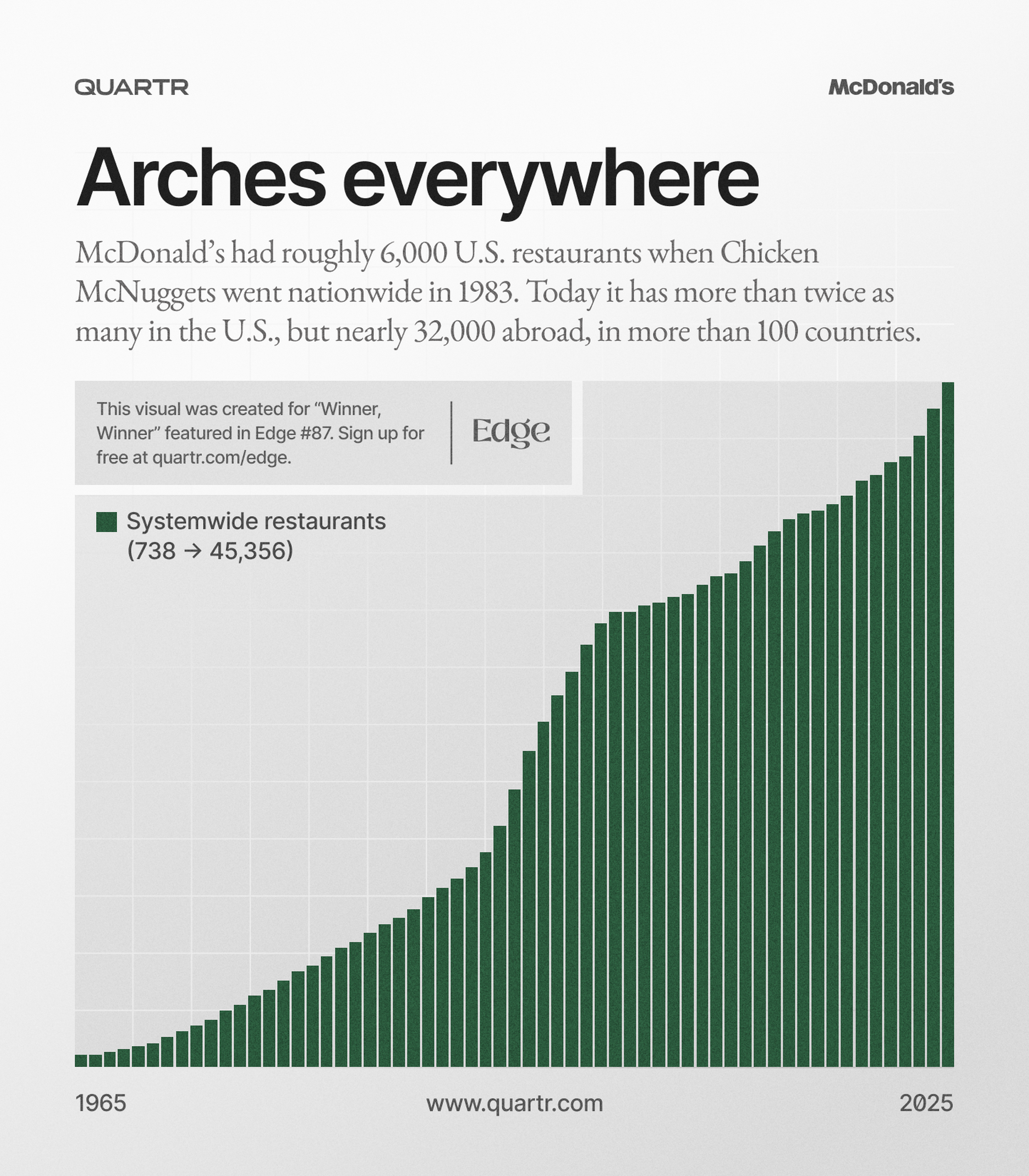
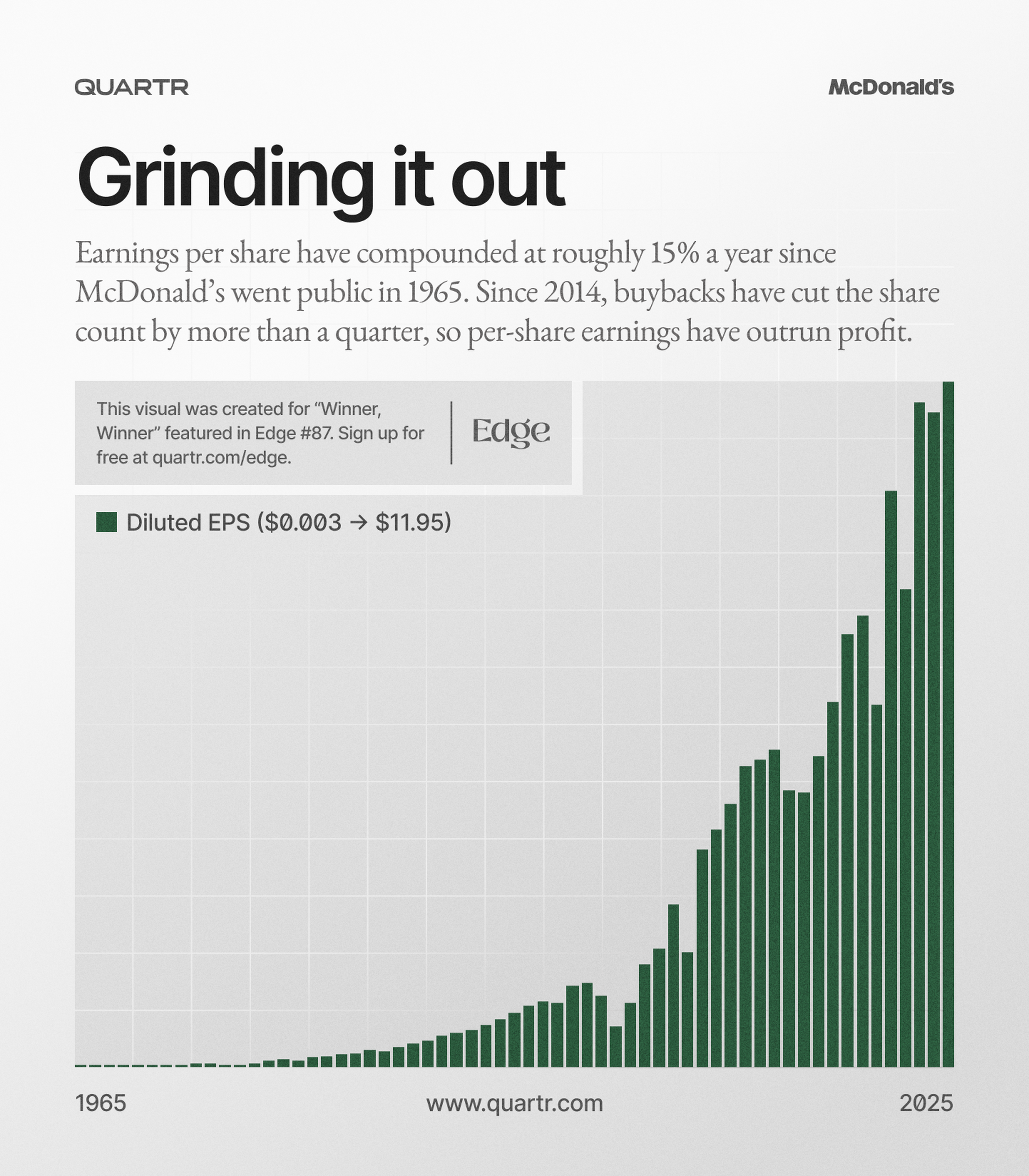
Winner, Winner: The Chicken McNugget Story
How a 1940s breeding contest, a Cornell food scientist, and a hedge by Ray Dalio helped McDonald's turn the Chicken McNugget into a fast-food icon.

9M Total Revenue was $46.881bn, up 7% at CER; Core EPS rose 14% to $8.00, supported by broad therapy-area growth.
Twelve positive Phase III readouts and four first approvals advanced the pipeline; 2027 readouts represent >$20bn in combined non-risk-adjusted peak-year revenue potential.
Ambition 2030 remained on track, with an $80bn risk-adjusted Total Revenue target and 20 NMEs by 2030.
9M Product Revenue was $46.768bn, up 6% at CER; Alliance Revenue rose 32% to $2.8bn. Q3 Total Revenue was $16.209bn, up 7%.
9M reported operating profit rose 10% to $11.797bn; Core operating profit increased 14% to $16.365bn.
9M reported EPS was $5.62, up 11%; Core EPS was $8.00, up 14%. Q3 Core EPS rose 19% to $2.79.
Core gross margin was 83% for 9M and 82% in Q3; 9M reported and core tax rates were 18% and 19%, respectively.
9M operating cash inflow was $10.9bn, down $1.3bn; working capital, higher tax payments and FX effects outweighed higher operating profit. CapEx was $2.3bn.
FY 2026 guidance was reiterated: Total Revenue growth at a mid-to-high single-digit percentage and Core EPS growth at a low double-digit percentage, at CER.
Core tax rate is expected at 18–22%; core gross margin is expected to be stable to slightly better than 2025.
Core R&D expense is expected at the upper end of the low-20% range of Total Revenue; operating expenses are expected to step up sequentially in Q4.
FY 2026 CapEx is expected to rise by a low-teens percentage, driven by manufacturing expansion and technology investment.
More than 20 key Phase III readouts and pivotal data for nine potential new medicines are expected in 2027; non-risk-adjusted peak-year potential exceeds $20bn.

AI chat

Automations


Live audio & transcripts

Quartr's AI stands out because it only pulls clean, first-party data from public companies. In investing, that's everything.
Jamie Ross
Investment Manager, GAM Investments
Research that used to take hours now takes seconds with Quartr Pro. Tracking shifts in tone or extracting tables, it's as simple as typing a query.
Tom O'Hara
Investment Director
Before Quartr we spent hours manually compiling insights through the peer earnings cycle. Now, these tasks are done faster, with greater precision.
Gregg Lampf
VP of Investor Relations
Being able to ask specific questions across years of transcripts and reports and instantly get verified answers is a game-changer.
Pontus Dackmo
CEO & Investment Manager
AstraZeneca is a multinational biopharmaceutical company established in 1999 through the merger of Astra AB of Sweden and Zeneca Group PLC of the UK. Headquartered in Cambridge, UK, the firm operates globally, specializing in the research, development, manufacturing, and commercialization of prescription medications. It focuses on a range of therapeutic areas including oncology, cardiovascular, renal, metabolism, and respiratory diseases. AstraZeneca's products cater to a diverse set of medical needs and are distributed in numerous countries worldwide. The company is a major player in the global pharmaceutical industry, maintaining a strong commitment to scientific research and the development of new medicines.
As previously mentioned, AstraZeneca came to be following the merger of two established pharmaceutical companies. Astra AB, with roots dating back to 1913, had a notable history in pharmaceutical production, introducing various medicines to the market over the decades. Zeneca on the other hand traces its roots back to 1993 after separating from Imperial Chemical Industries. The British half of the modern-day company had a footprint in both therapeutic products and agrochemicals, although it eventually divested from the latter. The merger of these two entities aimed to consolidate resources, streamline research and development processes, and enhance their presence in the global pharmaceutical market. The combined company, now known as AstraZeneca, has since played a significant role in the industry, building upon the foundational knowledge and experience of the two merged parties.
AstraZeneca primarily focuses on the discovery, development, and commercialization of prescription medicines. Their core areas of activity encompass a range of medical conditions, including respiratory, cardiovascular, renal, metabolic, oncology, and autoimmune diseases. The company also engages in significant research and development efforts, with research centers in the UK, Sweden, and the USA. This focus AstraZeneca was one of the pharmaceutical companies heavily involved with the global effort of finding a suitable vaccine during the Covid-19 pandemic. This is an effort they succeeded in, and together with companies like Pfizer and Moderna, they were a key player in the global vaccination effort.
As is common with large pharmaceutical companies, AstraZeneca has a presence in all corners of the world and the company operates in over 100 countries. It has manufacturing and commercial operations distributed across major markets including North America, Europe, Asia, and emerging economies.