Complete event summary combining all related documents: earnings call transcript, report, and slide presentation.
Status Update summary17 Jul, 2025
Regional security challenges and trends
Organizations in APAC face persistent visibility gaps across cloud, hybrid, and IT/OT environments, often due to data silos and lack of integration between teams and tools.
Budget pressures are intensifying, with organizations expected to fund AI initiatives without increased budgets, leading to a need for cost control and efficiency.
Shadow AI is emerging, with different departments independently deploying AI solutions, highlighting the need for robust AI governance and standardization.
Key findings from the state of security report
Nearly 60% of SOC leaders spend more time managing tools than responding to threats, due to fragmented tech stacks.
Alert overload and low signal fidelity hinder effective triage, with almost half of respondents struggling to prioritize alerts.
Data management gaps, including silos and inconsistent access, slow investigations and increase breach risk.
Industry-specific observations
Financial services organizations show higher maturity and investment in security, driven by regulatory pressure and alignment between business and security.
Public sector faces acute challenges from tool fragmentation, while manufacturing struggles with tool sprawl, alert noise, and lagging AI adoption.
Across industries, unified platforms and domain-specific AI are prioritized to address inefficiencies and improve resilience.
Partial view of Summaries dataset, powered by Quartr API
AI can get things wrong. Verify important information.
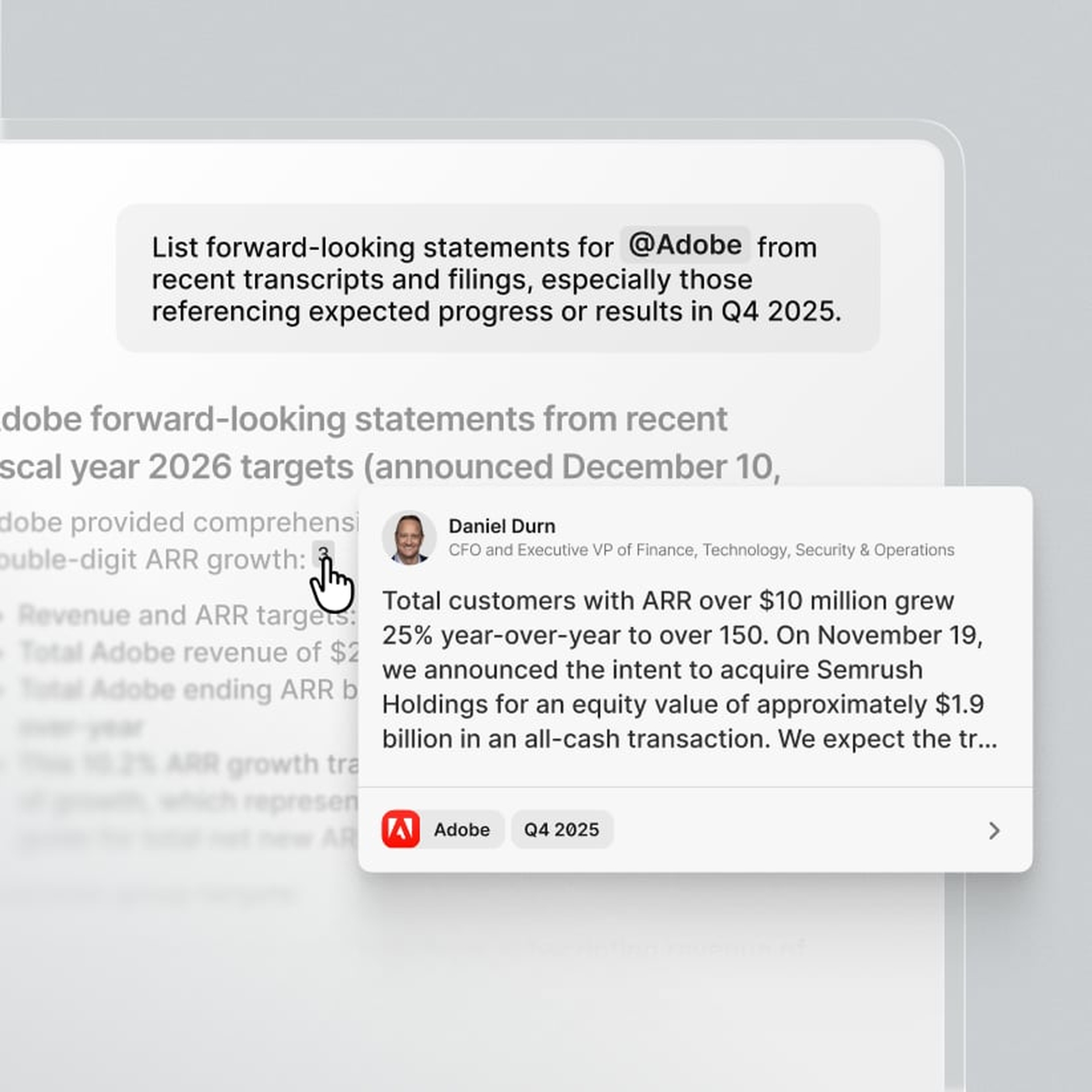
Ask across every event and document from public companies. Each answer links back to the exact line in the transcript, slide or filing it came from.Learn more
Find what matters
AI across all first-party IR material. Live calls, transcripts, slides, filings.
Trust every finding
50m+ first-party documents. Every output traceable to its source.
Find what matters
AI across all first-party IR material. Live calls, transcripts, slides, filings.
Trust every finding
50m+ first-party documents. Every output traceable to its source.
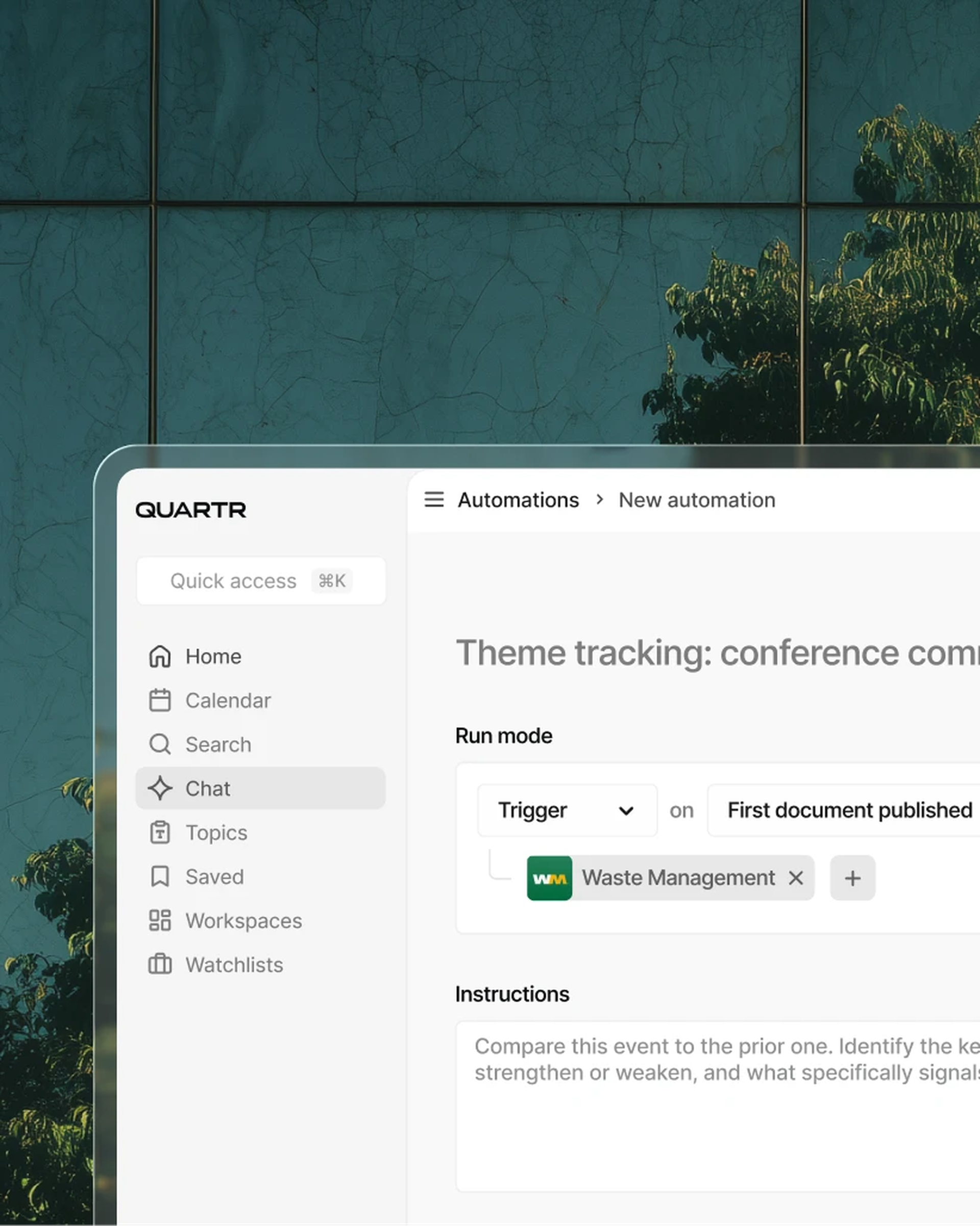
Automations
Zero in on what matters
Define the prompt once. It runs the moment a company publishes or on a schedule you set. Outputs map to the exact signals you choose.Learn more
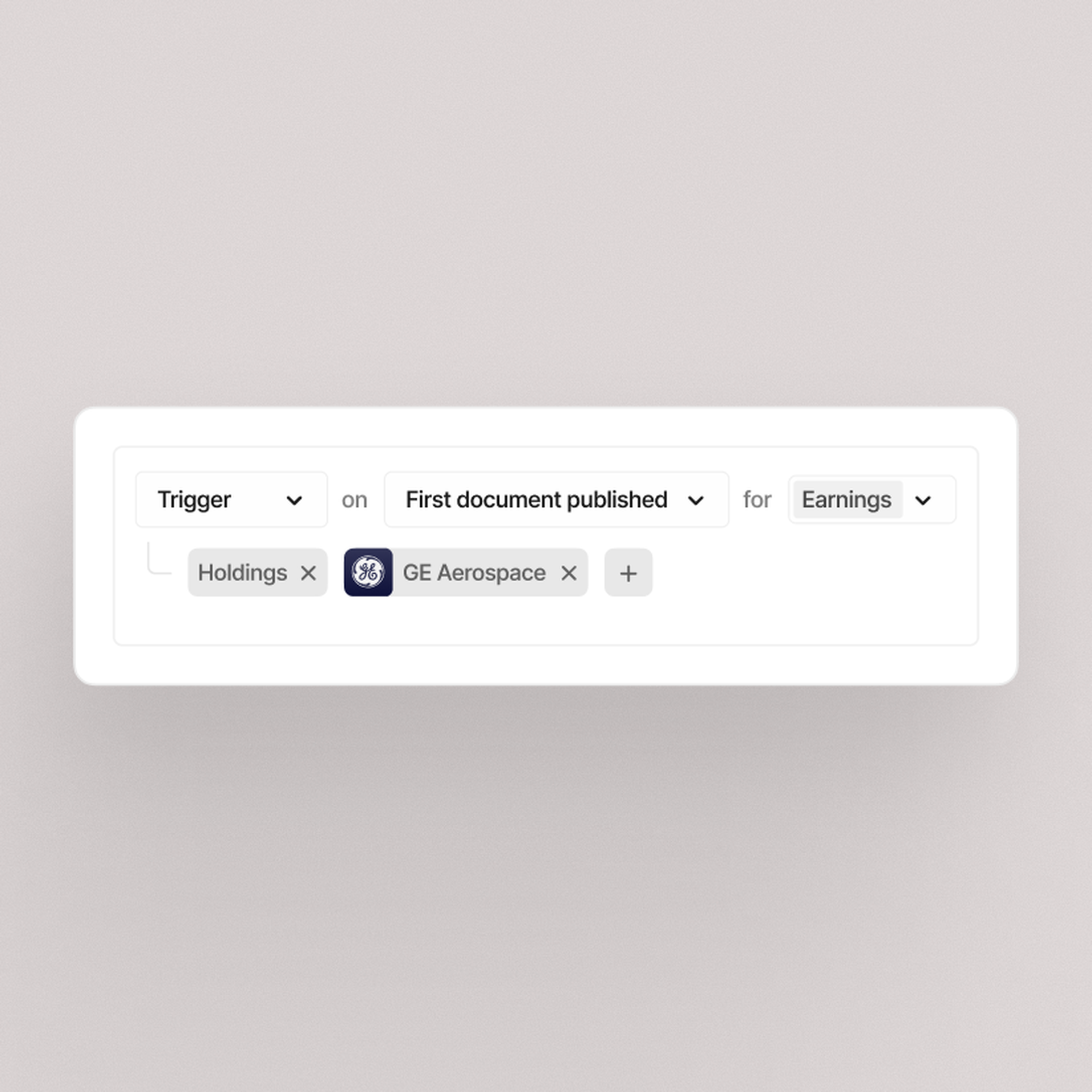
Event-triggered research
Runs when a company publishes new material. Trigger on the first published document for the earliest possible run, or wait for a specific one.
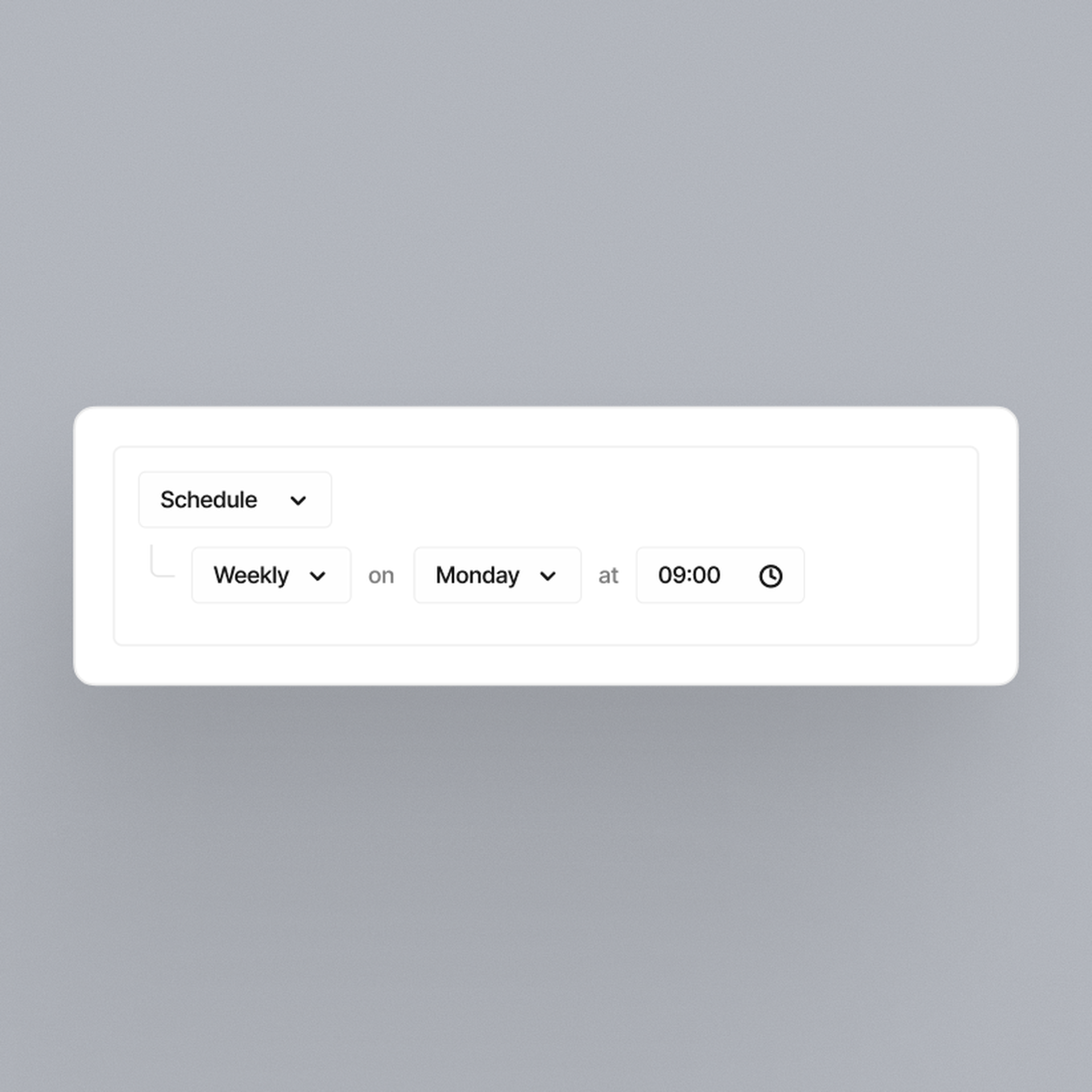
Scheduled research
Runs on a recurring cadence you set. Daily, weekly, monthly, or quarterly, for aggregate reads across a period rather than a single event.
Live audio & transcripts
Be first
Join any earnings call live in one click, with no manual registration. Follow the transcript as it happens and jump straight to the moments that matter.Learn more
Live earnings calls
Join any call in one click. The audio keeps playing while you work elsewhere in Quartr.
Live transcripts
Speaker-by-speaker, in real time. Searchable across every live and historical call.
Live earnings calls
Join any call in one click. The audio keeps playing while you work elsewhere in Quartr.
Live transcripts
Speaker-by-speaker, in real time. Searchable across every live and historical call.
Quartr MCP connects your AI environment to 17K+ public companies
Pull live transcripts, filings, and slides into Claude or Codex via MCP. Combine Quartr's global IR data with any other dataset. Run agentic research and monitoring.
Included with Quartr Pro at no extra cost.Learn more
Quartr's AI stands out because it only pulls clean, first-party data from public companies.
In investing, that's everything.
Jamie Ross
Investment Manager, GAM Investments
GAM
GAM
Research that used to take hours now takes seconds with Quartr Pro. Tracking shifts in tone or extracting tables, it's as simple as typing a query.
Tom O'Hara
Investment Director
Ciena
Ciena
Before Quartr we spent hours manually compiling insights through the peer earnings cycle. Now, these tasks are done faster, with greater precision.
Gregg Lampf
VP of Investor Relations
Protean
Protean
Being able to ask specific questions across years of transcripts and reports and instantly get verified answers is a game-changer.
Splunk is a technology company that specializes in data analysis and monitoring. Their platform allows organizations to collect, analyze, and gain valuable insights from large amounts of data generated across various sources. Splunk's software enables businesses to search, monitor, and visualize data in real time. This in turn helps them to detect and address potential issues, improve operational efficiency, and enhance cybersecurity. With a focus on data-driven decision-making, Splunk's solutions cater to a host of different customers within various fields, including IT, security, finance, healthcare, and more.
20 years of analytics
Splunk was founded in 2003 with the idea to help organizations and businesses effectively utilize their machine-generated data. Originally focused on IT monitoring, Splunk quickly expanded its capabilities to become a leading provider of data analytics and monitoring solutions. By enabling businesses to derive actionable insights from their data, Splunk gained popularity and grew its customer base across industries. Over the years, Splunk has continued to innovate and enhance its platform, incorporating advanced analytics, machine learning, and artificial intelligence.
Demystifying data
Splunk offers a comprehensive and scalable platform that helps organizations make sense of vast and diverse data sources. At the core of Splunk's platform is its data indexing and search technology, which allows users to collect, index, and analyze machine-generated data from various sources in real time. This data can be sourced from applications, servers, network devices, sensors, and more. Splunk's platform also provides advanced analytics capabilities, including machine learning and AI, to enable users to uncover hidden patterns, detect anomalies, and gain valuable insights from their data. Through their platform, Splunk enables organizations to turn their data into actionable intelligence, improve operational efficiency, and drive informed decision-making. Some notable customers and users of Splunk’s platform include names such as ManpowerGroup and Carrefour.
A customizable service
Splunk offers a range of applications and solutions tailored to specific use cases, such as IT operations, security, business analytics, and IoT. The company provides industry-specific solutions, applications, and add-ons that address the unique needs and challenges of various sectors, including financial services, healthcare, manufacturing, retail, telecommunications, and government.