)
)
The New York Times Company: Adapting to the Times
The New York Times was founded on the simple, yet radical idea that readers preferred quality journalism over sensationalist headlines. That bet survived civil war, financial distress, and numerous family successions. But the rise of the internet threatened the model that had worked for over 150-years. Faced with a collapsing advertising business and mounting debt, The New York Times Company was forced to reinvent itself. Rather than abandon its founding principles, the company reshaped its business around them. Two decades on, time has proven that quality journalism still commands a premium.
Raymond & Jones
In the middle of the nineteenth century, New York City was an intensely competitive newspaper town. Dozens and dozens of publications fought for attention on the streets of Manhattan, with hawkers and newsboys selling papers for a penny or two to passersby, and editors frequently and openly feuded with each other in their own publications. By the time the paper that is the subject of this article was founded, several newspapers bearing some version of the name "The New York Times" had already come and gone. It was into this chaos that two former colleagues decided to launch what would be the eighth attempt at the publication. This time, the paper would stick around.
Henry Jarvis Raymond was a journalist with a measured writing style (which were few and far between at the time) and an interest in politics. George Jones was a banker, and the two had previously worked together at The New York Tribune for a number of years.
The duo had grown tired of editor Horace Greeley and his fierce partisanship and had been drawing up plans for their own publication since 1844. However, they lacked the capital needed, and it would take seven long years for them to put the plan into action. Raymond had insisted on raising $100,000 as starting capital – one hundred times what Greeley had staked on the Tribune a decade earlier.
On September 18, 1851, the first issue of The New-York Daily Times rolled off the printing presses in a basement on Nassau Street. Like almost all newspapers at the time, Raymond and Jones' publication cost a penny. But its tone was starkly different from that of its competitors. In the inaugural edition, sold on the streets of the Financial District, Raymond laid out his editorial philosophy. He promised to write in temperate language, to avoid personal attacks, and to get angry as rarely as possible. "There are few things in this world which it is worthwhile to get angry about," he wrote, "and they are just the things anger will not improve."
This stood in direct contrast to the sensationalist writing that aimed to make readers as upset as possible, which defined much of New York's press at the time. The somewhat novel concept of reporting factually on the news, without attacking politicians and rival editors on every page, resonated. By its ninth day of publication, the paper claimed a circulation of ten thousand copies. Within a year, it was distributing around 24,000 copies daily.
The name was eventually shortened to The New-York Times (NYT). In 1857, the paper moved into a purpose-built five-story building on Park Row, a stretch of Lower Manhattan that was quickly becoming known as "Newspaper Row" because of the cluster of publications headquartered there.
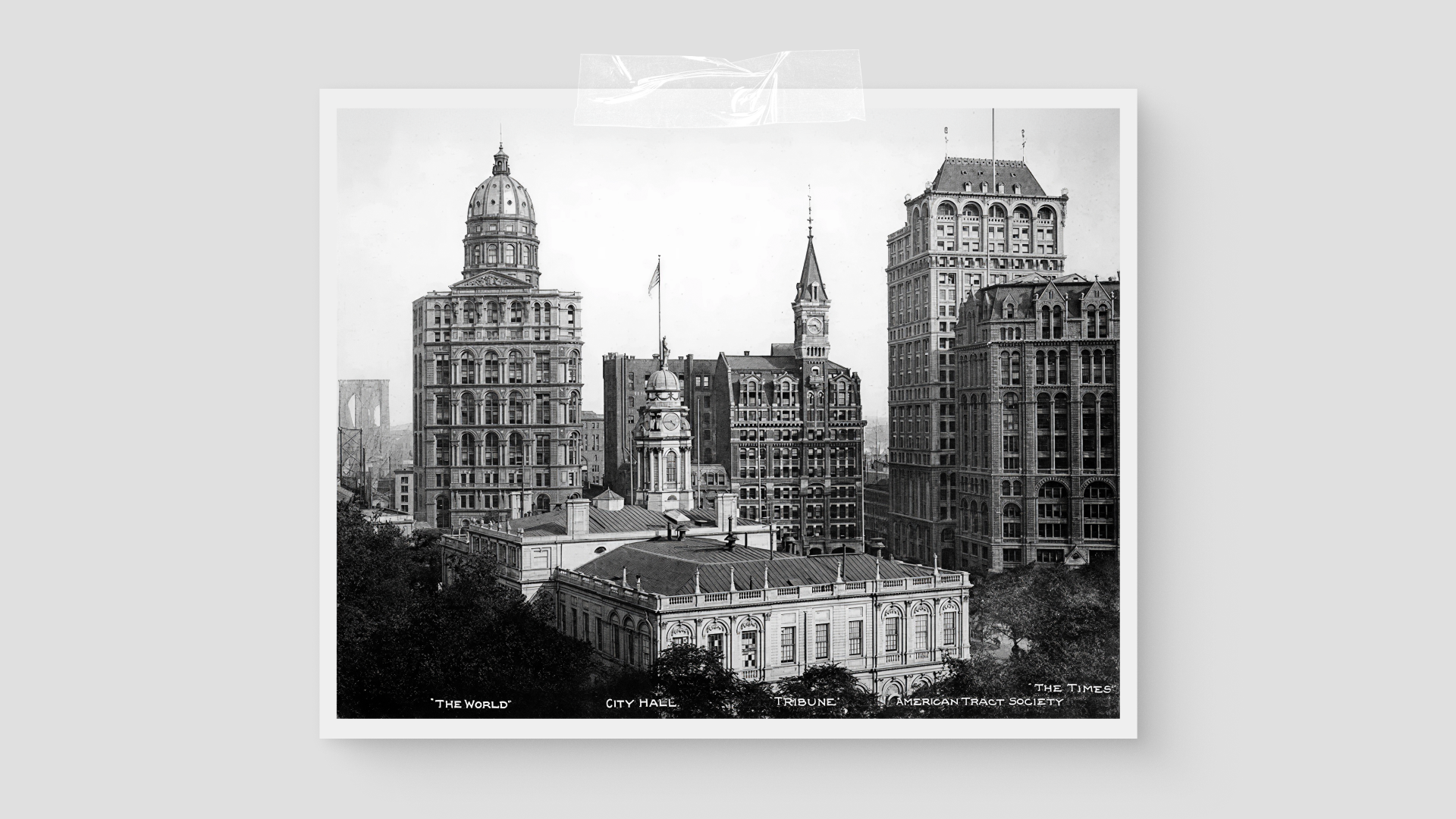
Raymond's political life and his work as a journalist would become increasingly intertwined, in ways that would be considered inappropriate (to put it mildly) by today's standards but were entirely typical of the era. As events transpired, he would not be content to simply edit a newspaper but would eventually run for office. Beginning in the New York State Assembly, he later served as its Speaker, and was elected lieutenant governor in 1854. He also played a central role in the founding of the Republican Party, and served a term in the U.S. House of Representatives.
The Civil War, which began just a decade after the paper's founding, forced the Times to adapt. Readers wanted battlefield updates, and the paper relied on correspondents in Confederate states. Most other publications at the time based their reporting on Associated Press wire dispatches, meaning that the Times could offer insights and analysis that its competitors couldn't match.
Embedding journalists in war zones is more or less standard practice nowadays, and on the evening news, we're used to seeing reporters in bulletproof vests and helmets reporting as close to the action as safety permits. It wouldn't be the last time the paper helped shape how journalism was practiced.
The Tweed exposé and financial trouble
Raymond was a larger-than-life figure. A journalist and politician who had once stationed a Gatling gun at the Times building to defend it against rioters (yes, really), and had stayed (mostly) true to his pledge of temperate reporting. But in 1869, at just 49 years old, he died of a heart attack. The paper he had been editing kept running, now under the full ownership of George Jones.
It was under Jones that the Times would, for the first time, gain national attention, due to what would become known as the Tweed exposé. In 1871, the newspaper obtained ledger books from a disaffected insider at Tammany Hall, the political machine that controlled New York's Democratic Party and, by extension, much of the city's government.
The ledgers revealed that William "Boss" Tweed, the Democrats' top name in NYC, and his cronies had embezzled millions of dollars from the city. Jones and his journalists published the details relentlessly, piling pressure on Tweed alongside satirical cartoons in other publications. The combined pressure eventually brought him down.
Jones ran the paper until his death in 1891, and in the years that followed, in the absence of his steady hand on the business, the paper drifted. His heirs had little interest in the quality journalism that had made the Times a respected publication, and even less aptitude for managing a business of that size. The profits Jones had built were spent without regard for where they came from, staff morale deteriorated, and the reporting suffered. By the mid-1890s, the Panic of 1893 had hammered the broader economy, and The New-York Times was in dire straits, having accumulated over $300,000 in debt.
Its paid circulation had declined to roughly 9,000, numbers close to where it had been in its earliest days four decades earlier. To put that figure into perspective: Joseph Pulitzer's World led the market at 400,000 daily issues, followed by William Randolph Hearst's Journal at 300,000. In other words, The Times was broke, heavily in debt, and directionless.
Sign up for Edge
Get curated quality company deep dives every other week.
A publisher from Chattanooga
It's time to introduce another protagonist to our story. Adolph Ochs was born in Cincinnati in 1858 to German Jewish immigrants and had grown up delivering newspapers in Knoxville, Tennessee. At age 11, he went to work as an office boy at The Knoxville Chronicle, and by 20, had borrowed $250 to purchase a controlling interest in the Chattanooga Times, a failing local paper in eastern Tennessee.
Over the next two decades, he turned it into one of the more respected regional newspapers in the South. He was ambitious, had spent more or less his entire life in the newspaper business, and was wholly committed to the idea that journalism should be trustworthy and free of personal bias.
He was also deeply in debt. During the mid-1890s, the Chattanooga real estate market had crashed, and Ochs had borrowed heavily against his properties to expand the paper. He needed a bigger opportunity to recover. When he received a telegram in the spring of 1896 informing him that the NYT might be available for a reasonable price, he booked his ticket to New York. What he found was a business in freefall, its circulation a fraction of what it had once been.
When Ochs walked into the offices of the Times for a meeting with the paper's investors, which included J.P. Morgan, he wasn't greeted with open arms. Here was a (largely) unknown, small-market publisher, from the South, no less, trying to establish himself in the largest and most competitive newspaper market in the country. While they might have been skeptical at first, he quickly convinced them that he was the man who should lead the NYT. Ochs was offered a salary of $50,000 a year, an enormous sum at the time, to simply manage the paper on behalf of the existing investors. He turned them down.
Ochs didn't want to manage the NYT; he wanted to control it. Through a series of financial maneuvers, he borrowed $75,000, bought bonds in The New York Times Company, and negotiated a deal that would give him majority ownership once the paper turned a profit for three consecutive years.
Ochs got to work immediately. He eliminated fiction from the paper, added a Sunday magazine section, expanded international coverage, and removed advertising he considered "dishonest or in poor taste." He coined the slogan “All the News That’s Fit to Print,” first introduced on October 25, 1896, before moving to the front page in February 1897, where it has remained ever since.
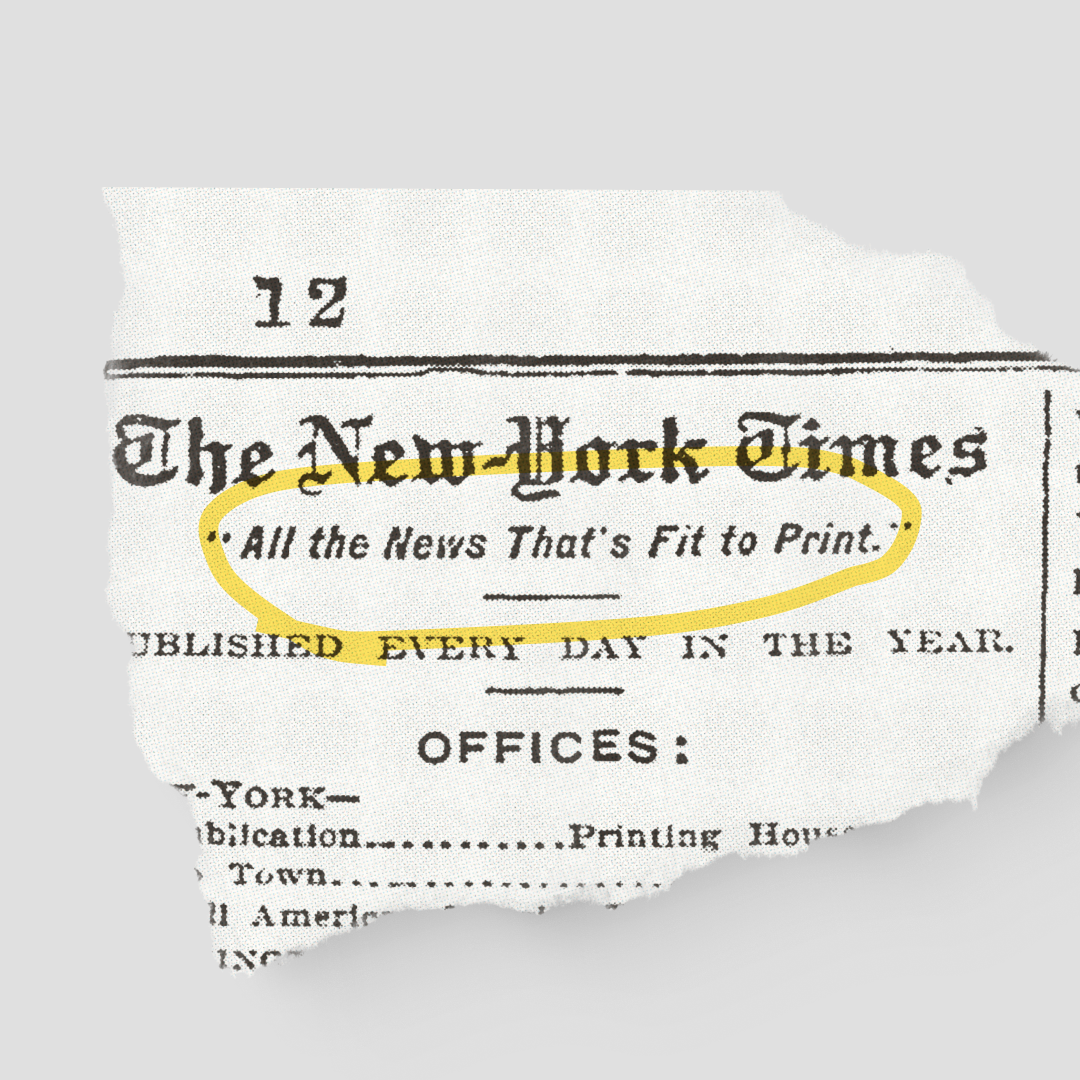
It was a pointed jab at the sensationalism of Pulitzer and Hearst, whose papers were then locked in a never-ending struggle to outdo each other in the circulation war, leading to one outlandish headline after another.
But Ochs' most critical business decision up to this point came in 1898. The Spanish-American War had boosted demand for news, but the Times lacked the resources to match its wealthier competitors' war coverage, and circulation was again sliding.
Ochs cut the price from three cents to one cent, matching the penny papers of Pulitzer and Hearst. The gamble paid off. Readers who had previously bought the more sensational papers found that they could now get serious journalism for the same price. Within a year, circulation had jumped from 9,000 to over 76,000.
Times Square gets its name
In 1904, Ochs moved the paper's operations to a newly built skyscraper on Longacre Square in Midtown Manhattan. In the coming years, the neighborhood would be so transformed by the Times' presence that the city renamed it Times Square.
That same year, Ochs hired Carr Van Anda as managing editor, a move that proved just as consequential as any decision he had made up to that point. Van Anda was relentless, meticulous, and very, very good at his job. Under his watch, the NYT would become the paper of record for major breaking news.
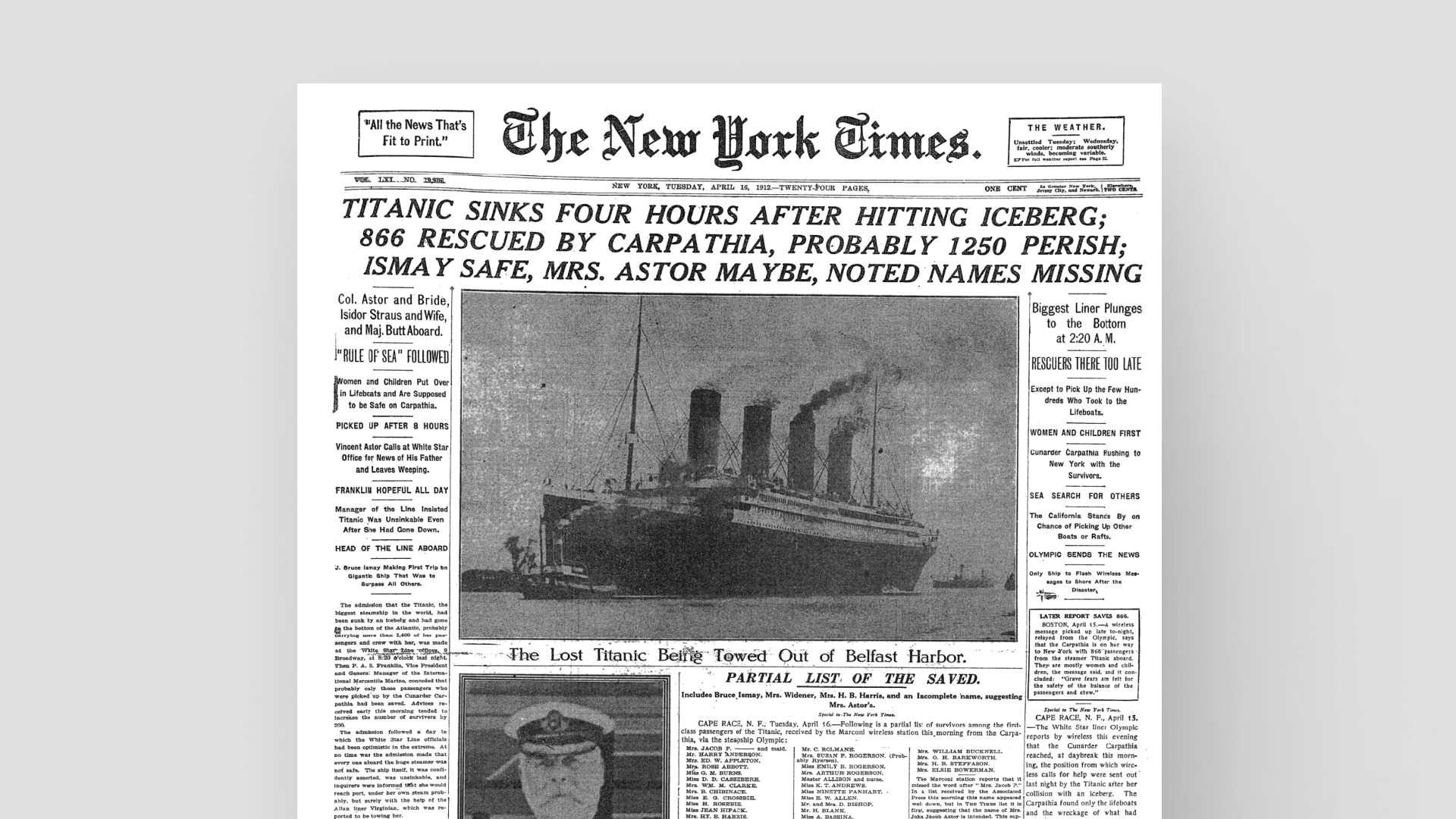
In April 1912, when early bulletins about the sinking of the Titanic were still uncertain, and many newspapers hesitated to commit to the story, Van Anda deployed reporters aggressively, secured charter boats to meet the rescue ship Carpathia before it reached port, and committed the paper to covering every angle.
While other editors waited for confirmation from the authorities, Van Anda went to press with the news his reporters had gathered in the field. The resulting coverage was so thorough and so early that it became a template for how newspapers covered disasters for decades.
During this period, the Times also committed heavily to covering the First World War. In 1918, it won its first Pulitzer Prize (for public service), for publishing the full texts of official reports, documents, and speeches by European statesmen relating to the war. The simple and somewhat unglorious act of printing primary sources in full helped establish a pattern that would define the paper for the next century: the conviction that its readers wanted access to information in its unaltered form.
Van Anda also pushed the Times to report on Einstein's then-obscure theory of general relativity, and was personally involved in covering the discovery of Tutankhamun's tomb in Egypt in 1922. By the time he stepped down as managing editor in 1925, the Times had built an international reputation for comprehensive, reliable reporting that no other American newspaper could match.
By the 25th anniversary of Ochs' takeover in 1921, the business had nearly 1,900 employees, and had expanded its product line to include a weekly book review, a financial review, a mid-week pictorial, a monthly current history magazine, and The New York Times Index. Daily circulation had grown from less than 9,000 in 1896 to roughly 780,000. Ochs ran the Times until his death on April 8, 1935. In the nearly four decades of his stewardship, he had taken a failing paper and turned it into one of the most respected and influential newspapers in the world.
The Sulzberger dynasty
When Ochs died, his son-in-law, Arthur Hays Sulzberger, became publisher. He took over a paper (and a readership) still reeling from the Great Depression, with circulation in 1935 being roughly two-thirds of what it had been in 1929. While he had inherited Ochs' editorial principles, Sulzberger was willing to make broader changes that his predecessor had resisted. He cut costs, ended several underperforming publications that had been launched under Ochs, and began to modernize the paper's look and feel.
Where Ochs had opposed photography, Sulzberger embraced it, encouraging the use of wirephoto technology as he expanded the paper's visual storytelling. He appointed Anne O'Hare McCormick as the Times' first foreign affairs editorial commentator in 1937, making her the first woman in such a role at the paper, and in 1945 hired George Strator, its first African American reporter. In 1942, the paper introduced a daily crossword puzzle, a feature that nearly a century later would become one of the most valuable pieces of its digital business.
The paper grew substantially during Sulzberger's 26 years as publisher. Daily circulation rose from 465,000 to 713,000 and Sunday circulation climbed from 745,000 to 1.4 million. The Times began printing editions in Paris and California using remote-control typesetting, extending its physical reach far beyond Manhattan.
In 1961, Sulzberger handed the reins to his son-in-law, Orvil Dryfoos, whose tenure would be brief and troubled. In December 1962, the New York Typographical Union staged a strike over the introduction of automated printing presses. The walkout lasted 114 days, in practice shutting down newspaper printing across the entire city.
By the time it ended, the city's newspaper landscape had been permanently transformed. Numerous smaller publications never recovered from the strike, and only three major dailies survived: The New York Times, The Daily News, and The New York Post. Dryfoos, whose health had deteriorated under the strain, died of a heart condition in May 1963, just weeks after the strike's resolution.
The family was unprepared and had to deal with the grief and a succession crisis simultaneously. The news still needed to be printed, but Arthur Hays Sulzberger was not in a position to return, being confined to a wheelchair and 71 at the time. His son, Arthur Ochs "Punch" Sulzberger, was only 37 and had not been groomed for the top job.
But on June 20, 1963, the board appointed him publisher, the youngest person ever to hold the role. It was a decision that would shape the company for the next three decades. While he might not have been thought of as the natural successor, he proved to be more than ready for the task.
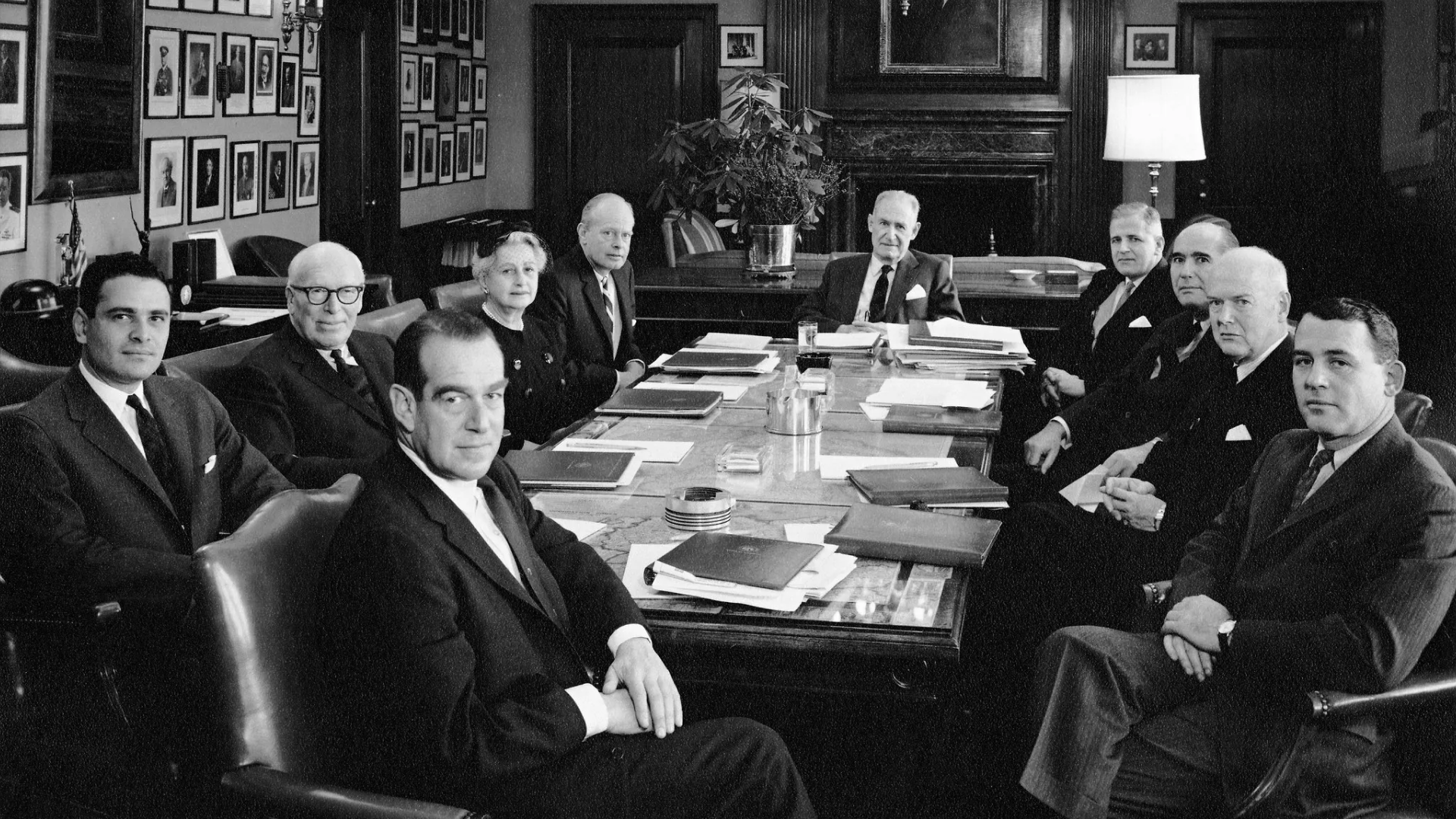
Punch Sulzberger's early years were defined by adaptation. He shut down the unprofitable Western edition of the paper in 1964 and began reviewing, reconsidering, and reevaluating the Times' structure. In 1967, he joined with the owners of the Washington Post and the now-defunct New York Herald Tribune to create the International Herald Tribune, replacing the Times' standalone international edition. He also oversaw the paper's transition from an eight-column to a six-column format, a change that gave the paper a more modern appearance.
It was also under Punch Sulzberger's watch that the Times became involved in two landmark Supreme Court cases that reshaped the relationship between the press, the government, and the American public.
The New York Times before the Supreme Court
The first of these was New York Times Co. v. Sullivan, decided in 1964. The case originated in 1960, when the Times published a full-page advertisement placed by supporters of Martin Luther King Jr. The ad described the treatment of civil rights activists in Montgomery, Alabama, and contained several minor factual errors. L.B. Sullivan, a Montgomery city commissioner, sued the Times for libel in state court, even though he was not named in the advertisement.
An (all-white) Alabama jury awarded him $500,000, roughly $5 million in today's money, and the largest libel verdict in the country at the time. More alarmingly, it was just one of seventeen similar lawsuits brought by southern officials against northern media outlets at the height of the civil rights movement, collectively seeking more than $288 million in damages.
The case went to the Supreme Court, which ruled unanimously in favor of the Times. Justice William Brennan wrote that public officials suing for defamation must prove "actual malice", meaning the publisher either knew the statement was false or acted with reckless disregard for the truth. The decision didn't just protect the Times, but completely reshaped American libel law, making it far more difficult for people in positions of power to use defamation suits to silence their critics. In effect, it made the press far freer to report on the actions of those in power.
Seven years later came the Pentagon Papers. In early 1971, Daniel Ellsberg, an analyst at the RAND Corporation, leaked a massive, classified Department of Defense study on U.S. involvement in Vietnam to reporter Neil Sheehan at the Times.
To make a very long story short: the study covered decades of government decision-making and revealed that multiple administrations, both Democratic and Republican, had systematically misled the American public about the scale, nature, and progression of the war. On June 13, 1971, the Times began publishing excerpts. The headline read: "Vietnam Archive: Pentagon Study Traces 3 Decades of Growing U.S. Involvement."
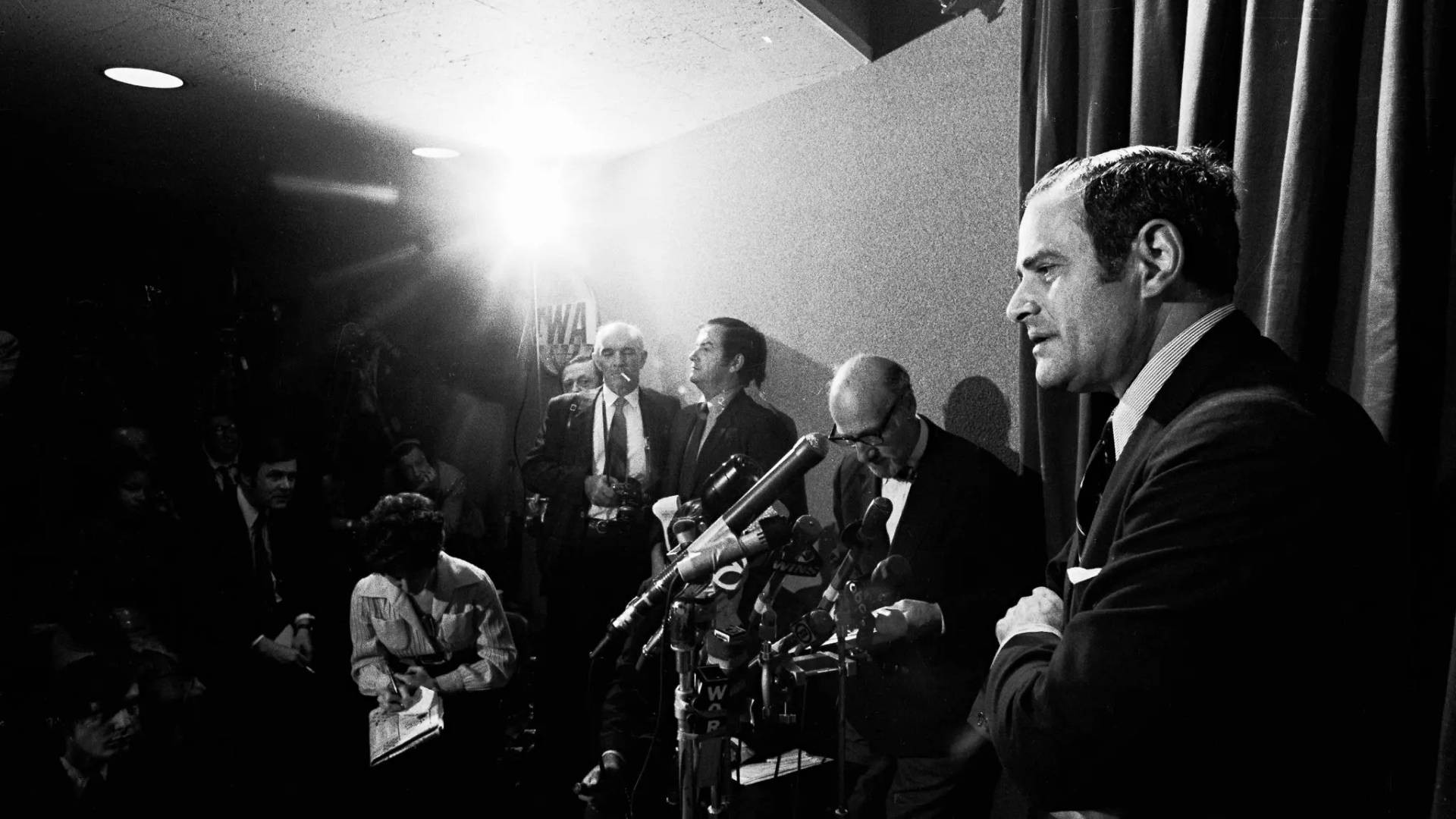
The Nixon administration moved quickly to block further publication, arguing that the material jeopardized national security. A federal judge in New York issued a temporary restraining order. It was the first time in American history that the federal government had obtained a prior restraint against a newspaper. Punch, who was in London when the government demanded the Times stop printing, very bravely refused to censor his paper. He would later admit he was "scared to death."
The case shot through the lower courts, and in less than two weeks, it was brought before the Supreme Court. In a 6-3 decision, the Court held that the government had not met the heavy burden required to justify prior restraint. The Times resumed publication the next day. The episode cemented the paper's reputation as a publication willing to challenge the most powerful institutions in the country, even when faced with immense legal, financial, and potentially existential risk.
I had no doubt but that the American people had a right to read them and that we at The Times had an obligation to publish them.— Arthur Ochs “Punch” Sulzberger
Becoming a modern publication
Through the 1970s and 1980s, the Times continued to evolve and modernize. In 1976, Punch Sulzberger introduced a four-section daily format that reshaped the paper's relationship with both readers and advertisers. The new structure added a dedicated business section and created rotating thematic sections for each weekday. It was a deliberate effort to broaden the paper's appeal beyond hard news readers and, by that, attract advertising.
While the move was clearly good for the business side of the organization, it was met with skepticism inside the newsroom as some journalists saw it as a concession to commercial pressures.
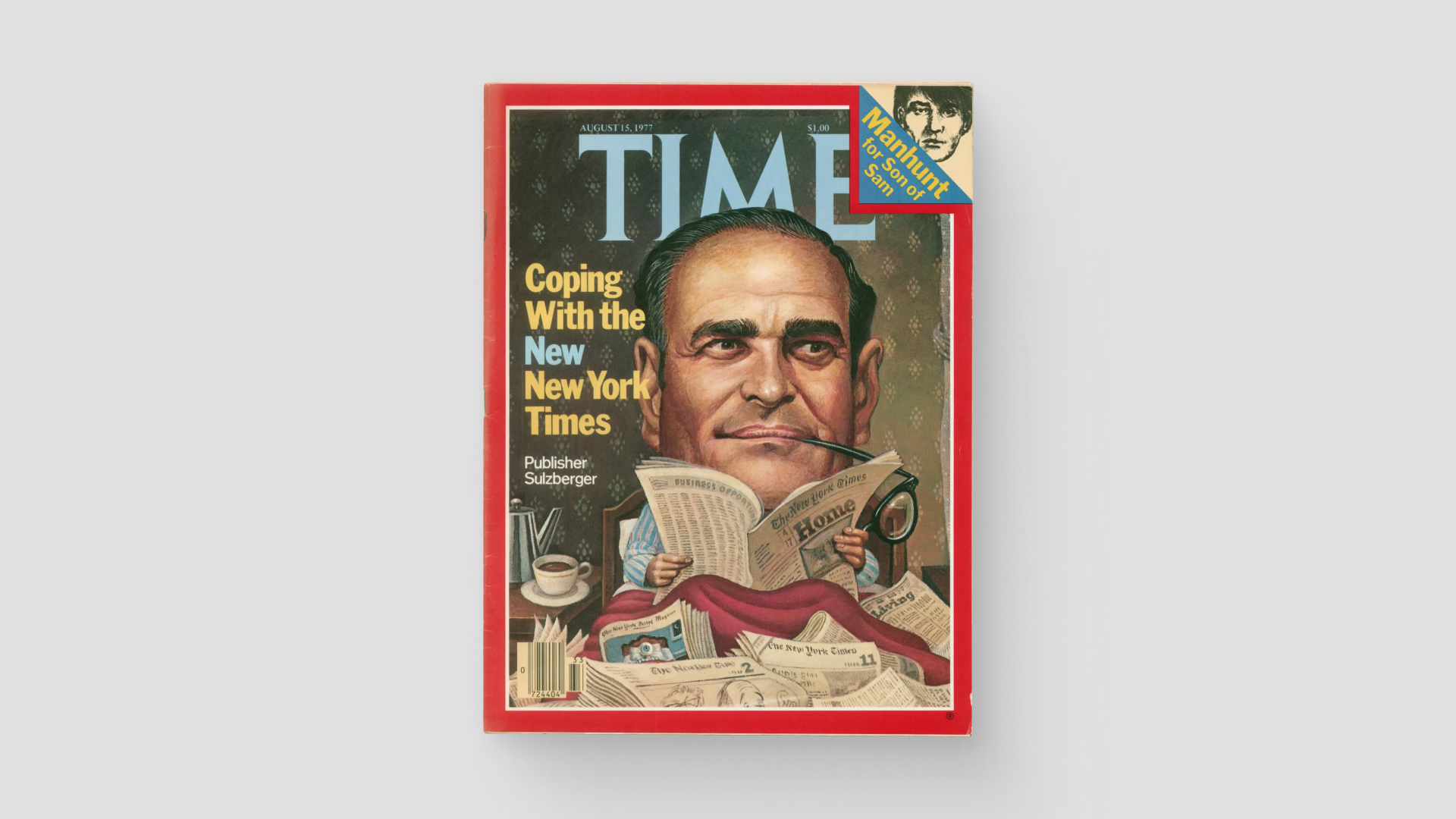
Regardless of that divide, it accelerated readership. By the mid-1980s, when daily newspaper circulation in the United States was at its historic peak, the Times was printing over 1.1 million copies on weekdays and considerably more on weekends. It was the most profitable period in the paper's history so far.
In 1992, Arthur Ochs Sulzberger Jr. succeeded his father as publisher. He inherited a newspaper with a strong brand, an excellent reputation, and a solid print business with daily circulation and subscriptions at all-time peaks. The paper had won dozens of Pulitzer Prizes under Punch Sulzberger's tenure, and its newsroom was among the largest in the country.
But the media landscape was about to undergo a transformation that would threaten every assumption the newspaper industry had been built on. Sulzberger Jr. understood this earlier than many of his peers. Where his father had been skeptical, the younger Sulzberger saw the internet as an opportunity before much of the competition. In May 1994, the Times launched @times on America Online, offering articles, film reviews, and business reporting through the platform. In January 1996, it launched nytimes.com as a standalone website.
The 1990s were also a period of aggressive expansion. In 1993, the Times Company acquired The Boston Globe for $1.1 billion, the largest newspaper acquisition in American history up to that point. The deal was part of a broader strategy to build a portfolio of strong regional newspapers. The company also invested in television stations, acquired About.com (a web-based reference site), and expanded its operations abroad. Revenue was growing, and the print advertising market, though showing early signs of softening, was still generating enormous sums.
The New York Times' Class A shares had begun trading over the counter in 1967 before listing on the American Stock Exchange in 1969. In 1997, the company transferred its listing to the New York Stock Exchange under the ticker NYT. Its ownership structure, however, remained intact over the years and was not typical of a publicly traded corporation.
By maintaining a dual-class system, the Ochs-Sulzberger family retained editorial and strategic control even as the business model evolved. Class A shares were available to the public, while Class B shares, carrying the majority of voting power, were held almost entirely by the family through a trust. That structure remains in place today, with the family still holding roughly 95% of the Class B shares, enabling it to elect 70% of the board, and insulating editorial priorities from external shareholder pressure.
Risk of disruption
Heading into the new millennium, the Times remained the most respected newspaper in the country, with more Pulitzer Prizes than any other news organization and a newsroom of thousands. Its business model had endured for over a century. While subscriptions had always been the reliable base, advertising had firmly grown into the primary driver. In 2000, the company reported its highest-ever revenue at $3.3 billion, still entirely generated by the printed paper, through both subscriptions and advertising.
That momentum had led to a broad portfolio extending well beyond the core business, making expensive bets on acquisitions and expansion that would soon be tested by the worst economic downturn since the Great Depression. Its portfolio of newspapers, including The Boston Globe, as well as a dozen other regional names and magazines, brought clear synergies. Less so were the synergies from the 18% stake it had acquired in the Boston Red Sox and its minority interest in Fenway Park. Somewhere in between sat its broadcast television stations.
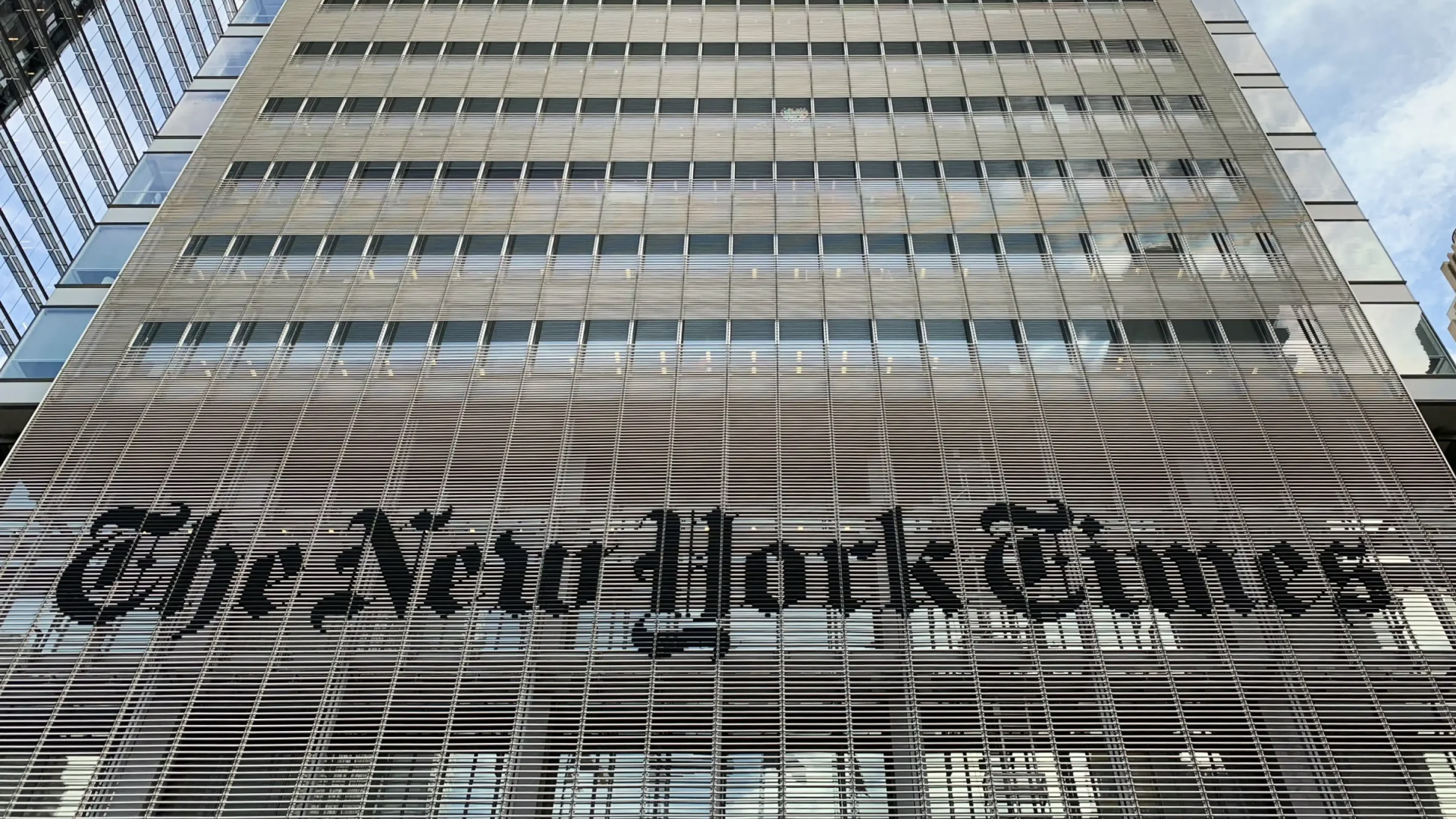
By mid-2007, the company had moved into its new headquarters on Eighth Avenue. Revenue in the years preceding had remained above $3 billion, though below its 2000 peak. On the surface, the business appeared stable, reflected in the prominence of its new Midtown tower. Underneath, however, the foundation was weakening. The looming question – could a newspaper survive without print? – was becoming unavoidable.
The internet was clearly reshaping the industry; that much was clear. Disruption was gradual at first, then accelerated, as it began affecting both sides of the model. Print advertising, long one of the most effective ways to reach large, targeted audiences, was showing signs of strain. For the Times, this shift had begun years earlier.
Weekday print circulation had peaked in 1994 at 1.18 million copies and declined steadily thereafter. At the same time, advertisers gained access to new channels. Platforms like Craigslist, Google, and later Facebook offered more targeted and measurable alternatives, pulling budgets away from print.
The company had shown a willingness to adapt, but that flexibility was more evident in its growing portfolio than in its core operations. As previously mentioned, the Times had launched online in 1996 and chose to keep its content free to build an audience. At the time, the decision made sense, but over time, the consequences of that decision would work against it. By making the paper fully available online, the company had built a readership that came to expect free and unlimited access.
The structure of the organization (the divide between newsroom and business) was a factor that exacerbated these challenges. Compared to most businesses, where a CEO leads with a clear hierarchy beneath them, The New York Times Company is structured differently. The CEO's authority is largely confined to the business side of operations, overseeing revenue, technology, and strategy, while the newsroom operates under an Executive Editor who holds ultimate authority over editorial decisions, independent of the CEO.
In addition, the publisher, traditionally a member of the Ochs-Sulzberger family, serves as the bridge between the two. This separation is designed to protect journalistic independence from commercial pressure, with the family serving as a consistent steward, helping maintain the editorial integrity that makes the Times what it is.
For decades, the model worked. Journalists measured success by the quality of the story, not by audience reach or traffic. Publishing schedules were built around print deadlines, and editorial and business operated in parallel, aligned enough to sustain a highly successful model. But as the industry continued to shift, that separation became harder to manage. What had once been a strength introduced friction, as differing priorities began to pull the organization in separate directions.
Challenges mounting
By 2008, the global financial crisis had taken hold. While the newsroom covered the market collapse, the business behind those headlines was facing the same pressures. The aforementioned structural challenges became even more pressing in the difficult macroeconomic environment as advertisers' budgets tightened.
In 2007, advertising revenue stood just above $2 billion. Two years later, it had fallen by roughly 35% to $1.3 billion. Digital advertising did grow during this period, but print still accounted for about 90% of the total, and therefore, its decline dominated the overall trend. In the years that followed, advertising would continue to shrink, partly due to divestments and intentional change in focus, but primarily due to the shifting landscape.
A common misconception is that circulation revenue deteriorated just as sharply. Print subscribers were declining, but price increases offset much of that pressure, keeping that revenue line slightly positive through the period. Still, with advertising as the primary driver, total revenue fell by approximately 25% from 2007 to 2009.
At the same time, the expansion of previous decades added pressure to a company that had stretched well beyond its core business. Entering 2009, The New York Times Company carried $1.1 billion in debt, much of it as a result of an aggressive capital allocation strategy that included issuing debt to repurchase shares. More than a third of those obligations were now due in May. Combined with declining revenue, several acquisitions, and the cash outlay for its new headquarters, the company was left with just $46 million in cash to meet those near-term commitments.
To remain solvent, The New York Times Company secured a $250 million loan from Mexican telecom billionaire Carlos Slim in January 2009. The terms reflected its distressed position: a 14% interest rate, along with warrants convertible into equity at a discounted price. For the company, it ensured survival. For Slim, it proved highly lucrative.
Further measures followed. A few months after the deal with Slim, it announced a $225 million sale-leaseback of part of its headquarters, using the proceeds to reduce debt. The building that symbolized its stature now also reflected its constraints. The suspension of its dividend was more or less inevitable as the company began unwinding much of its earlier expansion.
Television and radio stations, regional newspapers, and digital information businesses were sold, often at significant losses when measured against the capital invested upfront and the continuous improvements it had poured into these over the years. The Boston Globe, acquired for $1.1 billion, was sold in 2013 for $70 million.
The Red Sox stake, the Fenway Park interest, the broader media portfolio – the conglomerate was dismantled piece by piece. Each divestment improved liquidity while underscoring how far the prior strategy had fallen short, and raising the question of how it would generate durable revenue in the changing industry.
Transformation begins
Leading into the 2010s, change continued as the group refocused on the core newspaper and bridged the gap with its digital operation. Over the years, digital for the Times had mainly meant providing free access while generating revenue through advertising on its articles.
But the company had experimented with paid digital content before. TimesSelect, launched in 2005, placed columnists and archives behind a paywall for about $50 a year and reached 250,000 subscribers before being shut down in 2007, when management concluded that free traffic was more valuable. Now, the company was ready to try again on a broader scale. In March 2011, it introduced a metered paywall, allowing 20 free articles per month before prompting users to subscribe.
After more than a decade of free access, the move was met with skepticism. The prevailing view in digital media was that paywalls limited growth and pushed readers to competitors. Its advertising revenue had been declining for years, and now the company was ready to sacrifice more of that as every reader with restricted access was one less impression to sell to advertisers. It wasn't an easy decision, but building a subscription business required accepting that trade-off in exchange for something potentially more durable over time.
Time would tell whether the strategy would succeed, though early results eased some of its concerns. Within three weeks, the Times had more than 100,000 digital subscribers, and by the end of the first quarter, that number had grown to nearly 300,000. Just as importantly, traffic held up better than expected. The foundation for what would follow seemed to be in place. At the Q4 2011 earnings call (sourced through Quartr Pro), Publisher and Chairman Arthur Sulzberger Jr. assessed the year with the measured optimism of someone who could see the direction changing even if the destination was not yet clear:
“Looking back at 2011, I could use a number of adjectives to describe the year, challenging, fascinating, and, to a great extent, transformative. Both in terms of our past, but more importantly, in terms of where we are heading, 2011 will be remembered as the year in which we made unprecedented strides in our strategic evolution to a multi-platform organization.”
For over a century, newspapers ran on two remarkably stable revenue streams. Readers paid for access, and advertisers paid to reach those same readers. It was the foundation of the entire industry, from the largest papers to the small regional weeklies.
The paywall was the first clear signal that the Times recognized the need to adapt its century-old business model to a new reality. The question of what kind of organization it needed to become in a digital world remained largely unanswered, but change was underway. As the last parts of the old portfolio were sold off and the company narrowed its focus, that question became increasingly urgent.
We haven't done enough to crack that code in the digital era.
The innovation report
In mid-2013, publisher Arthur Sulzberger Jr. asked a team led by his son, then-senior newsroom editor A.G. Sulzberger, to diagnose the digital problem. The group spent approximately six months conducting hundreds of interviews across the newsroom, the business side, and competitor organizations, before publishing its findings internally in March 2014. What they found was damning. We'll quote the introductory words of the report directly, as it captured the tension at its core:
“The New York Times is winning at journalism. Of all the challenges facing a media company in the digital age, producing great journalism is the hardest. Our daily report is deep, broad, smart and engaging — and we've got a huge lead over the competition. At the same time, we are falling behind in a second critical area: the art and science of getting our journalism to readers. We have always cared about the reach and impact of our work, but we haven't done enough to crack that code in the digital era.”
The report's core emphasis was that the problem had nothing to do with the quality of the reporting but with everything that happened after a story was published. The newsroom's job ended when it hit publish. Distribution, audience development, social strategy, and search optimization had all been pushed to the margins or handed off to the business side, which the newsroom barely spoke to.
Stories were filed late in the day to meet print deadlines, and mobile apps were organized by print section. While the digital team and the newsroom were now in the same building on Eighth Avenue, they were still functionally separated by culture, process, and institutional habit.
To frame the danger of that posture, the report used a case study to illustrate the severity of the situation and the challenges that lay ahead: Kodak. Similar to The New York Times, Kodak had been the best in the world at what it did. The decisive factor in its eventual fate was a failure to recognize that inferior, cheaper competitors were building distribution advantages that would eventually make the product quality of its previous category leader secondary.
The report argued the Times was in the same position: excellent at producing journalism but flanked by organizations that were faster, cheaper, and better at getting content to readers. Disruption had begun, and the time to adapt was now.
The organizational recommendations were specific: create a senior audience development role embedded in the newsroom rather than on the business side, use data and analytics to inform editorial decisions, break down the separation between the newsroom and the product and technology teams, and treat distribution as a journalistic responsibility rather than an afterthought. None of these were radical ideas in isolation, but for an organization with over a century of success and little need to focus on them, it required significant adaptation.
Succeeding with its transformation would require humility and a willingness to change, two areas where Kodak had failed spectacularly. For a company that had pursued change before without success, following through on a new strategy required both conviction and alignment across the organization. When the report was published, the Times had roughly one million digital subscribers. That would change drastically in the years that followed.
Cracking the code in the digital era
Organizational change followed. The senior newsroom role outlined in the report was filled, and analytics teams were embedded across desks. The wall between editorial and product began, slowly, to come down. A few years prior, in 2012, the company had brought in Mark Thompson as President and CEO. Formerly Director-General of the BBC, he had led an ambitious and successful digital transformation at the British public broadcaster.
His background aligned well with the Times' needs: a journalist-turned-executive who understood both the editorial culture that defined the institution and the technological disruption reshaping it. Over the next decade, Thompson would become the chief architect of what would become a subscription-first strategy.
By the time the report was leaked to the public, the Times was set on the path to change, and soon thereafter came a concrete plan. In the fall of 2015, Thompson and Executive Editor Dean Baquet co-authored "Our Path Forward", a deliberate pairing that was itself a statement of intent, ending any ambiguity about whether the newsroom was inside or outside the transformation.
A central part of this was the recognition that the Times needed to move away from maximizing advertising, still more than half of total revenue at the time, and focus fully on building a subscription business. It was a bet that quality journalism, properly distributed and worth paying for, could support a more durable model than one built on free content and advertiser demand.
The memo set a single, public, time-bound target: double digital revenues to $800 million by 2020, a figure that combined digital subscriptions and digital advertising, which in 2015 stood at $193 million and $197 million, respectively. Implicitly, it projected that subscription growth would more than offset advertising's structural decline. It would prove to be correct.
The memo defined the operating framework in greater depth, focusing on mobile, personalization, and direct subscriber relationships. The goal was to move away from broadcasting journalism broadly toward building one-to-one relationships with readers. It also introduced the early logic of what would over time be known as the bundle, identifying Cooking and Crossword as products that could expand engagement beyond core news.
Both had already been in development. NYT Cooking launched in 2014 as a standalone product with its own dedicated app, built around the Times' deep archive of recipes and food journalism. The Crossword had existed in print since 1942, but the Times had been developing it as a digital product through the same period, formally establishing NYT Games in August 2014. Taken together, these two products were early proof that readers would pay for the Times in pieces.
At the same time, the paywall was exceeding expectations, with subscribers growing ahead of plan and by that increasingly reinforcing the company's shift in focus. In 2017, subscription revenue surpassed 60% of total revenue for the first time, reversing a structure that had defined the business for decades, where advertising had been the primary source.
In early 2017, the Times launched The Daily, a five-day-a-week news podcast hosted by Michael Barbaro. It was the first product designed natively for a new format rather than adapted from print. Within a year, it reached over a million daily listeners and became the most downloaded podcast on Apple Podcasts in 2017.
As then-COO Meredith Kopit Levien described it, The Daily served as “a vehicle to stimulate subscription,” introducing audiences to the Times' journalism within the product itself and becoming a daily habit for a global audience. Within a few years, its daily audience would surpass total print circulation and inspire the company to develop additional podcast series.
By the end of the decade, the company had moved far from the starting point of the Innovation Report. The $800 million digital revenue target for 2020 was reached a year early, with advertising, notably, contributing to just over 10%. Of the 4.4 million digital subscribers, more than 20% were paying for standalone products like Cooking and Crossword: an early sign of the multi-product demand that would shape its next phase.
It has to be said, throughout these transformational years, The New York Times Company never compromised on what had made the newspaper what it was. Though the group changed significantly, it had not reduced its investments in journalism, with headcount in the newsroom growing even as the company contracted elsewhere. The subscription bet only worked if the journalism was worth paying for. As Thompson put it at his final earnings call as CEO, in Q2 2020:
"The packaging and selling is important, of course, and we've made great strides in both, but the secret source is the journalism itself. It's the critical element in the virtuous circle of audience engagement, subscription and long-term loyal retention."
Changing of the Times
As The New York Times Company entered the 2020s, it remained smaller in revenue terms than at its pre-crisis peak. But after years of industry headwinds and a decade of organizational transformation, it seemed to have found a durable focus. Most of the puzzle pieces of what that focus would be centered around were already in place. The strategy had not yet been fully articulated, but its direction was becoming clear. The question was how far it could scale.
The bundle logic had been forming for some time. As early as the Q3 2018 earnings call, Thompson had discussed it directly: "One of the reasons we're so focused on products like cooking and crosswords is because of their potential to be bundled into higher-priced offerings, to have, as it were, an upward impact on average revenue per user (ARPU)." He continued: "We're trying to develop a sophisticated and tested approach to multiple bundles, multiple offers, and differentiated prices to deliver what in the long term will be the best possible yield."
When Meredith Kopit Levien succeeded Thompson as CEO in September 2020, she brought deep familiarity with the model, having previously served as Chief Revenue Officer and COO. At the Q4 2020 earnings call, she framed the transition clearly: "These last 10 years have been all about proving out our strategy of journalism worth paying for through direct-to-consumer digital subscription. The next decade will be all about scaling that idea."
Although not framed explicitly at the time, the logic echoed the Innovation Report's emphasis on connection and loyalty: the more products a subscriber used, the higher their retention and lifetime value. In mid-2021, the company began testing its all-digital bundle. Around that time, Meredith Kopit Levien spoke at the JPMorgan 49th Annual Global Technology, Media and Communications Conference:
“But you can imagine us increasingly treating the products like a family, like a bundle where we can be very compelling to a wider group of people. [...] For people who already have a relationship with The Times, they are great engagement vehicles. And we have some sense that people who subscribe to more than one product from The New York Times are more likely to retain. So all of those things taken together, say, the more we can mean to more people, the better the business, the better the underlying unit economics.”
By the Q4 2021 earnings call, in early 2022, the bundle had moved from theory and tests to declared strategy. The company spoke of its growing portfolio as "a bet on both volume and ARPU." Just days before that shift was formalized, the portfolio had expanded in two directions.
One of these additions was Wordle, acquired for a price in the low seven figures. The game had been built by Brooklyn software engineer Josh Wardle as a private gift for his partner, then shared publicly in October 2021. Within months, it had become a cultural phenomenon as tens of millions of players obsessed over their color-coded results. For the Times, the acquisition cost almost nothing relative to what it brought and what it would mean over time: one of the most recognizable daily habits on the internet, folded directly into the Games product.
The second addition was far larger and more closely resembled the newsroom business, as it acquired The Athletic. The British digital subscription sports media company was brought in for $550 million, its biggest acquisition in three decades. Founded in 2016, The Athletic had been built on a belief that resonated perfectly with the Times' stance that great journalism is worth paying for if the content is good enough.
By the time of the acquisition, it had 1.2 million paying subscribers and some of the best sports writers in the industry. The subscriber base barely overlapped with the Times' own, meaning almost every Athletic reader represented a potential net new subscriber to the bundle.
Together, these additions completed the structure the company had been building toward since the paywall launch a decade earlier: news, games, cooking, sports, and audio, assembled into a single ecosystem under the Times brand. The company had pursued diversification before, with limited success. This time, the expansion remained anchored in its core strength: journalism. Rather than moving away from it, the strategy built outward from it.
)
The bundle of today
The New York Times Company's business model today centers on one idea: the bundle. Whether through direct subscriptions or through products that lead users into it over time, the ecosystem is built to support and expand that core offering. The company refers to this as its “Essential Subscription Strategy”, an integrated bundle of news, sports, games, cooking, shopping advice, audio, and more, designed to be “the essential subscription for curious people seeking to understand and engage with the world.”
In 2025, the company generated $2.8 billion in revenue. The shift that began with the paywall has continued, with subscriptions accounting for roughly 70% of total revenue and advertising contributing about 20%. The remaining 10% comes from sources such as its affiliate business, licensing, content partnerships, commercial printing, and rental income from its headquarters. Within licensing, in 2025, the company also signed a multi-year licensing deal with Amazon centered on generative AI, covering journalism, recipes, and sports content. While the financial contribution is undisclosed, it signals a potential new avenue for monetization.
By the end of 2025, the company had approximately 12.8 million digital subscribers and is targeting 15 million by 2027. Beyond that, an additional 570,000 subscribers still receive the print edition. Digital subscribers now represent nearly 75% of subscription revenue, following a decade of growth at a 28% CAGR, consistently exceeding management expectations.
Of the digital base, roughly 51% hold a bundle or multiproduct subscription, either the full offering or a combination of individual products. That share has increased from 41% in 2023, the first full year with the current portfolio.
)
The shift toward bundled subscriptions has been driven by increasing the perceived value for non-bundled subscribers and converting that value into upgrades. The company prices the bundle so that the incremental cost of upgrading feels minimal relative to what is added.
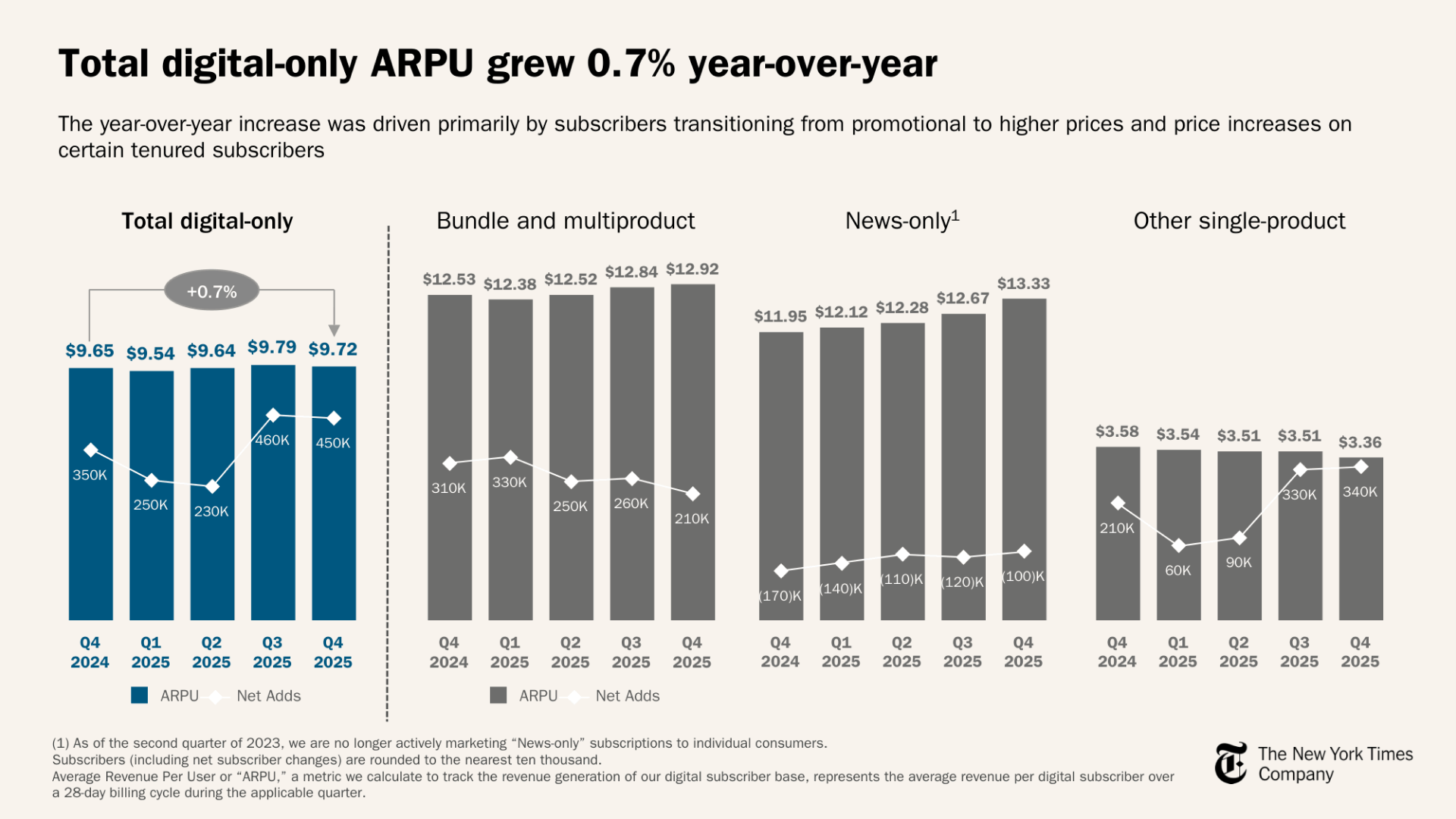
Like many subscription-based companies, the strategy is to bring users in on low-cost standalone products during promotional periods, and after monitoring their engagement, steering them toward the bundle over time. This approach is reflected in ARPU. The price of the bundle differs significantly from introductory pricing to mature pricing, with new subscribers typically entering at promotional rates (often around $1 per week) for periods that can extend up to a year.
The model mirrors that of streaming services: acquire users at low cost, build a habit, and increase pricing as engagement deepens. The company uses data to monitor engagement levels that ultimately determine how quickly subscribers move up the pricing ladder, with some transitioning directly to the full list price of $30 per month and others moving more gradually.
A key strength of the bundle is the value of the total. That leads to low churn since the perceived value is very high when a single subscriber interacts with the bundle in multiple different ways every day or week. If it simply relied on a single product, the perceived value would be lower, and if a subscriber had lost that single habit, the risk is that they would have been lost for good.
Now, a subscriber might lose the habit of looking up recipes, or disconnect from their favorite sports team in the off-season, but they still find great value in following the news and playing crosswords, and therefore perceive their subscription as worth keeping. To quote Kopit Levien, “the more it can mean to more people, the better the business.”
Since the bundle was introduced, ARPU for bundle and news-only subscribers has converged almost entirely over the three years. Initially, these sat around $16 and $8, respectively, but the gap has narrowed as bundle ARPU declined due to promotional pricing, while news-only ARPU increased as lower-paying subscribers churned or upgraded. Over time, the news-only segment has become smaller and more concentrated among higher-paying users, and is no longer a strategy to funnel new subscribers to the bundle.
Going forward, bundle ARPU is expected to have a structural tailwind as the large maturing cohort that entered the bundled ecosystem over the last few years is gradually moving through the pricing ladder. In Q1 2026, a tenured cohort of bundle subscribers began paying a higher list price of $30 per month, up from $25, with CFO William Bardeen describing early results as "very encouraging." The gap between this list price and the reported ARPU of around $13 reflects the layered nature of the subscriber base, with the majority still working through promotional and interim pricing stages before eventually reaching full list price.
In terms of attracting new subscribers to its ecosystem of products, an opportunity exists, as Kopit Levien discussed at the Morgan Stanley Technology, Media & Telecom Conference 2026:
“I think the most important thing to say is the audience for The Times, the total audience is much larger than the total subscriber base for The Times, and we've got lots of signal that the TAM is at least as large as we've previously said. We've got something now like 150 million user registrations and counting. We have 50 million to 100 million people who come to our sites and our apps every week. We've got millions of people beyond our sites and apps who watch our shows and listen to our podcast, read our newsletters. And I just looked the other day, we have I think 120 million social followers, and that number is growing.
And all of that just gives us a lot of confidence about that thing I said at the beginning, sort of further market -- a lot of room for further market penetration on the path to our next milestone of [15 million] and beyond.”
ARPU expansion is expected to come from both deeper engagement and new formats. The company's focus is on increasing the value of the existing bundle while extending into areas like video, which management has described as an “important and ambitious” priority. This includes video versions of news and podcasts, as well as expanded coverage across products like Cooking and The Athletic. Kopit Levien described the ambition on the Q2 2025 earnings call:
“The expertise and global presence of our newsroom combined with increasing online video consumption create a big opportunity for The Times to capture a greater share of attention. We believe our efforts in this area can make watching The Times as natural and compelling an experience as reading and listening.”
Adapted to the times
For over a century, the business was built on circulation. Readers paid to read the news, and advertisers paid to reach those same readers, with revenue flowing reliably from both sources. Print circulation still exists, but over time it will become as historic as the headlines it carries. The introduction of the paywall in 2011 became the starting point for a significant transformation. Today, the product portfolio behind it – games, sports, recipes, and audio – draws users in, making the paywall less of a barrier and more of an entry point.
On the publisher side, leadership remains with the Sulzberger family. Arthur Ochs Sulzberger Jr., who served from 1992 to 2017, was succeeded by his son A.G. Sulzberger in 2018. During this period, the newsroom has grown to more than 3,000 journalists, supported by the addition of The Athletic and a continued emphasis on journalism as the foundation of the business. Together with Mark Thompson and now Meredith Kopit Levien, the priorities outlined in the Innovation Report and Our Path Forward have continued: closer alignment between editorial and business, clearer shared objectives, and a stronger focus on distribution.
The company's revenue peaked back in 2000 at $3.4 billion. The years that followed brought structural decline, as both circulation and advertising weakened. Divestments and strategic focus further reduced the top line, leaving revenue more than 50% below the highs around the millennium, entering the 2010s.
Over the past decade, as the company rebuilt around subscriptions, operating margins largely held in the 10% to 13% range. Following the shift in strategy, revenue returned to growth, initially at mid-single-digit rates. Since 2020, growth has accelerated, supported by a more mature strategy and improving bundle economics. Through that period, revenue has grown at a CAGR of 9.8%.
)
With a relatively low incremental cost base, that growth has translated into operating leverage over the past few years. Most recently, EBIT margin expanded to 15.7% in 2025, reflecting a business that has established a more durable model. As subscriber cohorts mature and move through the pricing ladder, and as the mix continues to shift toward bundled subscriptions, this trajectory remains worth watching.
The sum of its parts
The New York Times Company is undeniably in the best position it's been for over two decades. Its bundled products reinforce each other, increasing both engagement and retention, while also attracting new users into the ecosystem on their own merit.
Its games are perhaps the clearest example of a product that punches far above its weight relative to what it appears to be on the surface. That portfolio now includes eleven titles, six of them free to play, together generating an audience of tens of millions of weekly players. With the majority of these being non-subscribers, the free engagement monetizes through advertising, builds habit, drives registration, and ultimately feeds the subscription funnel.
Cooking has followed a similar path. What began as a recipe archive has developed into a subscription product with over 25,000 recipes and an expanding video offering. Cooking performs particularly well as a seasonal subscription driver, driving most of its traffic around Easter, Thanksgiving, and Christmas.
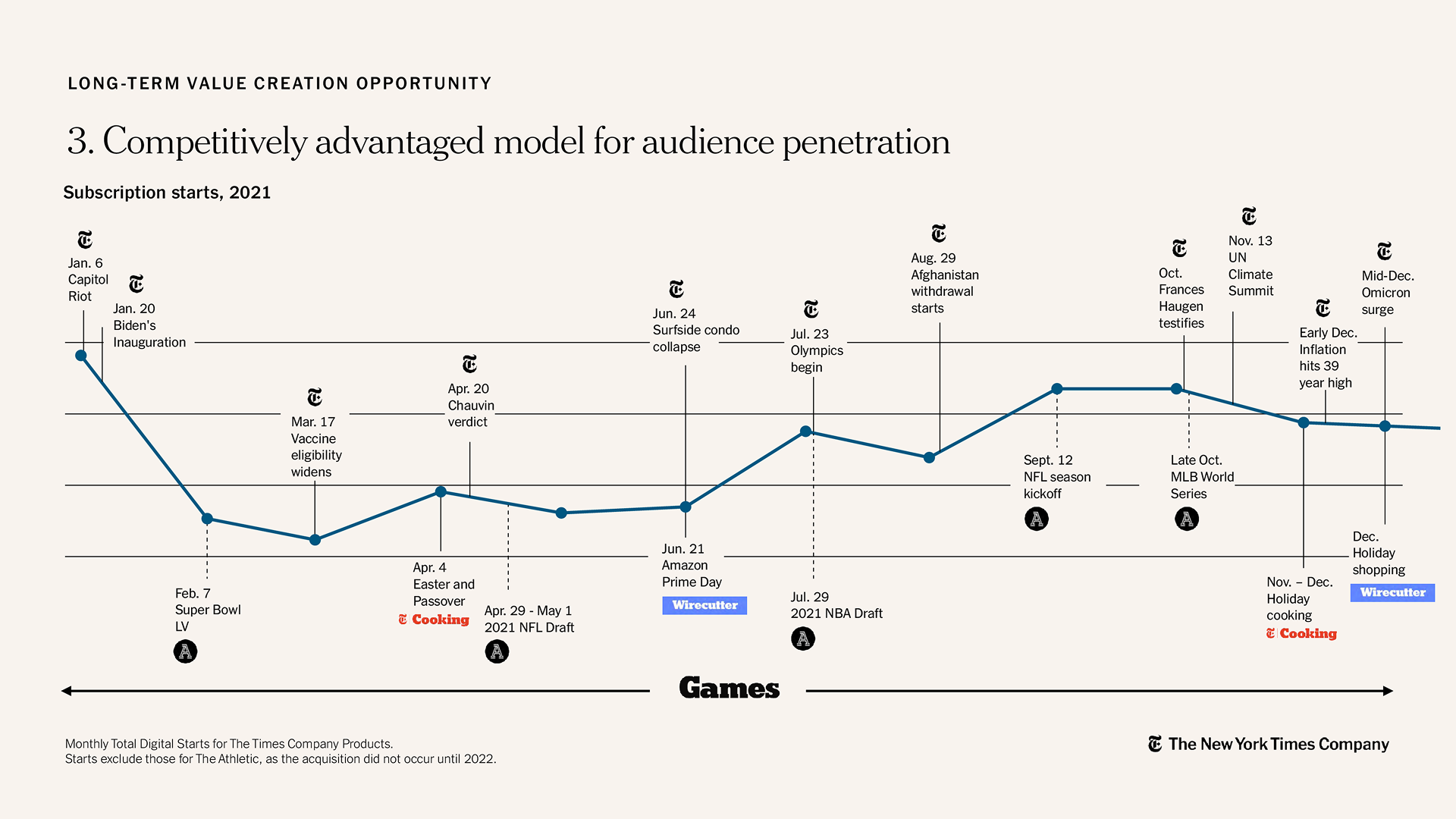
Finally, The Athletic might be the best validation of the bundle strategy. When it was brought in for $550 million, the synergy creation potential attracted considerable skepticism. As a standalone subscription product, it was running at a loss at the time but has, over the years, integrated with the rest of the Times bundle, transforming its cost structure and revenue profile. Within three years of its acquisition, The Athletic had turned profitable and become a self-sustaining contributor to the bundle it was bought to strengthen.
Closing thoughts
Over a century and a half, The New York Times Company has built and sustained one of the world's strongest journalistic brands and clearest quality stamps. But with the rise of the internet, what had long been a reliable industry began to shift, and when facing the risk of disruption, the company was forced to pivot. After years of expansion, crisis, and transformation, it ultimately managed to crack the code in the digital era, without compromising on what it has relied on since its founding: quality journalism.
Explore our platforms
Leading companies and financial institutions worldwide rely on Quartr to make better decisions faster.
)
Desktop
)
API