Complete event summary combining all related documents: earnings call transcript, report, and slide presentation.
EGM 2026 summary19 Oct, 2026
Opening remarks and agenda
Meeting called to order; formal business followed by a planned Q&A for questions submitted through the shareholder meeting link.
Stockholders of record as of September 14, 2026 were eligible to vote; proxy materials began mailing September 18, 2026. A quorum was present.
Specific resolutions to be voted on
Proposal 1 sought approval to reprice certain outstanding stock options granted under the 2025 Incentive Award Plan.
Proposal 2 sought approval for one or more adjournments, if needed, to solicit proxies if votes were insufficient to approve Proposal 1.
The Board recommended voting for both proposals.
Corporate governance
Meeting procedures were confirmed as compliant with the amended and restated bylaws and Nevada law; the inspector’s oath and mailing affidavit were to be filed with the minutes.
Partial view of Summaries dataset, powered by Quartr API
AI can get things wrong. Verify important information.
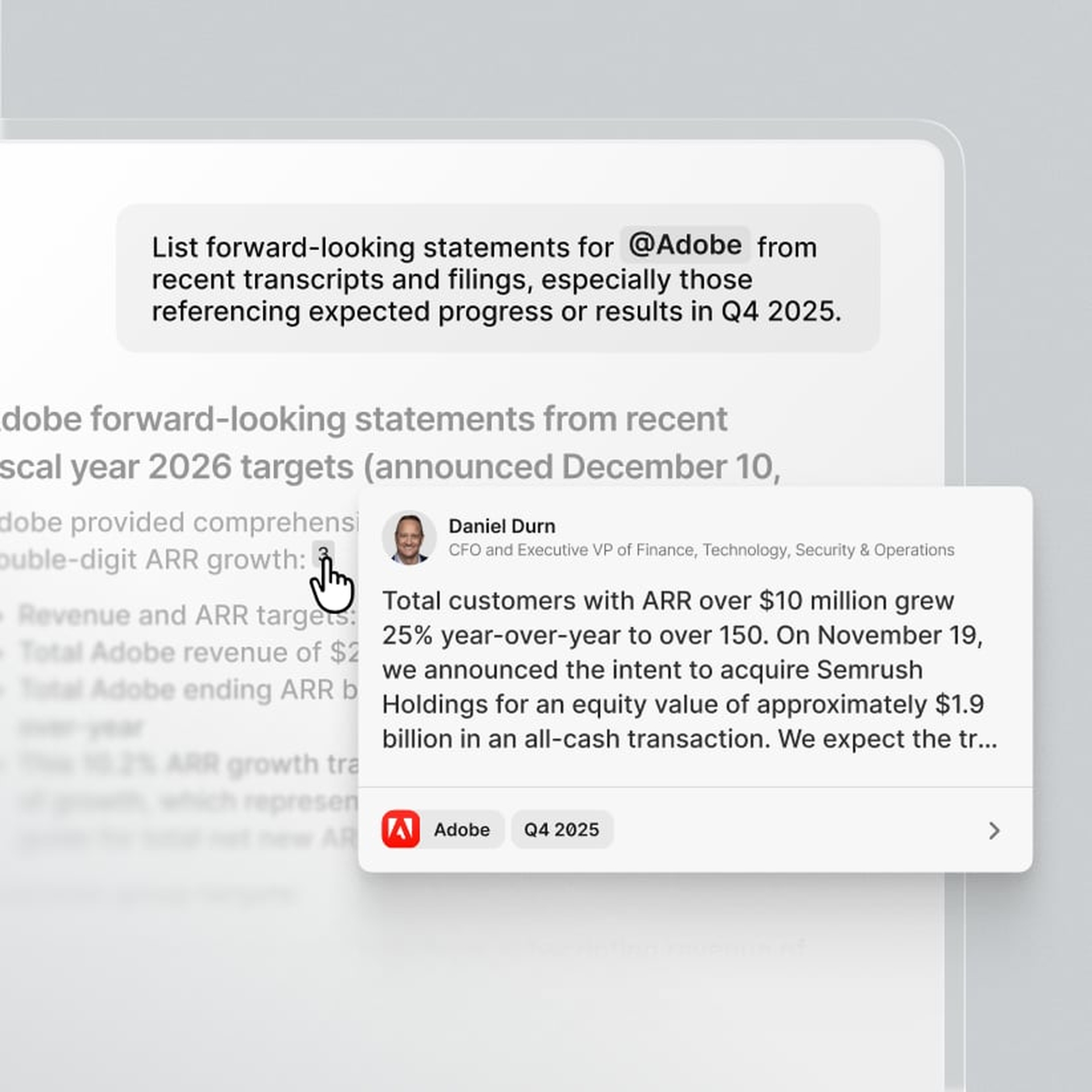
Ask across every event and document from public companies. Each answer links back to the exact line in the transcript, slide or filing it came from.Learn more
Find what matters
AI across all first-party IR material. Live calls, transcripts, slides, filings.
Trust every finding
50m+ first-party documents. Every output traceable to its source.
Find what matters
AI across all first-party IR material. Live calls, transcripts, slides, filings.
Trust every finding
50m+ first-party documents. Every output traceable to its source.
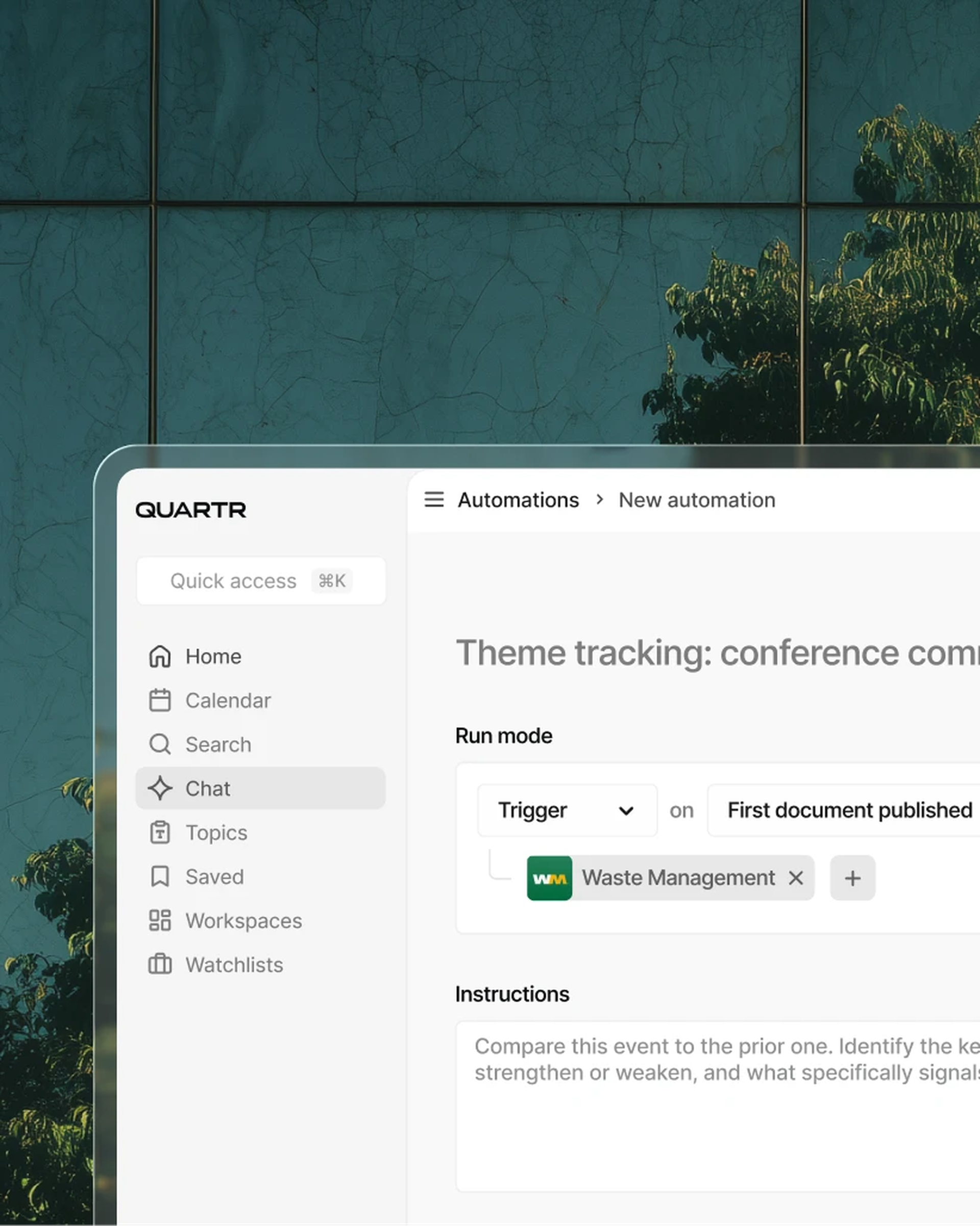
Automations
Zero in on what matters
Define the prompt once. It runs the moment a company publishes or on a schedule you set. Outputs map to the exact signals you choose.Learn more
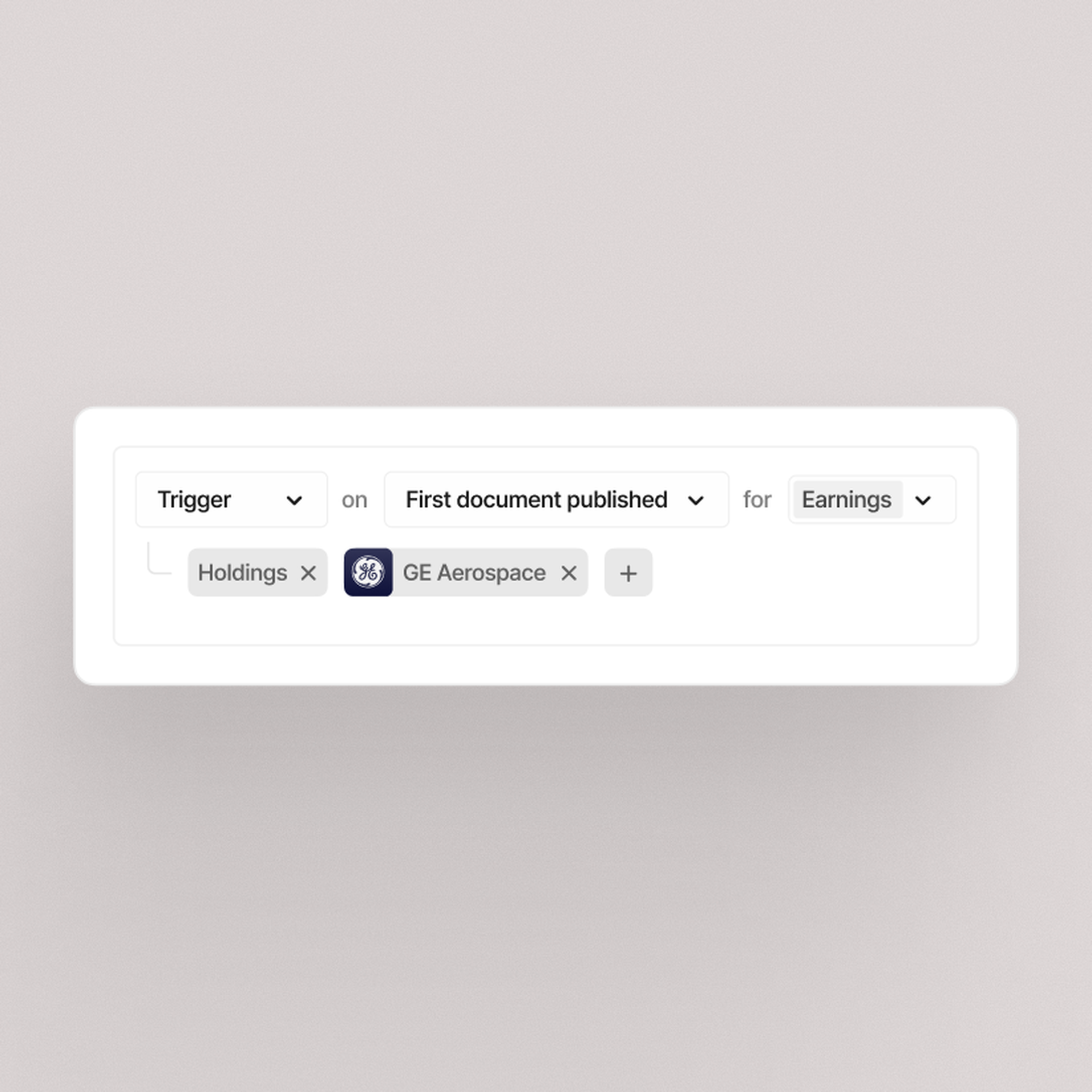
Event-triggered research
Runs when a company publishes new material. Trigger on the first published document for the earliest possible run, or wait for a specific one.
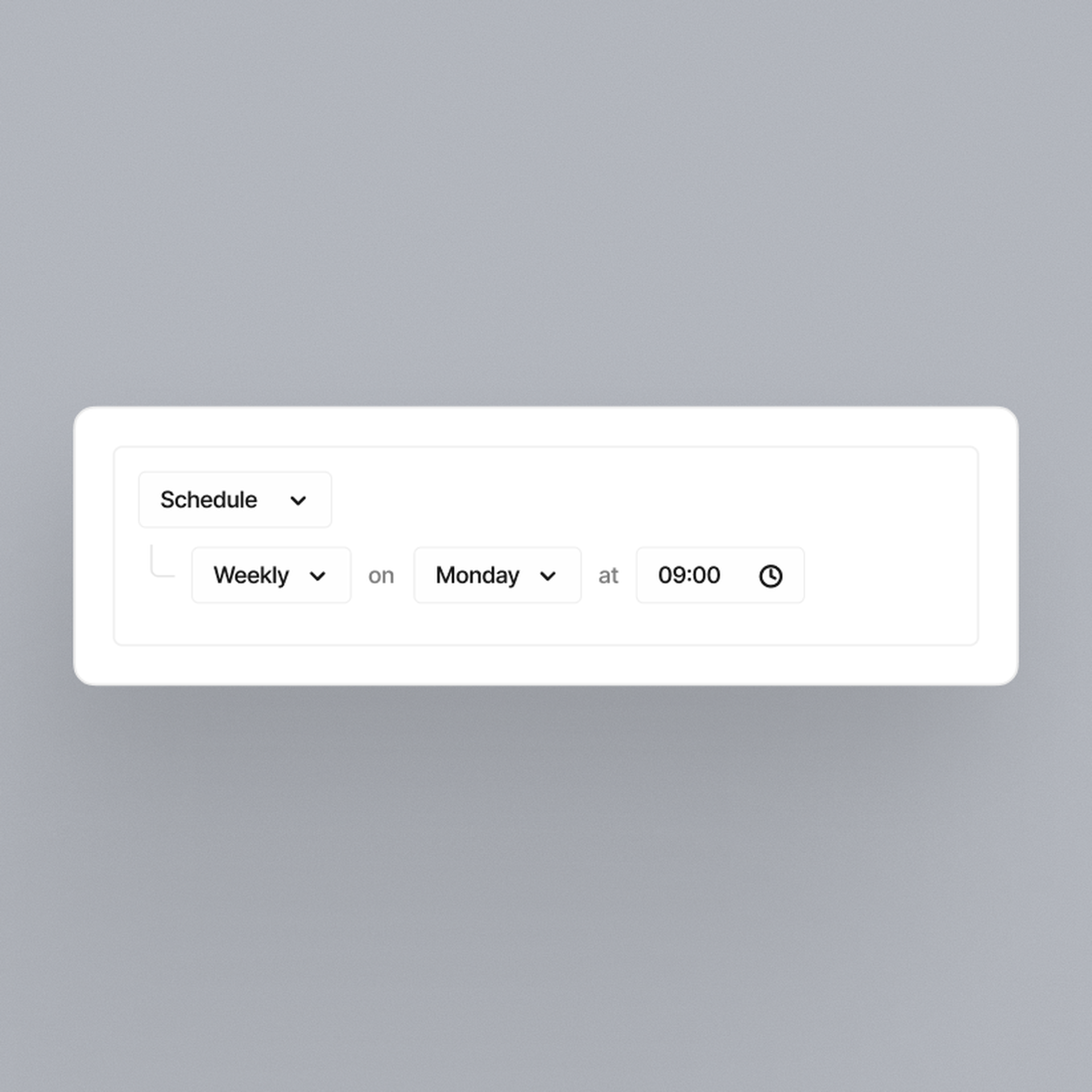
Scheduled research
Runs on a recurring cadence you set. Daily, weekly, monthly, or quarterly, for aggregate reads across a period rather than a single event.
Live audio & transcripts
Be first
Join any earnings call live in one click, with no manual registration. Follow the transcript as it happens and jump straight to the moments that matter.Learn more
Live earnings calls
Join any call in one click. The audio keeps playing while you work elsewhere in Quartr.
Live transcripts
Speaker-by-speaker, in real time. Searchable across every live and historical call.
Live earnings calls
Join any call in one click. The audio keeps playing while you work elsewhere in Quartr.
Live transcripts
Speaker-by-speaker, in real time. Searchable across every live and historical call.
Quartr MCP connects your AI environment to 17K+ public companies
Pull live transcripts, filings, and slides into Claude or Codex via MCP. Combine Quartr's global IR data with any other dataset. Run agentic research and monitoring.
Included with Quartr Pro at no extra cost.Learn more
Quartr's AI stands out because it only pulls clean, first-party data from public companies.
In investing, that's everything.
Jamie Ross
Investment Manager, GAM Investments
GAM
GAM
Research that used to take hours now takes seconds with Quartr Pro. Tracking shifts in tone or extracting tables, it's as simple as typing a query.
Tom O'Hara
Investment Director
Ciena
Ciena
Before Quartr we spent hours manually compiling insights through the peer earnings cycle. Now, these tasks are done faster, with greater precision.
Gregg Lampf
VP of Investor Relations
Protean
Protean
Being able to ask specific questions across years of transcripts and reports and instantly get verified answers is a game-changer.
The Trade Desk is a leading global technology company that specializes in programmatic advertising, a method that automates the buying and selling of digital advertising space in real time. Founded in 2009 by Jeff Green and Dave Pickles, The Trade Desk provides media buyers with a platform to manage data-driven digital advertising campaigns across various channels, including display, video, audio, and social media. By utilizing data analytics and algorithms, the platform allows advertisers to target specific audiences, ensuring that ads reach the most relevant viewers while optimizing the advertiser's spend.
Founding and Growth
The Trade Desk was founded in 2009 by Jeff Green and Dave Pickles who met when they both worked for Microsoft. The duo recognized the evolving landscape of digital advertising and the potential of programmatic buying. Their idea was to revolutionize the way media is bought and sold by using real-time bidding technology. Green, with a background in online advertising, combined his industry insights with Pickles' technical expertise to create a platform to address inefficiencies in the market and offer greater transparency to advertisers.
How it Works
The Trade Desk operates as a sophisticated digital platform tailored for programmatic advertising. At its core, it offers advertisers a centralized dashboard from which they can design, execute, and analyze ad campaigns across various digital channels. By integrating vast amounts of data, the platform facilitates precise targeting, ensuring ads reach specific audiences based on a myriad of attributes like demographics and behaviors. Throughout, advertisers are presented with a transparent view that provides comprehensive analytics, offering insights into how their campaigns are performing.
Real-Time Bidding
Real-time bidding (RTB) has transformed the digital advertising landscape completely. Instead of pre-purchasing ad space, advertisers, via platforms like The Trade Desk or one offered by their competitors (primarily Meta and Alphabet), bid on ad impressions in real-time, vying for the chance to display their ad to a specific user. Each of these bidding events happens in milliseconds, as a user loads a web page or app. The advertiser willing to pay the highest price wins the bid and their ad is promptly displayed to the user. RTB ensures that advertisers can tailor their messaging to the right audience at the right time, optimizing ad spend. For publishers, it translates to maximizing the revenue potential of their ad spaces by always selling to the highest bidder.