)
)
)
)
)
Company research29 Apr 2026
Target Corporation: The Business Behind the Bullseye
How Target grew from a Minneapolis dry goods store into a retail giant, blending discount pricing with design and private-label power.
When driving through the sparsely populated parts of the U.S., from the Great Plains to the Deep South, one thing keeps popping up in rural communities: the yellow-and-black signs bearing the name Dollar General. The small-box retailer has capitalized on something essential about America by going where larger retailers won't. Millions and millions of people live in small towns, value matters more than variety for many families, and convenience is worth paying for when the alternative is a long drive. Dollar General took those overlooked realities and scaled them nationwide, one dollar at a time.
The foundations of Dollar General's empire were laid by James Luther Turner, born in 1891 into a farming family in rural Tennessee. When James Luther Turner, or J.L. for short, was just 11 years old, his father died in an accident. With no other choice, he quit school to work on the family farm to help provide for his mother and siblings. He never completed his formal education and remained functionally illiterate for the rest of his life. Not uncommon for someone raised in rural America during that era, but all the more remarkable given what he would go on to accomplish.
But J.L. didn't want to stay in farming for the rest of his life. After two failed attempts at retailing in his early years, he found his work as a traveling dry goods salesman for a Nashville wholesale grocer. During the 1920s, he traveled all over Tennessee and Kentucky, visiting general stores and learning the ins and outs of small-town commerce, building relationships with storekeepers who would remember him long after he moved on.
In the early 1930s, J.L. left his sales job and settled his family in Scottsville, Kentucky, a small town of less than 2,000 people. The Great Depression had devastated small businesses across America, and while the situation was incredibly bleak, J.L. saw opportunity in the wreckage. He began buying and liquidating bankrupt general stores, purchasing inventory for pennies on the dollar, and then reselling it.
The work might not have been the most glamorous, but it proved lucrative. Perhaps more importantly, it taught him lessons about pricing, inventory, and the pull of a good deal that would shape everything that followed. J.L's son and only child, Hurley Calister Turner, or Cal for short, would accompany his father to these closeouts from a young age. He grew up watching his father negotiate, assess merchandise, and move products.
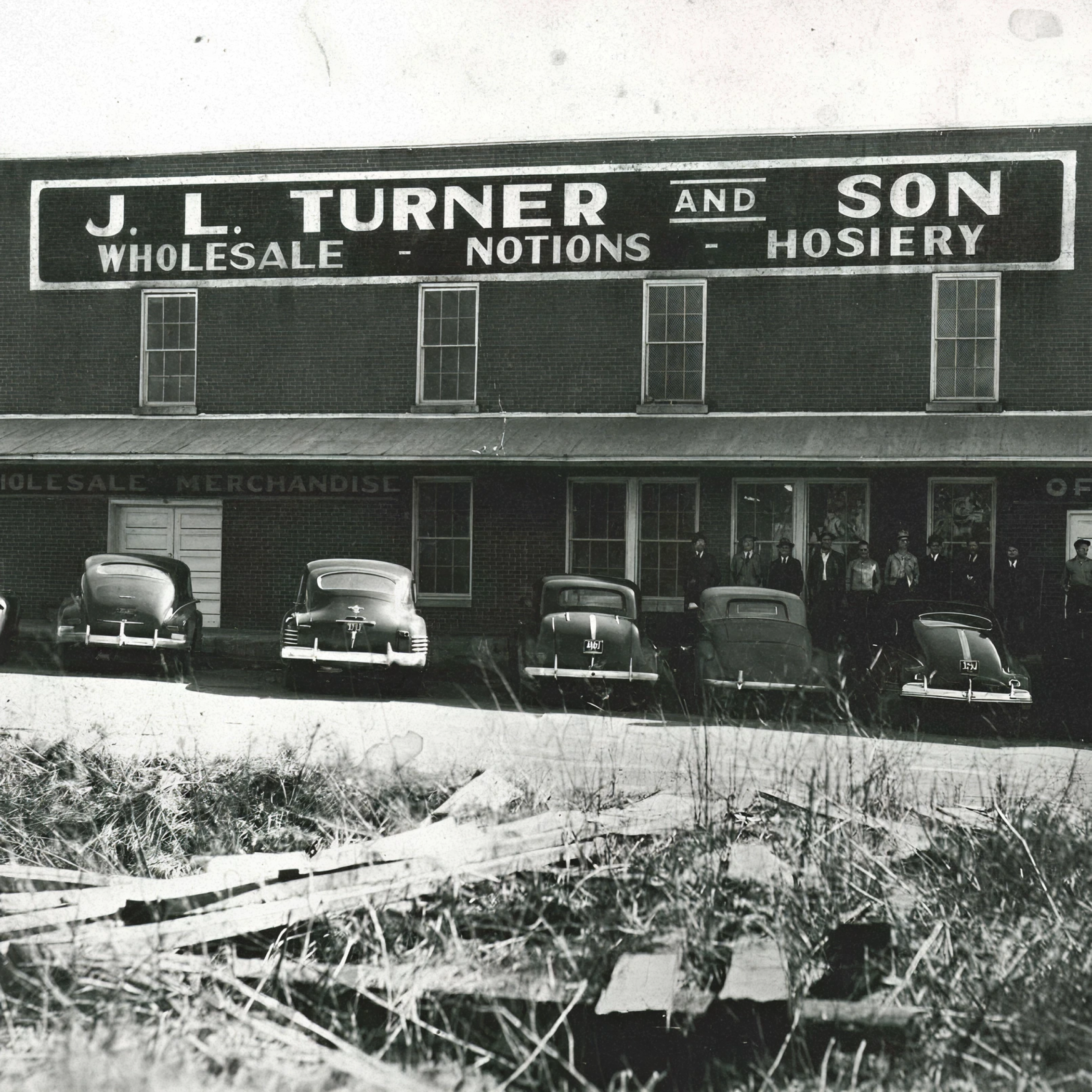
In October 1939, J.L. and his son Cal were ready to get into business together, pooling their resources and opening J.L. Turner and Son, a wholesale dry goods business in Scottsville. The business served local retailers, selling them the staple goods their customers needed at prices they could afford.
The shift from liquidation to wholesaling came at just the right time. As the New Deal reforms were taking effect and the economy began to recover, demand for basic goods increased, and Turner and Son's annual sales climbed above $2M by the early 1950s. J.L.'s network of relationships, built over the previous decades, combined with Cal's natural talent for business, turned the operation into a reliable supplier for small-town retailers across Kentucky and Tennessee.
But Cal was already thinking ahead. He could see that wholesaling, while stable, had limits. The real money was in selling directly to customers, and he had ideas about how to do it differently.
The concept of the dollar store came from taking an already existing idea and expanding on it. Throughout the 1940s and into the 1950s, it wouldn't be uncommon to see department stores across America run periodic promotions they called "Dollar Days". These were limited-time events where, as hinted at by the name, everything in the store was priced at a dollar or less. Customers loved it, and stores could move enormous volumes of merchandise in a short period of time.
Cal Turner saw the appeal and asked himself: What if the promotion wasn't temporary? What if you built an entire store around that one-dollar concept, every day of the year? It would require completely rethinking how a store operated, and everything from purchasing, pricing, and the product mix itself would have to be adapted. But if it worked, he figured, it could work exceptionally well.
By the mid-1950s, the Turner family had built a network of 35 department stores in Kentucky and Tennessee, operating under various names. While the dollar store concept might seem somewhat radical, testing the idea in a single store was, in Cal's mind, a no-brainer.
Said and done. In 1955, the theory was put to the test, converting Turner's Department Store in Springfield, Kentucky, into the first Dollar General Store. The interior was modest, with merchandise piled on tables for customers to sort through, but just like the “dollar days”, everything was priced at one dollar or less. The store became a success almost overnight, and Cal quickly began converting other Turner family stores to the Dollar General format.
By 1957, just two years after the first conversion, Dollar General operated 29 stores with annual sales of $5M. The formula was working (perhaps better than they could have ever imagined), and Cal was relentless about expansion. He understood that the dollar store concept had plenty of staying power, but that it needed to be executed well. That meant tight inventory control, aggressive bulk purchasing, and an unwavering commitment to the one-dollar price point.
J.L. Turner died in 1964. While Dollar General would have to go on without the founding father, Cal succeeded him as the company's leader. J.L. may never have mastered reading or writing, but alongside his son, he had created something that would endure.
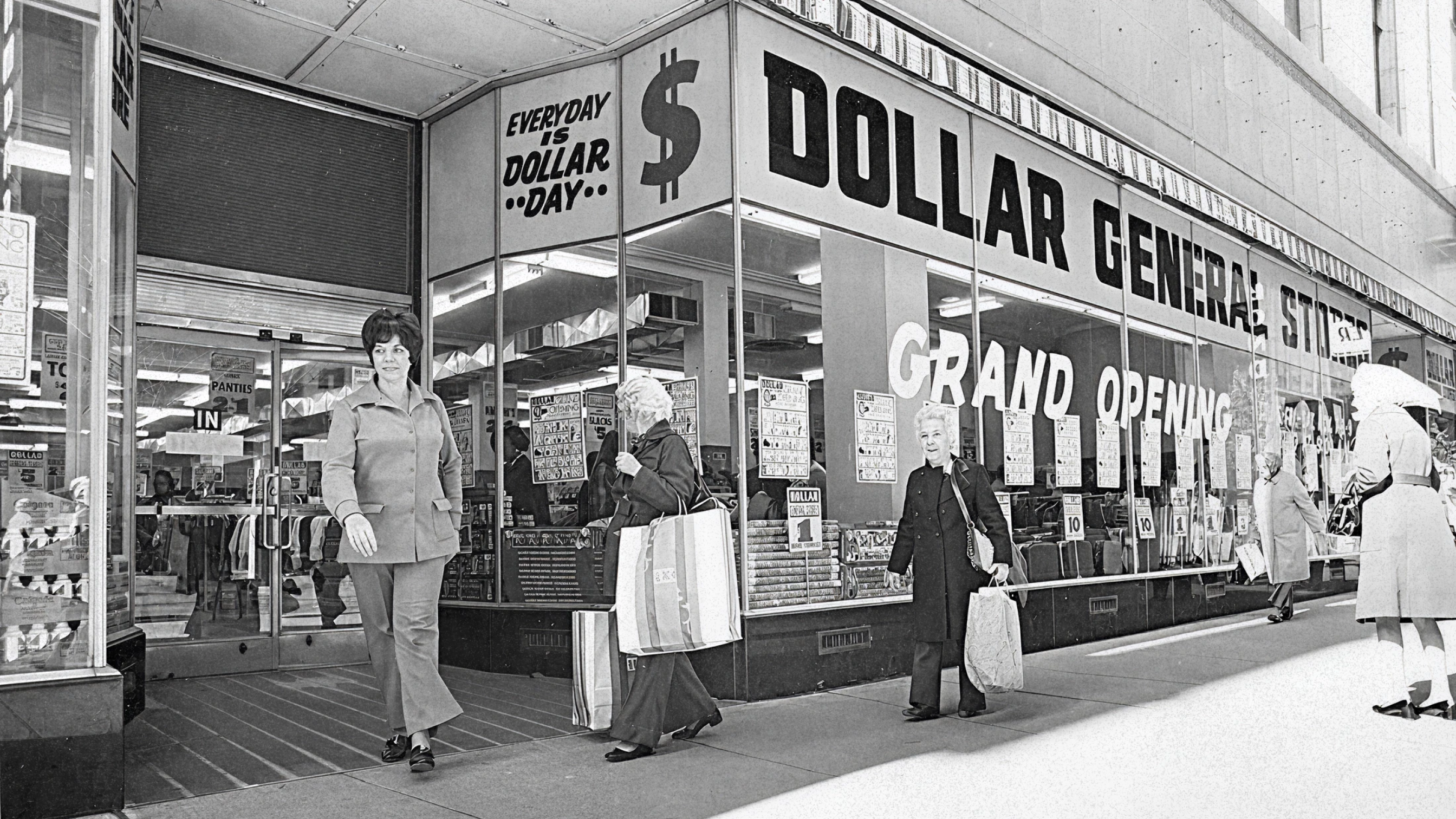
In 1968, Dollar General Corporation went public on the New York Stock Exchange. By this point, annual sales exceeded $40M, and the store count was climbing steadily.
During these years, the company became known for opportunistic purchasing, sometimes buying entire lots of merchandise that other retailers couldn't move and turning them into promotions. There's a story from those years about how every man in Springfield suddenly seemed to be wearing bright, pink corduroy pants. A Nashville manufacturing company had been unable to sell a large quantity of the fabric, so Cal Turner Sr. scored a deal by having the corduroy turned into pants and selling them to the fashion-conscious public.
Value is what it's all about. Getting what you pay for, knowing what you're buying, and finding what you're looking for.— Cal Turner Sr.
But beneath these anecdotes (of which the pink pants aren't the only ones) was serious business discipline. If there was a deal to be made, Cal Turner would pounce on the opportunity. However, Dollar General was laser-focused on consumable products. Items such as food, drinks, snacks, and cleaning supplies are in relatively stable demand, regardless of the present economic realities.
The target customer was clear from the beginning: low- and middle-income women shopping for their families while making every dollar count. Its consumable focus meant that demand was relatively stable and could even increase during times of economic hardship.
Equally important was the geographic focus. Cal Turner Sr. deliberately targeted rural towns with populations of 20,000 or less, and specific neighborhoods within larger metropolitan areas. These were communities that major retailers often ignored, considering them too small to justify the overhead of a big-box store. Dollar General saw opportunity in that neglect, and it has proven to be a winning concept all the way up to the present day. We'll be dissecting this in detail later.
The 1970s brought continued expansion and the passing of leadership to the next generation. Cal Turner Jr. was born in 1939, just three months after his father and grandfather had founded the company. Like his father before him, he literally grew up in the family business, working in stores and warehouses during summers and school breaks. After graduating from Vanderbilt University in 1962, and spending a couple of years in the Navy, he rejoined Dollar General in December 1965.
He worked his way up through the organization, learning every aspect of the operation, from merchandising to distribution to store management. In 1977, he became president of the company, with his father moving to chairman of the board. With the passing of the baton from one generation to the next, Dollar General was entering its most dramatic period of growth.
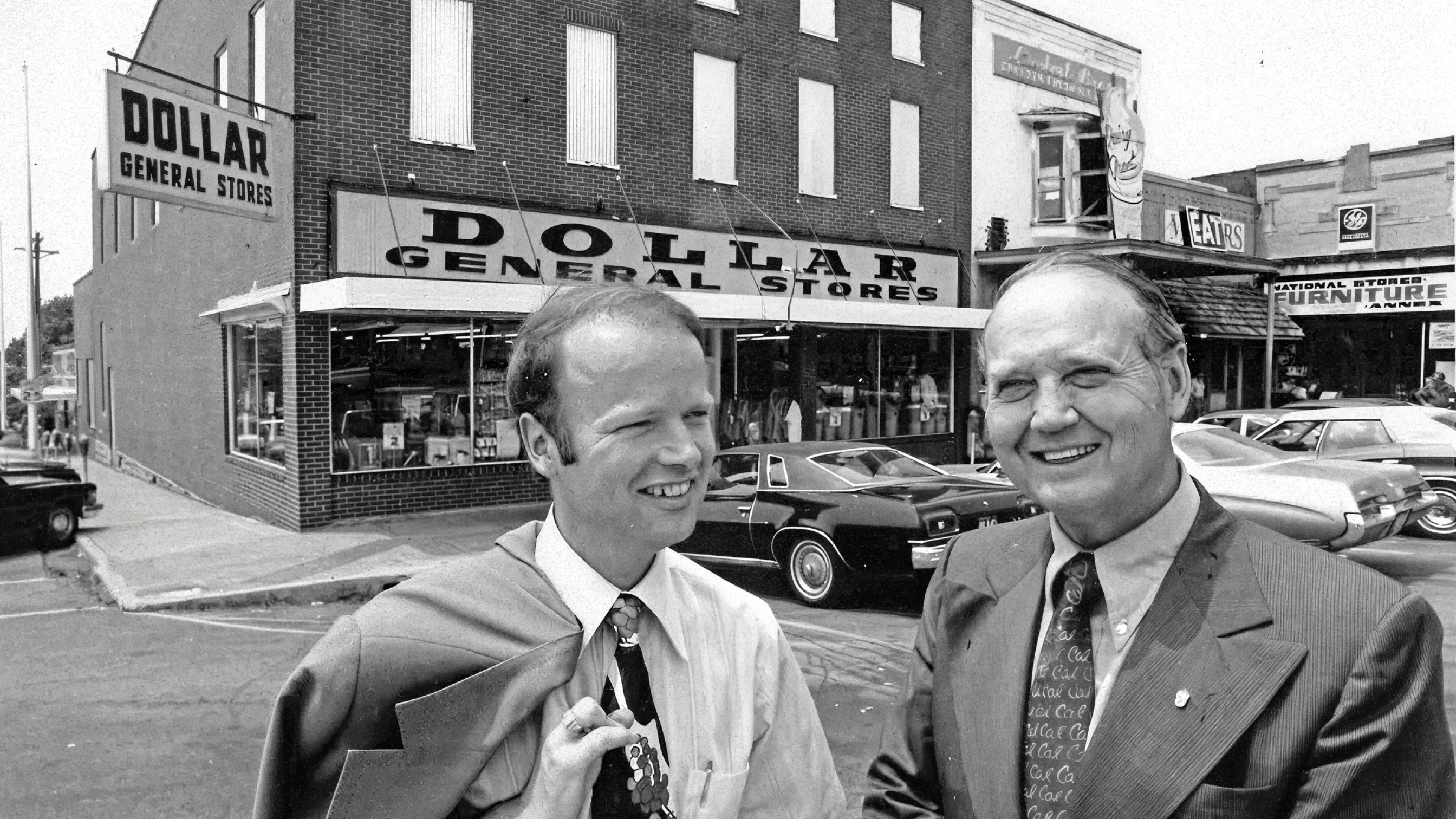
Under Cal Turner Jr.'s leadership, Dollar General would transform from a regional discount chain into a national retail empire. When he took over as president in 1977, the company operated a few hundred stores. By the time he retired as CEO in 2002, that number had grown to more than 6,000, with annual sales exceeding $6B.
The expansion was methodical and disciplined, and the strategy he laid out continues to shape Dollar General's framework to this day. The core of it was the same focus on rural markets and small towns as it had always been, but he brought new rigor to site selection, merchandising, and operations. The company invested heavily in distribution infrastructure, opening new centers to support the growing store base.
Throughout the years of expansion, the product mix evolved while maintaining the focus on consumables. Dollar General added basic apparel, housewares, and seasonal items to complement the core offering of consumable goods. The stores remained compact, also known as small-box, requiring far less space than a big-box retailer like Walmart or Target would.
But that was the point. Small stores could operate profitably in small communities and therefore be located closer to these customers, and the limited selection made shopping quick and convenient while keeping overheads low.
The one-dollar price ceiling gradually became less rigid as time went on. By the 1980s and 1990s, Dollar General sold items at various price points, though the name and the value proposition remained. About 30% of merchandise still cost less than a dollar, and everything was priced to compete aggressively with larger retailers. Yes, the product assortment was smaller, but customers didn't need to drive to a larger city to do their shopping.
By the late 1990s, Dollar General had become one of the fastest-growing retailers in America. Revenue compounded at more than 20% annually, while the store base expanded at a pace of more than one new opening per day. Still, the basic formula that Cal Turner Sr. had pioneered in Springfield remained as relevant as ever: offer value, stay close to customers, and keep costs down. But as the company entered the 2000s, his heir was preparing to step aside.
Cal Turner Jr. retired as CEO in 2002, though he remained chairman of the board for several more years. For the first time in roughly 60 years, the company was guided by leadership outside of the Turners, a significant shift for an organization that had been led by the founding family since 1939.
The transition did not immediately halt growth as revenue and operating income continued to rise for several years. But beneath the surface, the pace of expansion was beginning to take its toll. Same-store sales gradually decelerated, and the company's rapidly expanding footprint added operational complexity, putting margins under pressure as distribution, inventory management, and store execution became more demanding.
By 2007, Dollar General was a proven, nationwide business, but an underperforming one. The store base was valuable, the brand was strong, and the business model had proven itself over decades. But execution had slipped, and the company stood at an inflection point.
Get curated quality company deep dives every other week.
On March 12, 2007, Dollar General announced it had agreed to be acquired by KKR, in a deal valued at $7.3B. KKR saw the company's fundamentals beyond its recent years' performance, a business with a strategy and footprint that was simply off track. The deal closed in July that same year, and Dollar General was taken private.
KKR wasted no time in addressing Dollar General's operational issues. The firm brought in new leadership, starting with Rick Dreiling, who became CEO in January 2008. Dreiling came from outside the dollar store world, having most recently served as chairman and CEO of the drug store chain Duane Reade.
When Dreiling arrived in Goodlettsville, he found a company that had all the fundamentals in place, while being unable to execute on them. As he later recalled in an interview with Drug Store News, the various departments couldn't even agree on which store to show him as an example. Merchandising, operations, and supply chain were siloed, working at cross purposes rather than as a coordinated team.
Dreiling's approach was to bring the discipline and processes he had learned in the grocery and drug businesses to what he, in that same interview, called "the last wild frontier of discount retailing." He overhauled the executive team, brought in retail veterans, and shifted focus back to the fundamentals: labor control, category management, inventory turns, and store presentation.
Under his leadership, the company also made changes that seemed simple but had been neglected. For years, Dollar General stores in the South, which is unapologetically Coca-Cola country, had carried only Pepsi products. For many consumers in the South, what type of soda you drink is first and foremost a matter of regional pride. Ensuring that the stores stocked Coca-Cola might not sound like a big deal, but it is emblematic of the variety of changes that needed to be made in order to attract more customers.
But perhaps most critically, Dreiling and his team clarified the value proposition. Dollar General wasn't trying to be everything to everyone. It was a convenience and value play, offering essentials close to home at prices that competed with nationwide retailers.
The improvements couldn't have come at a more critical moment. The financial crisis and subsequent recession hit Dollar General's core customer base hard. Unemployment rose, household incomes fell, and consumers became intensely price-conscious. But those same forces drove more traffic to Dollar General. The regulars still kept coming (again, Dollar General sells consumable items everyone needs), and customers who might have shopped elsewhere traded down, looking for ways to stretch their budgets.
The company's performance during the crisis was notably strong. While much of retail struggled, Dollar General thrived. The recession expanded the trade-down audience, as rising unemployment and weakening income stability pushed middle- and higher-income consumers toward value retailers, widening the addressable market. Same-store sales accelerated from low single digits to roughly 9% annually in FY2009 and FY2010, while profitability rebounded sharply as cost discipline improved. What had initially looked like a leveraged buyout struck at the worst possible moment quickly became a textbook turnaround for KKR.
In August 2009, just two years after KKR took the company private, Dollar General filed for an IPO. The speed of the return was remarkable, as these types of deals are usually structured with a much longer timeline, giving management time to implement changes and demonstrate results. But Dollar General's turnaround had been so swift and so compelling that KKR decided to move ahead with an IPO far earlier than originally planned.
Rick Dreiling remained as CEO and chairman after the IPO, continuing the transformation he had started. In an interview with CNBC on the day of the IPO, he outlined the company's plans: use the fresh capital to pay down debt, continue opening new stores, and improve existing locations.
The expansion accelerated through the early 2010s. By FY2013, Dollar General had crossed the 10,000-store mark, having sustained its steady rollout through a turnaround, a financial crisis, and a deep recession. To support the ever-expanding network, the company invested heavily in infrastructure, adding new distribution centers and increasingly building out its private truck fleet to reduce costs, improve control, and streamline operations.
In June 2015, Todd Vasos, then serving as COO, succeeded Rick Dreiling as CEO. Having joined Dollar General in 2008 during the KKR years, Vasos represented continuity and stability, as he preserved the strategic framework Dreiling had established while gradually extending it into new directions.
Under Vasos' leadership, Dollar General stayed firmly on its expansion path. From the mid-2010s through 2020, the company embarked on one of the most aggressive store-opening sprees in its history. Between 2015 and 2020 alone, it added roughly 4,500 new stores – an average of 900 openings per year. Even at scale, Dollar General kept building.
But expansion was not only geographic. During these years, the company accelerated the rollout of refrigerated and frozen assortments, requiring changes to store layouts, electrical capacity, and logistics. To support this, new builds and remodels increasingly had larger footprints with dedicated freezer space, embedding consumables more deeply into the model. In doing so, Dollar General gave customers more reason to complete a larger share of their weekly shopping in its stores.
By the late 2010s, Dollar General had rebuilt its disciplined, repeatable growth model. The footprint had doubled in little more than a decade, and the supporting infrastructure had scaled with it. In many of its rural markets, competition remained limited, allowing steady unit growth and attractive store-level economics. Heading into 2020, the company was operating from a position of strength.
The pandemic initially reinforced that trajectory. Growth accelerated as stimulus checks and a low-rate environment lifted discretionary spending, temporarily strengthening household balance sheets and spending power for many of Dollar General's customers.
Then conditions tightened, and the margin for error narrowed.
Inflation placed disproportionate strain on the company's low- and fixed-income customer base, pushing spending toward essentials and compressing margins. At the same time, supply chain disruptions led to inventory imbalances, shrink rose sharply, and competitive pressure intensified across both mass retail and from digital channels. Meanwhile, Dollar General was investing in new formats and distribution initiatives, adding complexity just as execution became more challenging.
These forces have shaped the company's recent performance and frame how its stores, pricing, supply chain, and economics should be understood. To see how they intersect, we need to walk through the model piece by piece.
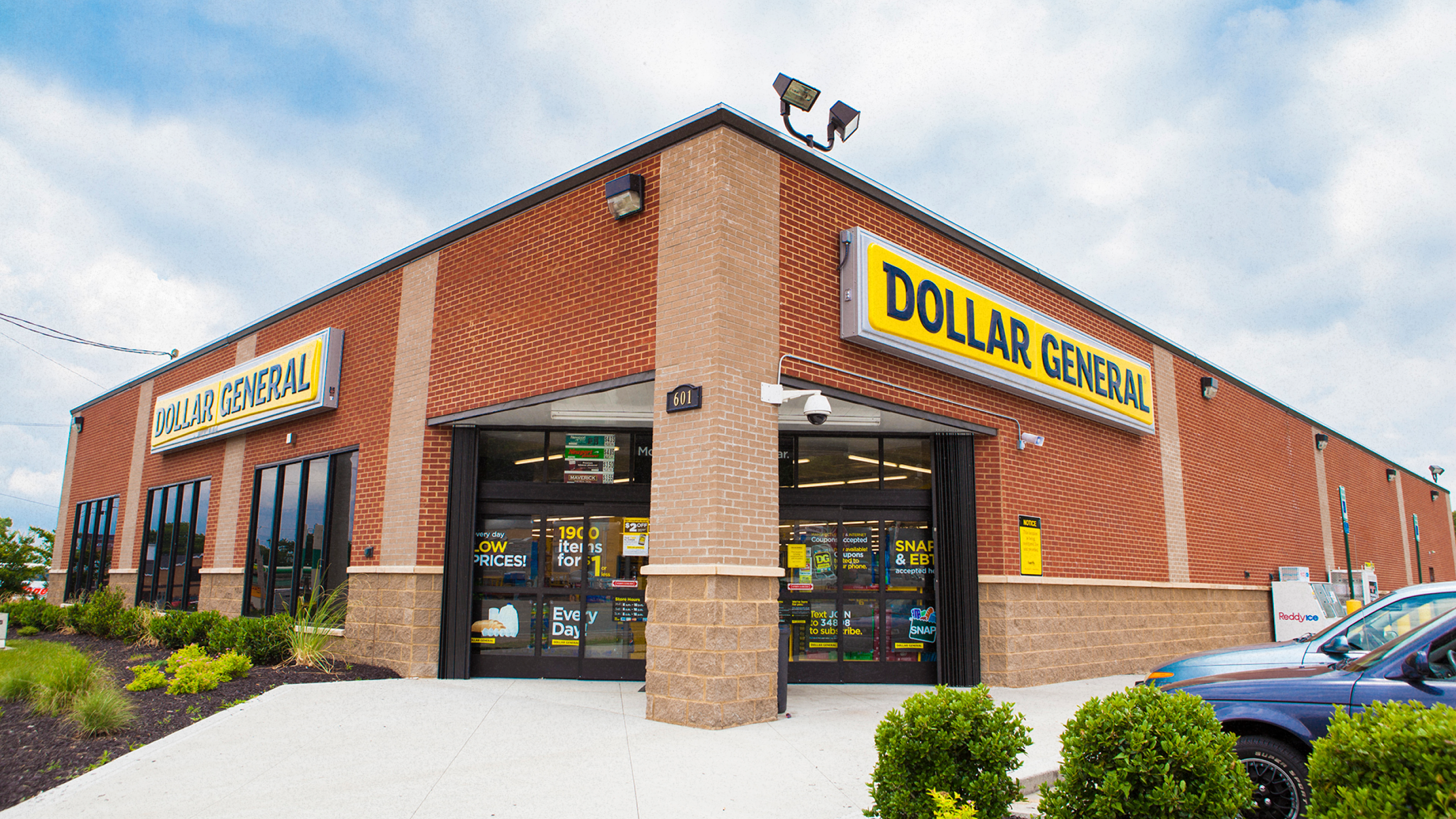
As you know by now, Dollar General's business model begins and ends with the store. Location, in-store experience, assortment, and unit economics each play a central role in the company's performance. Today, that model spans nearly 21,000 stores across the U.S., all built on the same small-box playbook, designed to be replicable on a daily basis. That's right: Dollar General has, over the past three decades, opened roughly 18,500 stores, which gives it a daily open-rate of more than two stores per day.
)
In recent years, Dollar General has taken its foot off the gas in footprint expansion as it worked through operational challenges. Even so, it added roughly 600 stores in FY2025 and has opened more than 500 stores so far in FY2026, with one quarter remaining, maintaining its commitment to the strategy, albeit at a slower pace than before. The guided pace of 450 new U.S. openings in 2026 continues in that lower direction, but the company is simultaneously ramping up renovation projects across the existing base. More on that opportunity later.
Site selection follows a consistent framework, unchanged for decades: accessibility for underserved customers, alignment with target demographics, and real estate economics that support attractive returns. As management describes it, each location is evaluated to ensure it can meet customers' price, value, and selection needs, though the company does not disclose the specifics of its internal models.
Dollar General's roughly 21,000 stores are spread across all 48 continental states, giving it one of the largest retail footprints in the country. The density varies significantly by region: Texas has close to 2,000 stores, California has fewer than 300, Kentucky (where the first Dollar General store opened) has nearly 800, and Idaho less than 10. As that breakdown shows, some parts of the U.S. have a heavy concentration of stores, while in others, Dollar General has focused far less. That distribution reflects how closely its strategy aligns with local geographies and demographics.
As we've been over before, stores are located in rural or semi-rural communities, often far from major metropolitan areas, which also supports its unit economics as land lease costs in these markets are comparatively low. This highly strategic positioning places Dollar General in markets that typically cannot support the scale economics required by big-box retailers such as Walmart or Costco. For customers who may live 30 minutes from the nearest mass merchant, a Dollar General is often within 5 to 10 minutes. In many cases, the competition is more likely to be a local convenience store or small independent than a national chain.
More than 80% of stores serve towns with fewer than 20,000 people, and roughly 75% of Americans live within five miles of a Dollar General. CEO Todd Vasos expanded on that geographical advantage at its Q3 2026 earnings call (sourced through Quartr Pro):
“We have spent years, Chuck, and many, many dollars, as you know, not only building but strengthening that competitive moat in rural America. And with 80% of our stores in those small towns across America, very, very difficult to replicate, whether it be brick-and-mortar or whether it be on a digital basis. [...] We moved that way with a lot of intentionality and that intentionality was really centered around rural America. [...] We feel that's a very strong competitive moat”
Dollar General has accepted cannibalization as a natural consequence of its aggressive store expansion, particularly in markets where it already maintains a strong presence. Management has consistently characterized cannibalization rates as "minimal" and "predictable," reflecting the highly localized nature of shopping behavior in rural communities where customers rarely travel more than a few miles.
Beyond accepting it as inevitable, however, the company has explicitly pursued a strategy of intentional cannibalization in recent years, prioritizing the capture of attractive real estate locations over optimizing individual store returns on capital. Rather than leave prime locations open for competitors, Dollar General knowingly accepted overlap in trade areas to secure market position and density advantages.
The demographics across its target geographies are equally important in the model. Many of these communities skew lower income, aligning with Dollar General's core customer base: households earning $30,000 annually or less account for roughly 60% of its business. As Vasos described it at the Goldman Sachs 31st Annual Global Retailing Conference 2024, this is a customer who “must have value” and is focused on making ends meet, often avoiding the distractions of a big-box trip to concentrate on essentials.
We own rural America.— Todd Vasos
In February 2023, Dollar General opened its first Mi Súper Dollar General in Monterrey, Mexico. The rationale was that it believed it could replicate its small-box, value-driven model in Northern Mexico, targeting customers similar to its core U.S. base. Although its initial goal of reaching 10-20 stores by the end of 2023 was not met, the rollout has progressed gradually. As of late 2025, Dollar General operated 15 stores in Mexico, with plans to open approximately 10 more in 2026.
Beyond its core banner and the Mexico expansion, Dollar General operates additional concepts across the U.S.: pOpshelf, DGX, and DG Market.
Launched in 2019, pOpshelf was designed as a small-format concept focused on seasonal merchandise, home décor, health and beauty, cleaning supplies, and party goods, a more discretionary-heavy assortment aimed at a higher-income customer in urban geographies. In 2022, management outlined ambitions for 1,000 stores by 2025 and 3,000 in the longer term. But the macro environment proved less supportive of that view. Weaker discretionary spending has since weighed on performance, resulting in a much slower rollout than initially planned. In FY2025, the company recorded impairment charges and reset expectations. As Todd Vasos explained at the Q4 2025 earnings call:
“After analyzing business performance and revised outlooks for our current portfolio of pOpshelf locations, we identified 51 store closure candidates based on financial and operational considerations from our test-and-learn phase. We plan to convert 6 of these 51 locations to Dollar General stores and close the remaining 45 stores. This will leave 180 stores remaining as part of the pOpshelf banner.”
Since then, the company hasn't opened any additional stores and is in wait-and-see mode, having "paused expansion of this concept while we evaluate and evolve its go-forward strategy and performance."
The performance of DGX and DG Market is less transparent. Partly because both formats are included within overall store counts, and also since they are discussed less frequently. DGX, introduced around 2019, is a smaller, metro-focused concept positioned to compete with urban convenience stores such as 7-Eleven. As of Q3 2023, it had fewer than 100 locations but had long-term ambitions of approximately 1,000 stores. However, management has not provided updates on its progress since that call.
DG Market, launched following the 2016 acquisition of 44 former Walmart Express locations, is effectively a larger-format store with expanded fresh offerings, including produce and meat. While the company has not provided detailed updates on its expansion pace, it has highlighted the attractive economics of the concept. As then-CFO Kelly Dilts noted at the Q4 2024 earnings call:
“We really like the IRR. They're certainly at the upper end of what we expect from new stores and a payback of less than 2 years. We like the top line and the flow-through on the operating margin, and the 4-wall is strong. So we think it hits all cylinders.”
If you live in the U.S., you've likely visited a Dollar General or at least driven past one. For those who haven't, the experience is visually sparse but operationally standardized. The stores are modest, utilitarian, and designed first and foremost to be cheap to build, operate, and replicate. There's little emphasis on décor or atmosphere, with fluorescent lighting, narrow aisles, basic shelving, and minimal staffing being common features set out to keep costs down. All of these factors help enhance the sense of convenience for its customers, which runs through its entire operations.
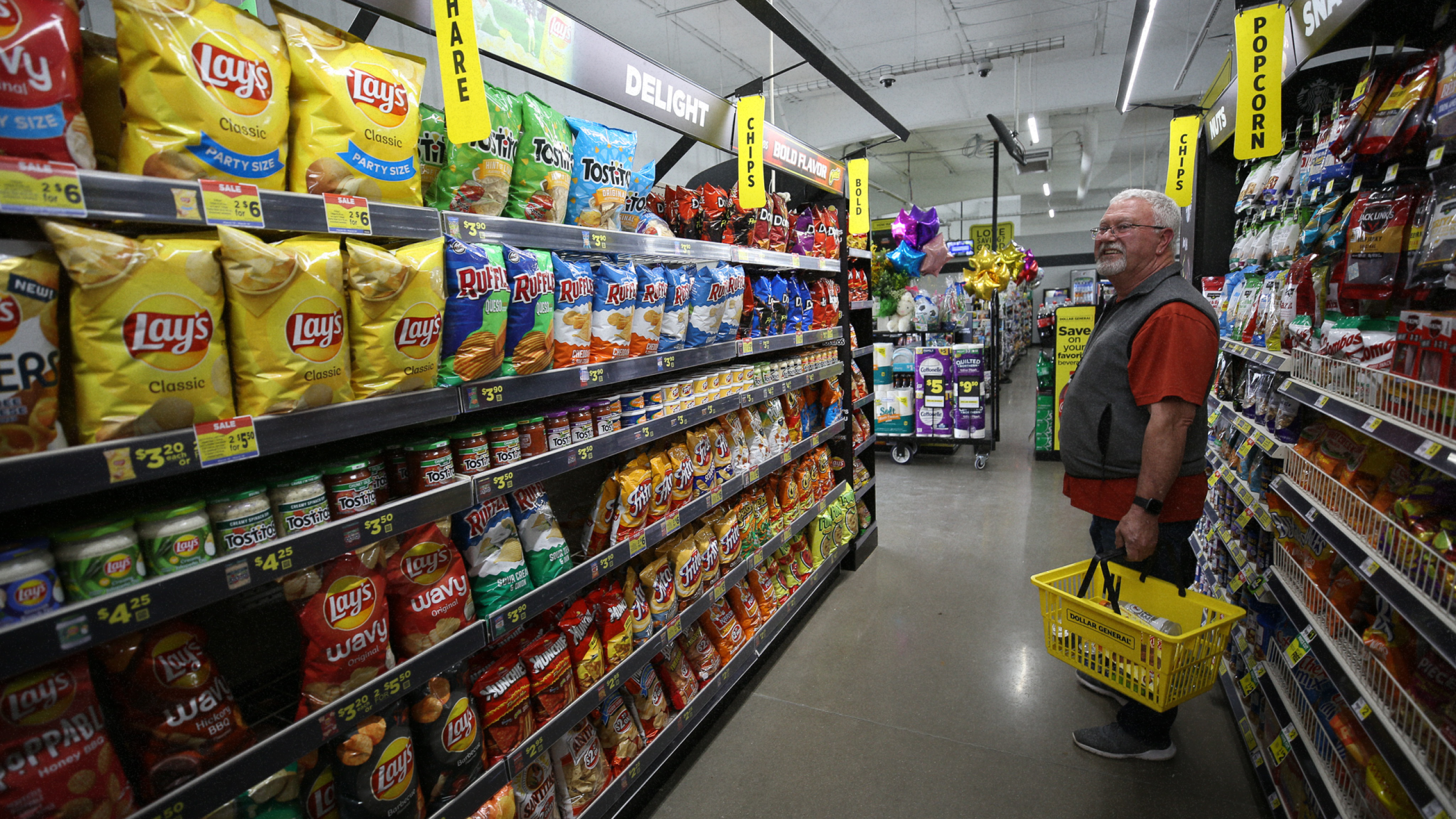
For much of its history, Dollar General operated with a tightly standardized footprint of roughly 7,300 square feet and no refrigeration infrastructure. As previously mentioned, that began to change in the mid-to-late 2000s, when the company introduced refrigerated and frozen cases in select stores, marking one of the more significant physical shifts in the chain's evolution. As refrigeration became a permanent feature, new stores have gradually expanded to roughly 8,500 to 9,500 square feet, designed to accommodate freezer aisles and additional backroom space.
Dollar General's store design sits strategically between retail extremes. In comparison, Walmart stores range from roughly 30,000 square feet for smaller formats to nearly 180,000 square feet for Supercenters, while traditional convenience stores, generally operate in just a few thousand square feet. That middle ground, larger and more assortment-driven than a gas station, yet far less capital-intensive than a big-box retailer, allows Dollar General to operate profitably in communities that often can't support a full-scale supermarket.
Dollar General's stores carry roughly 10,000 SKUs, a constrained assortment given its small-box format. Putting that into the same competitive context, a Walmart Supercenter can stock more than 100,000 items, while a convenience store may offer only a few thousand.
Dollar General's middle position also explains its merchandising strategy. While selection varies somewhat by store type, the layout and core categories remain largely standardized across the network. The mix is heavily weighted toward consumables, which accounted for approximately 82% of sales on a trailing twelve-month basis as of Q3 FY2026. Consumables may drive traffic, but they carry the lowest gross margins.
As CEO Todd Vasos describes the strategy with the mix: “We've long used consumables to drive traffic and non-consumables to build the basket.” These non-consumables – 10% seasonal merchandise, 5% home products, and 3% apparel – carry higher margins and are more discretionary, with performance that tends to track the broader economic environment.
That mix also sets Dollar General apart from its most frequently compared peer in the dollar channel. While often grouped together, Dollar Tree maintains a roughly even split between consumables and discretionary categories across its ~9,300 stores, supporting a more discovery-driven model than Dollar General's staples-focused approach. Additionally, while the two chains overlap in some suburban markets, Dollar General's model extends far deeper into rural and small-town America. The peer comparison is therefore more about price positioning than a direct overlap in customer base or real estate strategy.
Private label brands are embedded throughout the in-store assortment, spanning food under Clover Valley, health under Rexall, and household goods under DG Home, alongside multiple other in-house labels. These serve as low-price alternatives and margin enhancers next to many of the world's largest consumer brands, including Coca-Cola, PepsiCo, General Mills, Kraft Heinz, Nestlé, Procter & Gamble, Unilever, Hershey, and Mars to name a few. In Q4 2023, management noted that private brands accounted for more than 20% of sales. While the company has not updated that specific figure, it has consistently emphasized continued share gains, supported by inflationary pressure and more value-focused consumer behavior.
While Dollar General's pricing strategy is built around value, it's not targeting price leadership. Management has repeatedly stated that its goal is to price within 3 to 4 percentage points of mass retailers on average. But for a customer balancing limited cash flow and time, the total trip equation often matters more than the lowest sticker price.
As Dollar General describes it, many of its core customers are constantly traded down. Therefore, when inflation surged in recent years, their limited discretionary flexibility and heavy exposure to food, fuel, rent, and utilities quickly pushed spending further toward essentials. Customer visits remained relatively stable, and same-store sales rose modestly, but baskets shrank, and mix shifted sharply. Consumables increased from 76.7% of sales in FY2021 to 82.2% by FY2024, compressing margins in the process.
At the same time, the anticipated influx of middle-income trade-down shoppers proved slower to materialize, with many remaining in a “value-seeking” mode at mass retailers or online. In contrast to 2008-09, when financial stress accelerated migration across income tiers, this recent cycle was more uneven. Without a sharper deterioration in employment or income stability, the shift into “must have value” mode never fully took hold, leaving Dollar General squeezed between a financially strained core customer and a delayed downstream migration.
The impact was visible in the income statement: net sales continued to grow, but operating income fell roughly 30% in FY2024 as mix, shrink, and cost pressures weighed on profitability. We'll get into the finer details of this later on.
In a tight economic environment that our consumers are facing, it's going to be that fine balance and it always is between value and convenience.— Todd Vasos
Operating roughly 10,000 SKUs across nearly 21,000 stores demands operational precision. One key to maintaining that scale is the company's constrained and consistent assortment, allowing it to buy in significant bulk. As previously mentioned, consumer brands account for roughly 80% of sales and are sourced directly from the largest consumer packaged goods companies. By concentrating volume into fewer SKUs, Dollar General ranks among the largest customers for many of these companies, strengthening its negotiating leverage.
Private label follows a different path. These products are developed internally and sourced through a mix of domestic manufacturers and international partners. Direct imports account for only a small portion of purchases, typically in the mid- to high-single-digit range, while indirect imports are roughly twice that level.
From supplier to shelf, products either ship directly to stores via vendors and third-party distributors or move through Dollar General's expanding distribution network. Dry goods flow through strategically located distribution centers, increasingly supported by automation. Temperature-controlled products move through the DG Fresh network – roughly a dozen dedicated facilities supplying most stores – allowing the company to self-distribute frozen and refrigerated items.
That infrastructure shift has improved sales by enabling wider baskets for consumers, while enhancing margins by eliminating third-party markups. From its distribution centers, goods are delivered to stores via third-party carriers or its growing private fleet.
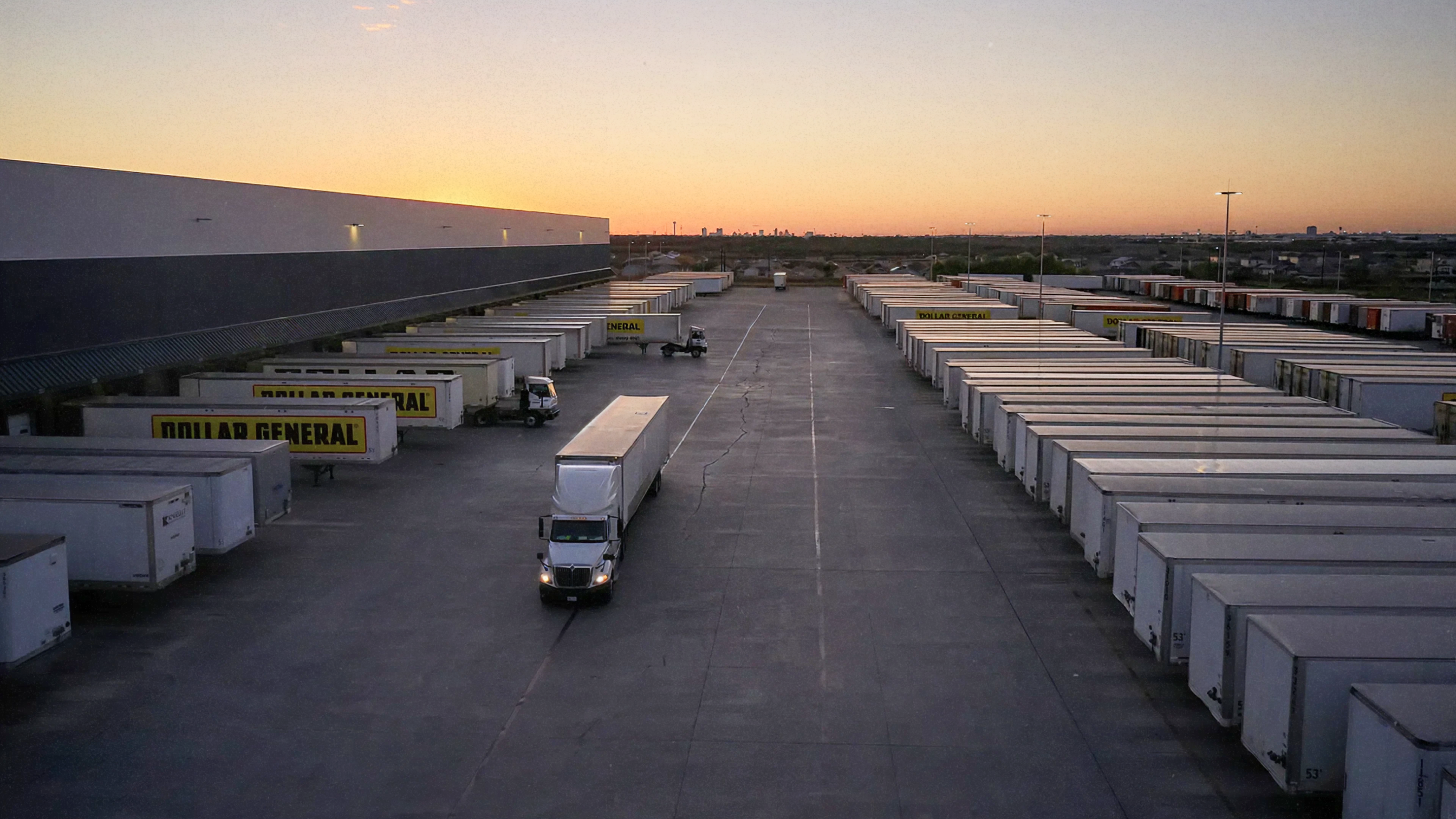
The limited assortment model carries several advantages, including faster inventory turns, as deeper volumes per item accelerate sell-through and simplify replenishment. When operating smoothly, Dollar General's sourcing and supply chain are key strengths, amplifying the economics of the format. When that system is disrupted, however, the effects ripple quickly across the store base and system, a dynamic that became evident over the past several years.
During and after the pandemic, demand volatility, port congestion, labor shortages, and transportation disruptions strained freight flows globally. Within Dollar General's centralized network, those shocks exposed operational sensitivity. Throughput slowed at distribution centers, inventory built up unevenly, and allocation imbalances emerged: elevated inventory at the corporate level alongside empty shelves in many stores.
The amount of out-of-stocks we have in our store are probably some of the largest that I've seen in the 15-plus years.— Todd Vasos
Because store operations depend on a predictable delivery cadence, late or incomplete shipments quickly created bottlenecks. Labor productivity declined as on-shelf availability suffered. At the same time, shrink rose to elevated levels, driven by its expansion of self-checkout, excess inventory, and weak in-store control environments, accelerating losses and pressuring gross margins throughout FY2024. Vasos described shrink as “the most significant headwind in our business” during Q1 2024. Eventually, Dollar General pivoted by converting thousands of stores back from self-checkout, while intensifying store-level controls.
By early 2024, many of the most acute operational pressures had begun to ease. The company, however, had already endured two years of traffic strain, declining customer satisfaction, and simultaneous pressure on margins and working capital. The turnaround initiatives that followed would focus on restoring execution discipline across this backbone of the business.
Dollar General's model is built on capital efficiency. The stores are small, standardized, and inexpensive to replicate. Most stores are leased rather than owned, with third-party developers typically constructing the building shell while Dollar General completes the interior buildout. By leasing instead of owning real estate, the company avoids large upfront acquisition costs, keeps capital requirements low, and can move rapidly in its expansion, but also retains flexibility if a location underperforms.
New stores average roughly $500,000 to open, including initial inventory and capital expenditures for shelving, refrigeration, HVAC, flooring, and lighting. Management has guided to cash payback periods of around two years and average new-store returns of approximately 16% to 17%.
Location reinforces that advantage. Because stores are primarily placed in rural and lower-density markets, land and lease costs are materially lower than in suburban or urban retail-dense geographies. The format does not require prime retail frontage or high-traffic shopping centers. It requires accessibility, parking, and proximity to its core customer.
Once open, the economics are driven by simplicity and cost control. Stores operate with lean staffing, with a small team of employees, many of whom are part-time. With over 195,000 employees across the system, labor is, of course, the largest operating expense. Therefore, as demonstrated in recent years, because the format relies on tight labor scheduling and minimal in-store headcount, sustained wage inflation or inefficiencies in store execution can quickly pressure operating margins.
Even after recent strain, the core economics remain intact. Limited SKUs enable bulk purchasing, which lowers product costs. Lower costs support competitive everyday pricing. Competitive pricing sustains traffic. Concentrated volume strengthens supplier leverage. The flywheel is straightforward.
Historically, that formula compounded consistently. Between 1990 and 2021, Dollar General delivered 31 consecutive years of positive same-store sales growth, a streak unmatched in discount retail. The streak ended in FY2022 with a 2.8% decline, though the comparison came against FY2021's extraordinary pandemic surge of 16.3% comparable growth and 21.6% overall sales growth. On a two-year basis, comps remained up 13.5%, and Dollar General retained pandemic-era customers at rates exceeding expectations.
)
Improving the existing base has become an increasingly important lever recently. Dollar General operates two primary remodel programs: Project Renovate, a full remodel, and Project Elevate, a lighter refresh. A Renovate project costs roughly half as much as a new store, while Elevate requires significantly less capital. In return, Renovate projects generate first-year comparable sales lifts of approximately 6% to 8%, and Elevate projects deliver gains in the 3% to 5% range. The company targets enhancements across roughly 20% of its store base annually, allowing much of the network to be refreshed within a few years.
“We have a lot of locations left that we can go into. So we're feeling good about the pipeline and just the ability to produce the results that we have seen historically. I think right now, we've done a nice job of balancing the capital allocation between new stores and existing stores. And as we think about that, maximizing the current store base is just really powerful as we work to gain that mature store comp.”
– Kelly Dilts, then-CFO at Dollar General, at its Q4 2025 earnings call.
As told so far, throughout the years, Dollar General's model worked almost mechanically. Small-box stores, disciplined expansion, lean labor, concentrated assortment, and rural density, compounding into steady same-store sales and high returns on invested capital. In recent years, however, that model was tested across multiple fronts at once. Inflation strained its core customer, supply chains faltered, and inventory imbalances exposed how sensitive the system was to disruption.
At the same time, competitive intensity increased. Mass retailers, led by Walmart, strengthened their price positioning in core categories, while digital platforms such as Amazon, Temu (owned by PDD Holdings), and Shein took market share in discretionary categories where Dollar General's rural footprint had previously provided some protection. Evidently, customers who had grown accustomed to online ordering during the pandemic shifted more non-consumable purchases to these digital channels. For a “must have value” shopper, price transparency diminished the role of proximity, effectively removing switching costs. Traditional convenience was challenged by new, digital convenience.
While Dollar General's sales continued to grow, the mix shifted further toward lower-margin consumables, and shrinkage, labor pressures, and operating deleverage weighed on profitability.
During these challenging years, Dollar General turned back to a familiar operator. In October 2023, Todd Vasos returned as CEO after stepping down in November the prior year, now back with a mandate to restore operational focus and execution discipline. Under his leadership, the company launched a “Back to Basics” initiative centered on tighter control of inventory, labor, and in-store standards. At his first earnings call after returning, in December 2023 (Q3 FY2024), Vasos outlined the path forward:
“I believe the macro still has an effect on us as well as others. But what we've always been and prided ourselves on control, which you can control here at Dollar General, and we're doing just that with back to basics. And we believe that we can help overcome some of those shortcomings in the macro environment with being able to control what -- and what the consumer feels and sees when she's in the store. So more to come. We feel like we're on the right track here, but we've got a lot of work yet to do, but I feel good about that.”
Within Dollar General's own network, on-time and in-full delivery rates improved, temporary warehouse capacity was consolidated, and distribution center accuracy increased. As product flow steadied, the company addressed one of its most visible operational issues: inventory imbalances. Through aggressive SKU rationalization, eliminating between 10-20% of the total assortment and tighter perpetual inventory controls, the company drove inventory down from a peak of $7B in early 2024 to $6.7B by late 2025. This occurred while simultaneously improving in-stock rates.
Eventually, the external conditions began to ease. Inflation moderated from peak levels, and while many of Dollar General's core customers remained financially constrained, the pace of cost escalation slowed, which was a more workable backdrop for internal improvements to take hold. The same can be said about global supply chains, which began normalizing as freight rates declined and port congestion cleared.
Financially, the recovery has been gradual but undeniable. Across other margin decompressors, shrink began to moderate as store-level controls strengthened and self-checkout was removed from more than half of its stores. Additionally, earlier elevated levels of labor turnover began to moderate.
Although the multi-decade same-store sales streak saw a brief interruption, performance soon returned to its historical pattern as traffic recovered. Gross and operating margins remain below their FY2021-2023 peaks, but the trajectory has reversed, helped in part by the non-consumable categories taking a larger mix share. Speaking specifically about the margin outlook, CFO Donny Lau said on the Q3 2026 earnings call that Dollar General sees “more tailwinds than headwinds” heading into 2026 and beyond.
)
Dollar General's capital allocation framework has remained consistent over the years, built around a clear hierarchy: first invest in the business, then return cash through dividends, and finally repurchase shares when appropriate.
As discussed, significant growth opportunities remain within the core Dollar General model. The store economics of its buildout in itself support that in multiple ways, incentivizing the company to continue increasing its store count. While 2026 guidance of 450 store openings is a slowdown of its historical pace, it remains committed to its long-term target of 11,000 potential opportunities in the U.S. Todd Vasos addressed the short and long-term priorities at its Q3 2026 earnings call:
“We got 11,000 opportunities in the Continental United States to put a Dollar General store in. Obviously, as we said, we won't get all those. But your question pointed to the reason we're bullish on getting a lot of these is that our competition today is really not opening a lot of stores. And for that, we don't feel compelled to have to rush to open a lot of stores. So we believe that the right mix right now, 450 stores, still very strong for the year.
The right mix of remodel and new we believe is the right thing, taking care of that mature store base as we go forward is also strong. But with still close to 17% returns on new stores, we feel very bullish about what the future looks like with that 11,000 opportunities. And when we feel it's appropriate, we have the opportunity and the capacity to step it up from there.”
As touched on by Vasos, supporting that approach are planned remodel programs, including approximately 2,000 Project Renovate and 2,250 Project Elevate initiatives in 2026. These investments aim to lift productivity across the mature store base, improving organic growth alongside new openings.
Beyond the storefronts, capital also flows to infrastructure to support the consumer-facing operations. While investments into DG Fresh, additional distribution capacity, automation initiatives, and its private fleet increased fixed costs during the recent downturn, they have strengthened supply chain control and structurally improved the long-term cost position of the business. These investments, while ill-timed in the short run, now form a more scalable backbone for the 21,000-store footprint.
Format expansion beyond the core banner has been more uneven. The aforementioned concepts, such as its Mexican stores under the Mi Súper Dollar General brand, pOpshelf, DGX, and the continued rollout of DG Market, have required resets, closures, or slower rollout plans. Execution so far has proven more difficult than initially anticipated, and the company has put both near-term expansion and long-term targets on hold. For now, the emphasis appears to be on stabilizing and optimizing rather than broadening.
Outside of reinvestments, Dollar General has maintained an uninterrupted quarterly dividend for more than a decade, including through the recent operational challenges. Share repurchases, historically an aggressive component of capital returns, have been paused since 2023 after leverage rose above its target range amid margin compression and inventory buildup. Management has indicated that it expects to be in a position to restart share repurchases as early as 2027, contingent on leverage returning to targeted levels.
Dollar General is a company that occupies a unique position in American retail. Strategically placed, built, and operated to sidestep direct competition, Dollar General's yellow and black signs have become a constant across rural America. The stores stay open, the shelves stay stocked, and customers keep coming in for laundry detergent, soda, bread, and all of the everyday essentials that keep households running. In the end, the formula remains unchanged from the principles the Turners built it on: value and convenience, store by store.
Explore our platforms
Leading companies and financial institutions worldwide rely on Quartr to make better decisions faster.
Desktop
API
)
)
)